
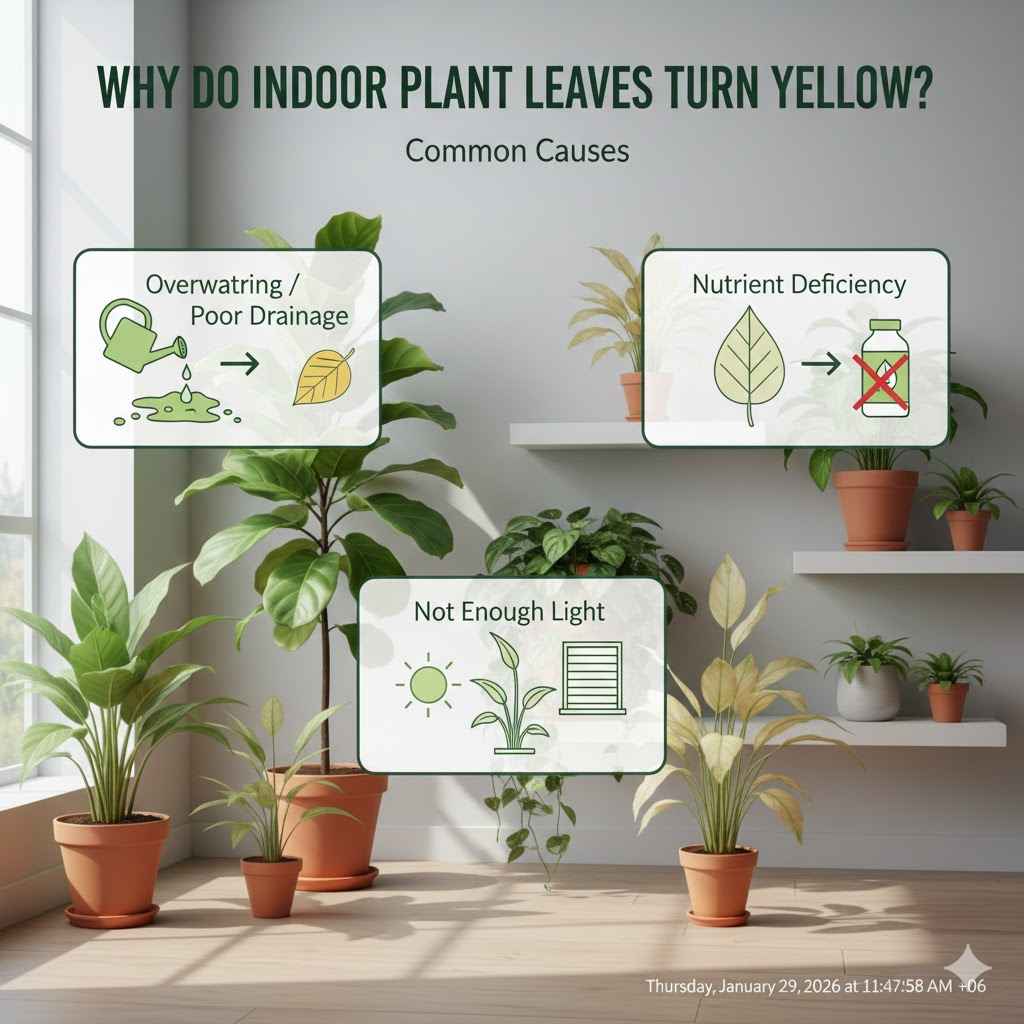
Indoor plant leaves turn yellow mainly due to overwatering, underwatering, poor light, nutrient shortages, or wrong temperatures. Don’t worry—most cases are easy to fix with simple tweaks to care. Follow these steps to get your plants green and healthy again.
Yellow leaves on your indoor plants can feel worrying, especially when you’ve tried your best to keep them happy. It’s one of the most common issues beginner gardeners face. The good news? Yellowing is usually a sign your plant is stressed, not dying. With a few easy checks and changes, you can turn things around fast. In this guide, I’ll walk you through the top causes and clear fixes so your plants thrive again.
Common Causes of Yellow Leaves on Indoor Plants
Indoor plants show yellow leaves when something blocks their ability to make chlorophyll—the green stuff that keeps them looking vibrant. Let’s look at the main reasons, starting with the most common.
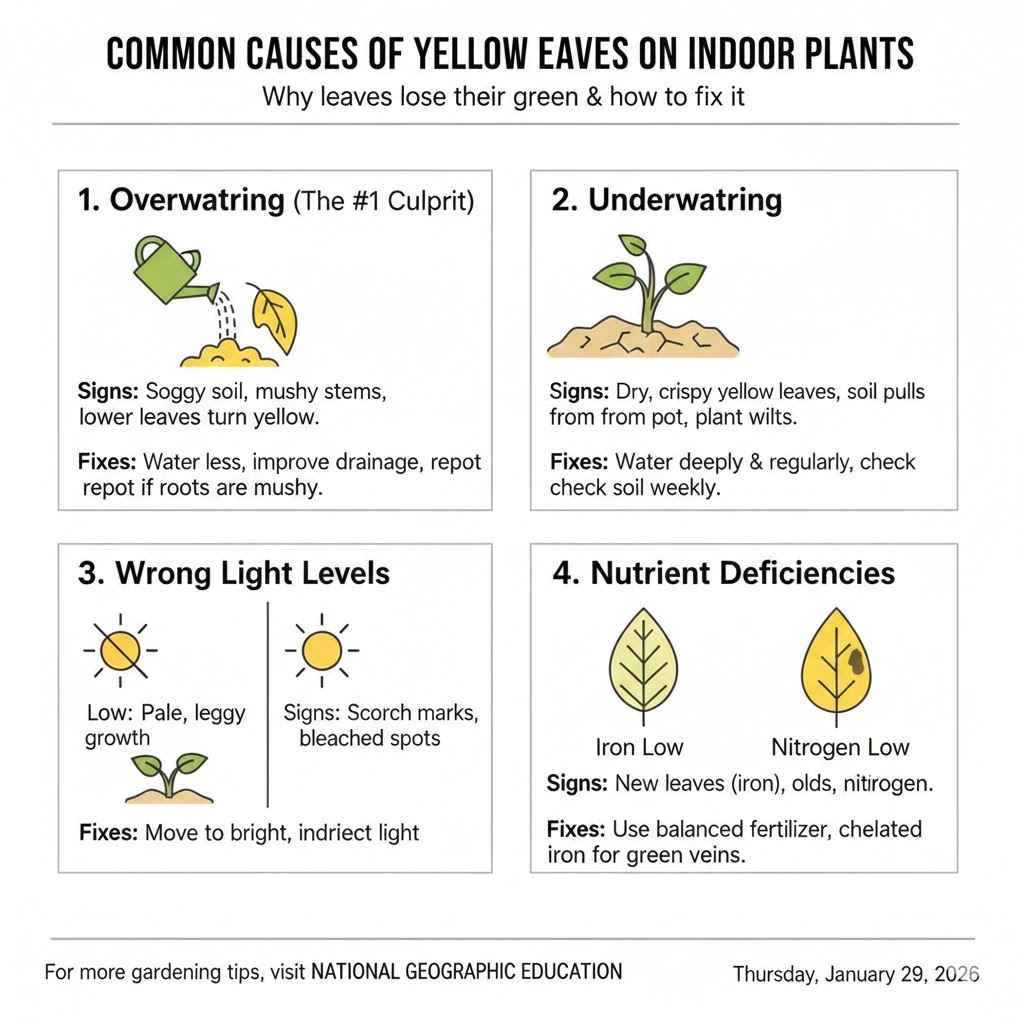
1. Overwatering (The #1 Culprit)
Overwatering tops the list for why houseplant leaves turn yellow. Too much water drowns the roots. They can’t get oxygen, so they rot. This leads to yellow, soft leaves that drop off.
Signs: Yellow leaves (often lower ones first), mushy stems, wet soil that stays soggy, or a bad smell from the pot.
- Stop watering right away.
- Check the soil—if it’s wet two inches down, wait until it’s dry.
- Improve drainage by adding holes to pots or using well-draining soil.
- Repot if roots are brown and mushy—trim bad roots and use fresh soil.
For more on root rot, check this guide from the University of Maryland Extension: Yellowing Leaves on Indoor Plants.
2. Underwatering
Not enough water stresses plants too. Leaves turn yellow and dry, often with crispy edges. The plant drops leaves to save water.
Signs: Yellow, dry, curled leaves; soil pulls away from the pot; plant looks wilted.
- Water deeply until it drains out the bottom.
- Set a schedule—check soil weekly with your finger.
- Use room-temperature water to avoid shock.
3. Wrong Light Levels
Light affects chlorophyll production. Too little light makes leaves pale yellow. Too much direct sun scorches them yellow or brown.
- Low light: Overall pale or yellow-green leaves, leggy growth.
- Too much light: Yellow spots or bleached areas.
- Move to bright, indirect light (like near an east-facing window).
- Avoid direct midday sun.
- Use grow lights in dark rooms during winter.
4. Nutrient Deficiencies
Plants need balanced food. Low nitrogen causes old leaves to yellow evenly. Iron shortage (common in high pH soil) shows yellow leaves with green veins (interveinal chlorosis).
- Nitrogen low: Older leaves yellow first.
- Iron low: Newer leaves yellow, veins stay green.
- Use a balanced houseplant fertilizer every 4-6 weeks in growing season.
- For iron, use chelated iron supplements or lower soil pH if needed.
See this resource from Iowa State University Extension: What causes leaves on my houseplant to turn yellow or brown.
5. Temperature Stress and Drafts
Sudden cold drafts or hot air from vents shock plants. Leaves yellow and drop.
Signs: Yellow leaves after moving or near windows/doors in winter.
- Keep temps 65-75°F (18-24°C).
- Avoid cold windows or heaters.
- Acclimate plants slowly to new spots.
6. Pests or Diseases
Spider mites, scale, or fungal issues can cause yellowing.
Signs: Spots, webs, sticky residue, or uneven yellowing.
- Inspect undersides of leaves.
- Wipe with soapy water or use neem oil.
- Improve air flow to prevent fungus.
7. Natural Aging or Normal Shedding
Lower leaves yellow and fall as plants grow. This is normal.
Signs: Only old, bottom leaves affected; rest of plant looks healthy.
Fix: Trim them off—no worry needed!
How to Diagnose and Fix Yellow Leaves Step by Step
Follow this simple checklist every time you spot yellow leaves:
- Check soil moisture — Stick your finger 2 inches in. Wet? Overwatered. Dry? Underwatered.
- Look at light — Is it bright indirect? Adjust position.
- Feel the leaves — Soft/mushy = overwatering. Dry/crispy = underwatering.
- Inspect for pests — Use a magnifying glass if needed.
- Note patterns — Where yellowing starts (old/new leaves) gives clues.
- Test temperature — Avoid extremes.
- Fertilize if needed — But only if other issues are ruled out.
Common Houseplant Yellowing Patterns Table
| Pattern | Likely Cause | Quick Fix |
|---|---|---|
| Lower/old leaves yellow evenly | Overwatering or nitrogen deficiency | Let soil dry, fertilize lightly |
| Newer leaves yellow, green veins | Iron deficiency (high pH) | Use chelated iron, adjust pH |
| Yellow with dry tips/edges | Underwatering or low humidity | Water deeply, mist or use pebble tray |
| Overall pale yellow | Low light | Move to brighter spot |
| Yellow spots or patches | Pests or sunburn | Treat pests, reduce direct sun |
| Yellow after repotting/moving | Shock or temperature change | Give time to adjust |
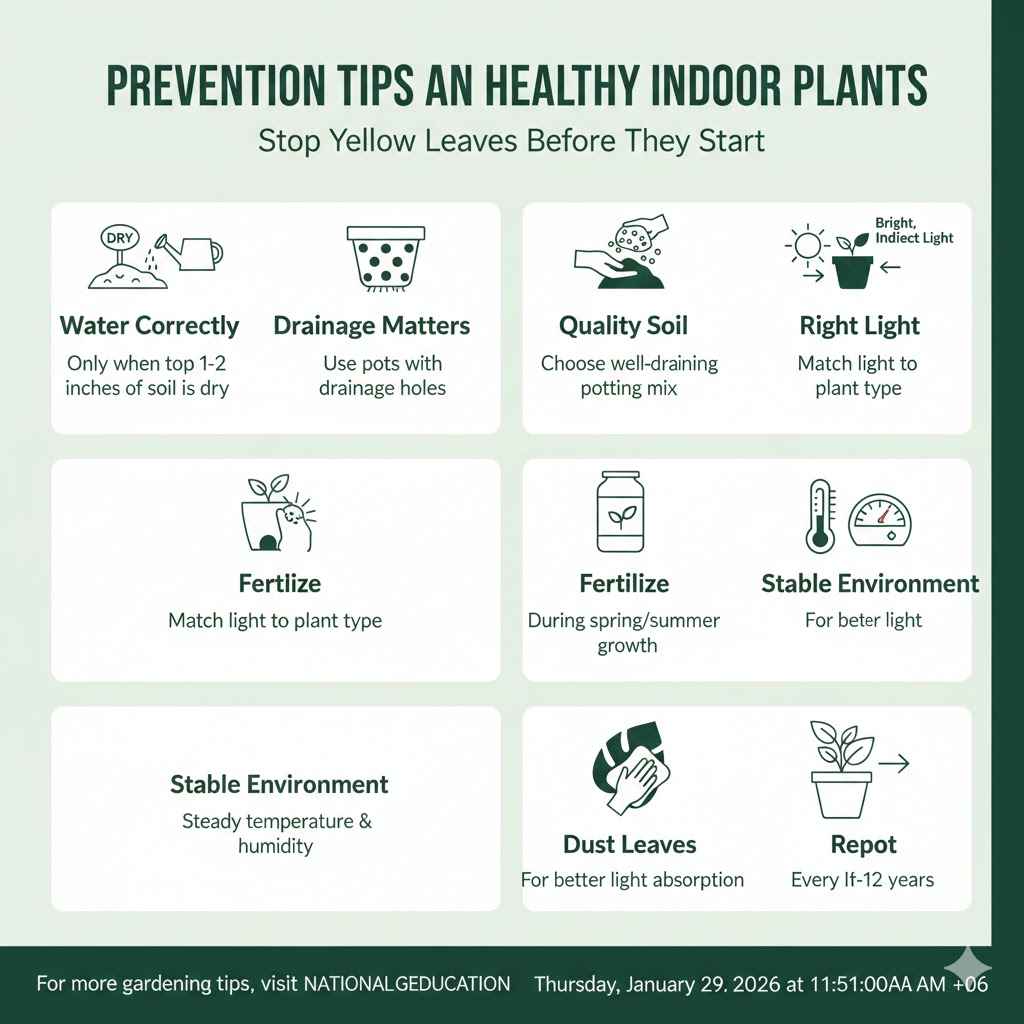
Prevention Tips for Healthy Indoor Plants
To stop yellow leaves before they start:
- Water only when top 1-2 inches of soil is dry.
- Use pots with drainage holes.
- Choose well-draining potting mix.
- Place in right light for each plant type.
- Fertilize during spring/summer growth.
- Keep steady temperature and humidity.
- Dust leaves for better light absorption.
- Repot every 1-2 years.
FAQ
Why are the bottom leaves on my indoor plant turning yellow? Bottom leaves often yellow from natural aging or overwatering/root rot. If only a few, it’s normal. If many, check soil moisture and roots.
Can too much sun make indoor plant leaves yellow? Yes! Direct harsh sun scorches leaves, causing yellow or brown patches. Move to indirect bright light.
How do I know if my plant has nutrient deficiency? Look for patterns: even yellow on old leaves (nitrogen), yellow with green veins on new leaves (iron). Fertilize with balanced houseplant food.
Is yellowing leaves always bad? Not always. One or two old leaves yellowing is normal. Widespread yellowing signals a problem to fix.
What should I do if my plant has yellow leaves and wilting? Likely overwatering. Stop watering, improve drainage, and check for root rot. Repot if needed.
Can low humidity cause yellow leaves indoors? Yes, dry air makes tips yellow and crispy. Use a humidifier, pebble tray, or group plants together.
How often should I water to avoid yellow leaves? It depends on the plant, light, and season. Check soil weekly—water when top inch is dry. Most houseplants need watering every 7-14 days.
Conclusion
Yellow leaves don’t mean you’ve failed as a plant parent—they’re just your plant’s way of asking for help. By checking watering first, then light, nutrients, and environment, you can solve most issues quickly. Gardening indoors is all about small, steady care that adds up to big rewards. Your plants will bounce back greener and stronger, and you’ll feel proud watching them thrive. Keep observing, adjust as needed, and enjoy the peaceful joy of nurturing your indoor green friends. You’ve got this! Happy gardening.