
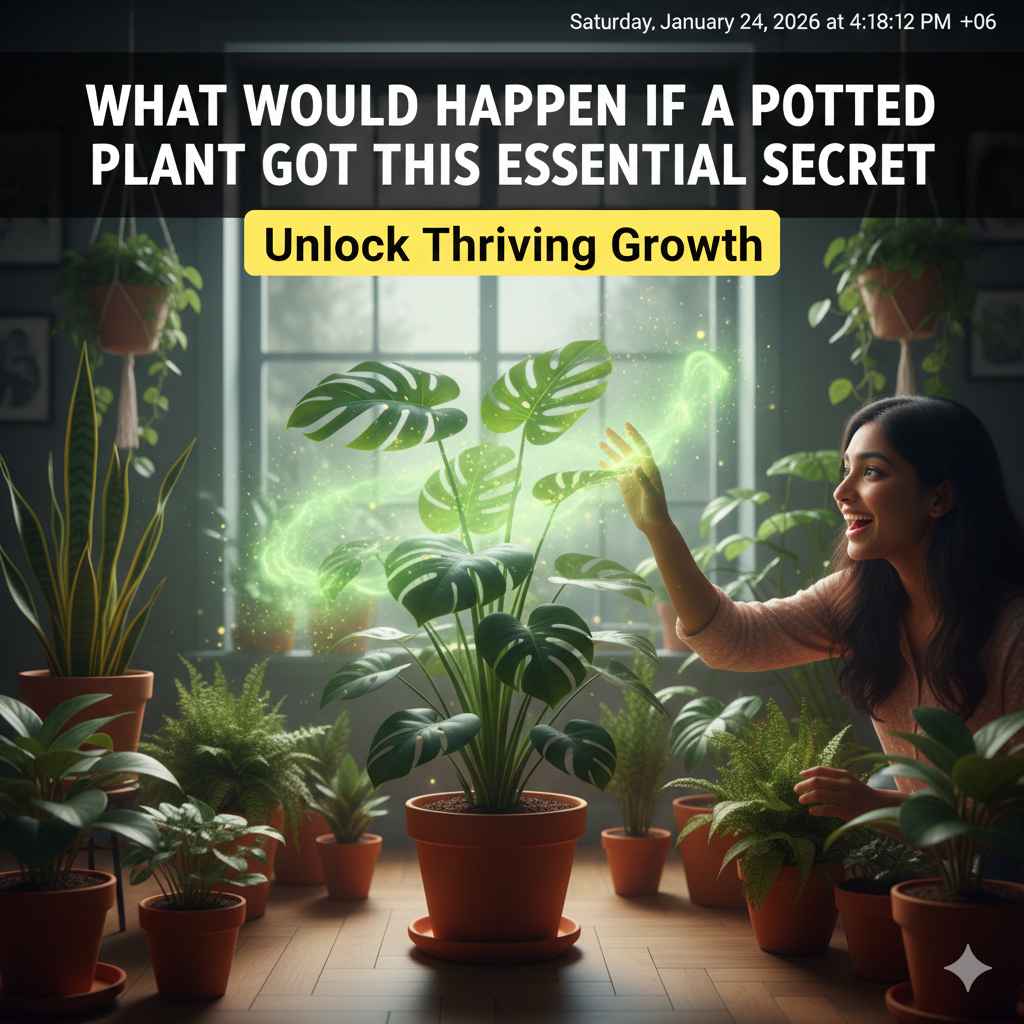
If potted plants got the essential secret of mycorrhizal fungi, they would develop a massive, secondary root system. This allows them to absorb significantly more water and nutrients, leading to faster growth, brighter flowers, and incredible resilience against drought and disease. Your plant essentially gets a powerful natural helper living in its soil.
Have you ever felt like you’re doing everything right, but your potted plants still look a little sad? You give them water, sunlight, and even some fertilizer, but they just don’t thrive. It can be so frustrating! Many beginner gardeners face this exact problem and start to think they don’t have a “green thumb.” But what if I told you there’s a hidden helper that most store-bought potting soils are missing? There is a simple, natural secret that can completely change your gardening game. Let’s unlock it together and watch your plants flourish like never before.
The Hidden Helper Your Potted Plants Are Missing
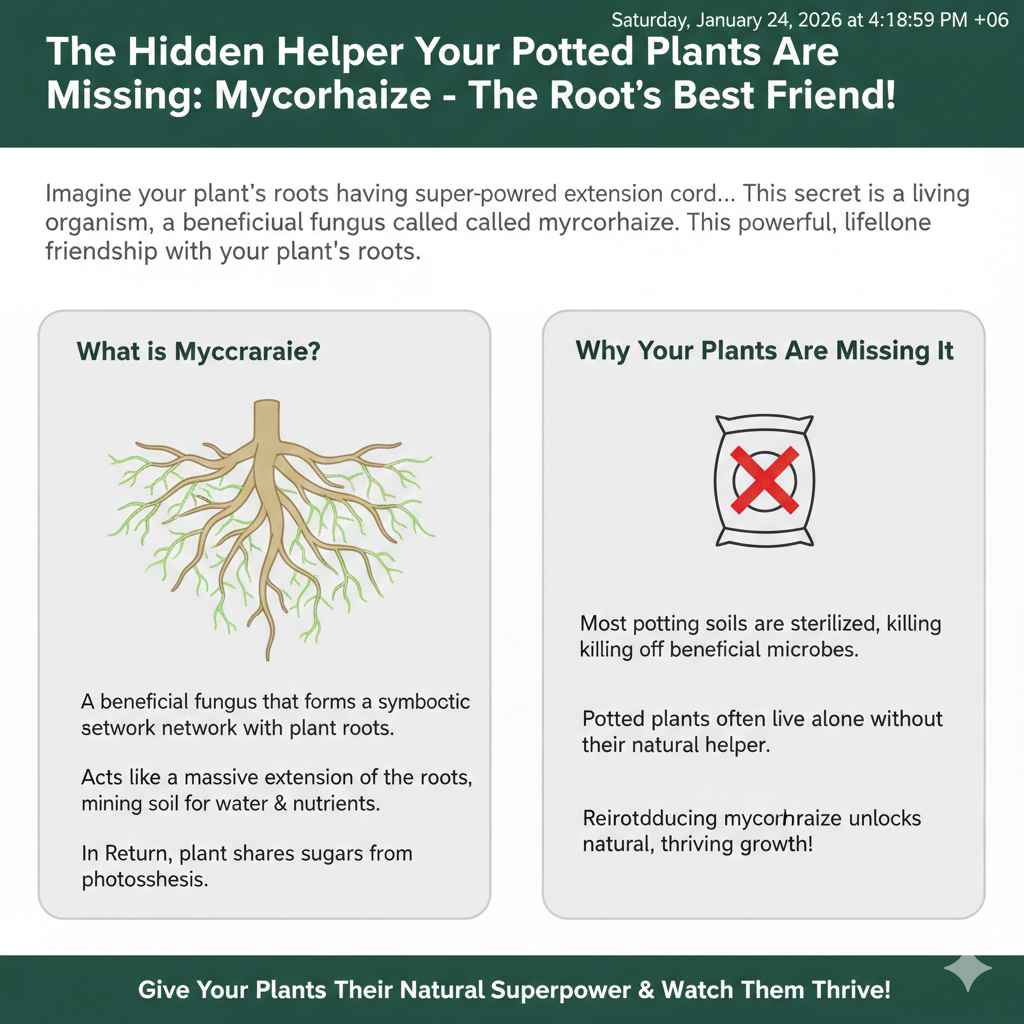
Imagine your plant’s roots having a super-powered extension cord, reaching parts of the soil they could never touch on their own. That’s exactly what this secret provides. The secret isn’t a chemical or a complicated technique; it’s a living organism, a beneficial fungus called mycorrhizae (pronounced my-co-RYE-zay). This isn’t the kind of fungus that causes problems. Instead, it forms a powerful, lifelong friendship with your plant’s roots.
Most plants in nature have this symbiotic relationship. The fungi network extends far beyond the plant’s own roots, acting like a massive web that mines the soil for water and nutrients. In return, the plant shares some of the sugars it makes from sunlight. It’s a beautiful partnership. The problem? Most potting soils are sterilized, meaning they are completely free of these beneficial microbes. When you bring a plant home in a pot, it’s often living alone without its natural helper. By reintroducing this secret helper, you are simply giving your plant what it needs to thrive as it would in nature.
How This Fungi-Friendship Transforms Your Plant
So, what exactly happens when you introduce mycorrhizal fungi to your potted plant? The magic lies in the connection. Tiny fungal threads, called hyphae, attach to and extend from the plant’s roots. This web can be hundreds of times larger than the root system itself!
This incredible network does a few amazing things:
- It acts like a sponge: The fungal web is amazing at soaking up and holding onto water. During dry spells, the fungi can find and deliver water to your plant, making it much more drought-tolerant. You’ll find yourself watering less often!
- It unlocks nutrients: Some nutrients in the soil, like phosphorus, are hard for plant roots to absorb. The fungi are experts at breaking down these nutrients into a form the plant can easily use. It’s like having a personal chef for your plant.
- It builds a stronger defense: A plant with a strong mycorrhizal network is a healthier plant. It is better equipped to fight off diseases and pests, just like a person with a healthy immune system.
This isn’t just a small boost; it’s a complete system upgrade for your plant. You are creating a living, thriving ecosystem right there in the pot.
What Would Happen If A Potted Plant Got This? The Stunning Results
Let’s get specific. What changes will you actually see? Adding this essential secret to your plant’s soil leads to visible, often dramatic, improvements. You are not just feeding the plant; you are empowering it to feed itself more effectively.
1. Explosive Root Development
The first change happens underground, where you can’t see it. The fungal network encourages your plant to grow a bigger, more complex root system. A plant with more roots is a stronger, more stable plant. When you eventually repot it, you’ll be amazed by the dense, healthy web of roots that has formed.
2. More Vibrant Leaves and Flowers
Because the plant is getting a five-star meal of nutrients every day, it has more energy to put into its growth above ground. This means:
- Lush, greener leaves that look full and healthy.
- More flowers that are often bigger and brighter in color.
- For fruit and vegetable plants, this translates to a larger, more flavorful harvest.
3. Incredible Resilience to Stress
Potted plants live in a tough environment. They can dry out quickly or face temperature swings. Mycorrhizae act as a safety net. Forgetting to water for a day or two is less likely to be a disaster. The fungal network will share its stored water, keeping your plant happy and hydrated for longer. According to research from institutions like the U.S. Department of Agriculture, this relationship is key to plant survival in stressful conditions.
A Tale of Two Monsteras: A Visual Comparison
To really understand the difference, imagine two identical Monstera plants. We pot them at the same time, in the same soil, and give them the same light and water. The only difference? Plant B gets a sprinkle of mycorrhizal fungi in its soil.
| Feature | Plant A (Without Fungi) | Plant B (With Fungi) |
|---|---|---|
| Growth After 3 Months | One or two new leaves. Slow, steady growth. | Several new, large leaves. Noticeably fuller and taller. |
| Leaf Color | Healthy green, but perhaps a bit light. | Deep, rich, glossy green. |
| Watering Needs | Soil dries out completely every 5-6 days. Leaves may droop if watering is late. | Soil stays moist longer. Needs water only every 8-10 days. Rarely droops. |
| Resilience | Developed a few yellow leaves during a hot week. | Stayed perfectly healthy and green through the same hot week. |
After just a few months, the difference is undeniable. Plant B is not just surviving; it is truly thriving. That is what happens when a potted plant gets this essential secret.
How to Give Your Potted Plants This Secret: A Step-by-Step Guide
Ready to give your plants their new best friend? It’s incredibly easy. You can buy mycorrhizal inoculants—the product containing the fungi—at most garden centers or online. It usually comes as a powder or granule.
What You’ll Need:
- Your potted plant
- A bag of mycorrhizal inoculant
- A small spoon or scoop
- Watering can
- (Optional) A larger pot and fresh potting mix if you are repotting
Method 1: Applying When Repotting (The Best Way)
The easiest and most effective time to introduce the fungi is when you are moving your plant to a new pot.
- Prepare the New Pot: Add a layer of fresh potting mix to the bottom of the new, larger pot.
- Sprinkle the Secret: Take a small amount of the mycorrhizal inoculant powder (follow the package directions for the amount, but it’s usually 1-2 teaspoons for a 6-inch pot). Sprinkle it directly onto the new soil where the plant’s roots will sit.
- Direct Root Contact: Gently remove your plant from its old pot. You can also lightly dust the plant’s root ball with the powder. The goal is to get the fungi in direct contact with the roots.
- Pot the Plant: Place the plant into the new pot. The roots should now be touching the powder. Fill the rest of the pot with fresh soil, gently patting it down.
- Water Thoroughly: Give the plant a good watering. This helps “activate” the fungi and encourages them to start growing and connecting with the roots.
Method 2: Applying to an Existing Plant (No Repotting Needed)
Don’t want to repot right now? No problem! You can still give your plant this boost.
- Create Holes: Using a pencil or your finger, carefully poke 3-4 small holes into the soil around the base of the plant. Make them a few inches deep to get closer to the main root zone.
- Add the Inoculant: Carefully pour a small amount of the mycorrhizal powder into each hole. Try to distribute the recommended amount evenly among the holes.
- Cover and Water: Gently cover the holes with soil. Water your plant thoroughly. This will carry the fungal spores down to the roots where they can begin their work.
That’s it! Once the fungi establish their connection, the partnership lasts for the entire life of the plant. You only need to do this once.
Choosing the Right Fungi for Your Plants
There are two main types of mycorrhizal fungi, and most products for home gardeners contain the most common type. However, it’s helpful to know the difference. The University of Maryland Extension provides great information on this. Here’s a simple breakdown:
| Fungi Type | How It Works | Best For These Plants |
|---|---|---|
| Endomycorrhizae | The fungi penetrate the root cells to exchange nutrients. | Over 85% of all plants! Including most houseplants (Monstera, Pothos, Ferns), vegetables, fruits, and flowers. |
| Ectomycorrhizae | The fungi form a sheath around the outside of the root tips. | Mainly for conifer and hardwood trees like pines, oaks, birches, and beeches. |
For almost all of your potted plants, a product containing Endomycorrhizae is what you need. Most commercially available inoculants are a blend designed for general use and will work perfectly.
Common Mistakes to Avoid
To ensure your new fungal friends thrive, there are a couple of things to keep in mind:
- Avoid Over-Fertilizing: Especially with high-phosphorus fertilizers. If the plant gets too many easy nutrients from fertilizer, it won’t bother forming a relationship with the fungi. Use a gentle, balanced, or organic fertilizer, and use it less often.
- Be Careful with Fungicides: Some chemical fungicides can harm or kill your beneficial mycorrhizal fungi. If you have a disease problem, look for organic or microbe-friendly solutions first.
- Don’t Expect Instant Results: It takes a few weeks to a month for the fungal network to get established. Be patient! The long-term benefits are more than worth the wait. The biggest changes happen under the soil first.
The Long-Term Impact: A More Sustainable Garden
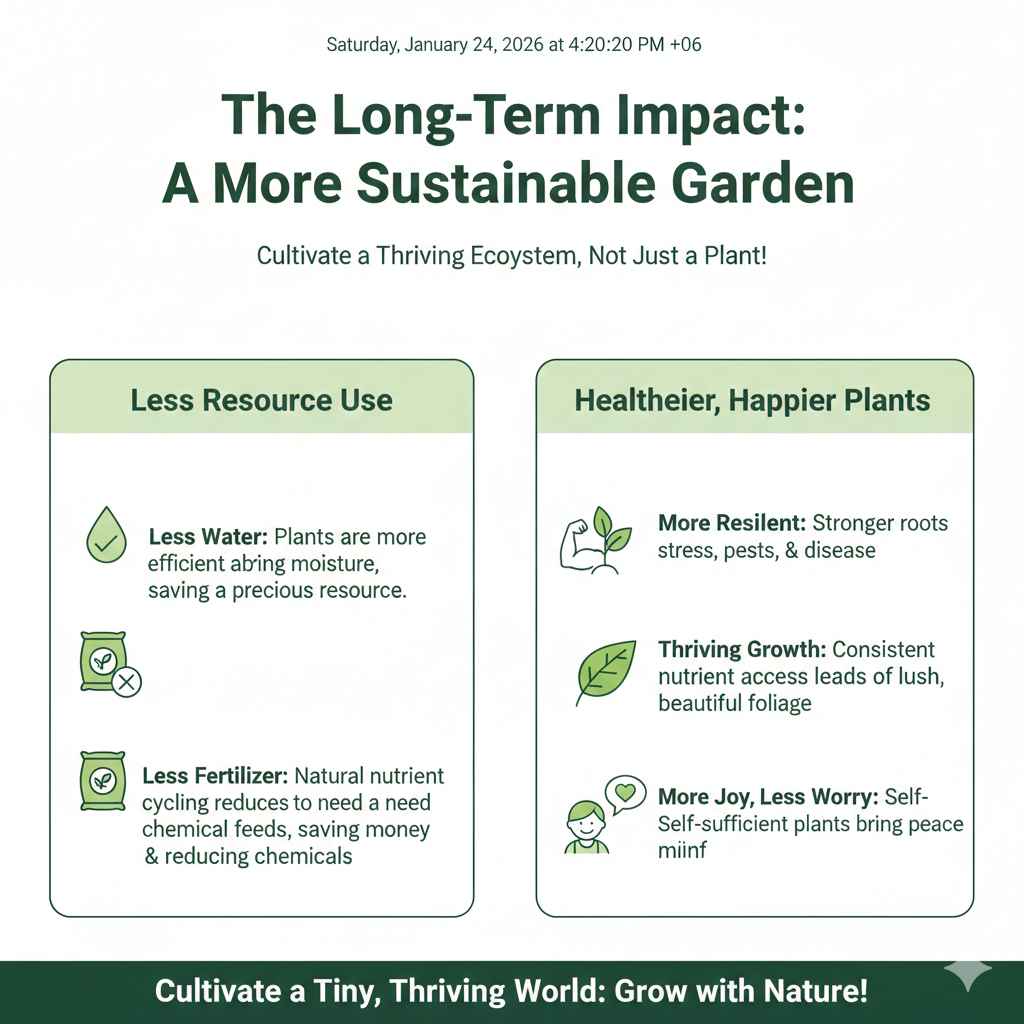
What happens when all your potted plants have this secret? Your entire approach to plant care changes. You become less of a “feeder” and more of a “facilitator” of a natural ecosystem. Your plants become more self-sufficient, resilient, and beautiful.
You’ll use less water, saving a precious resource. You’ll need far less fertilizer, saving you money and reducing chemical use in your home. Most importantly, you’ll have healthier, happier plants that bring you more joy and less worry. You are not just growing a plant in a pot; you are cultivating a tiny, thriving world.
Frequently Asked Questions (FAQ)
1. Is mycorrhizal fungi safe for all plants?
Yes, it is beneficial for over 90% of all plant species. A few plant families, like orchids, blueberries, and brassicas (cabbage, broccoli), form different types of relationships or none at all. However, for the vast majority of common houseplants, flowers, and vegetables, it is incredibly safe and helpful.
2. Can I use too much of the inoculant powder?
You can’t really harm your plant by adding too much, as it’s a natural product. However, it would be wasteful. It’s best to just follow the instructions on the package, as a little goes a long way. The goal is just to get some of the spores in contact with the roots.
3. How often do I need to apply it?
Just once! After the fungi establish a connection with the plant’s roots, they will grow with the plant for its entire life. You do not need to reapply it unless you are taking a cutting that has no roots.
4. Will it work in any type of potting soil?
Yes, it works in virtually all types of potting mix, including peat-based, coco-coir based, and regular potting soil. The fungi are not picky; they just need a root to partner with.
5. Does this replace fertilizer?
It doesn’t replace fertilizer, but it makes fertilizer work much better. The fungi make nutrients in the soil more available to the plant. You will find that you need to fertilize much less often, and you should use a gentler, more balanced formula. Think of the fungi as the delivery system and fertilizer as the package.
6. Where can I buy mycorrhizal fungi?
You can find it at most local garden centers, nurseries, and hydroponics stores. It is also widely available from many online retailers. Look for products labeled as “mycorrhizal inoculant,” “root booster,” or something similar, and check the label to ensure it contains endomycorrhizal fungi.
Conclusion: Your Green Thumb Was There All Along
The journey of learning to care for plants is filled with small discoveries that lead to big successes. Understanding the power of mycorrhizal fungi is one of the most rewarding secrets you can learn. It transforms a simple pot of soil into a living, cooperative ecosystem. What would happen if a potted plant got this secret? It would grow stronger, healthier, and more beautiful, with a resilience that will surprise you.
So, the next time you feel discouraged by a struggling plant, remember this hidden helper. You don’t need a magical “green thumb”—you just need to give your plants the natural partnerships they were born to have. Give it a try, and watch your confidence as a gardener grow right alongside your vibrant, thriving plants.