
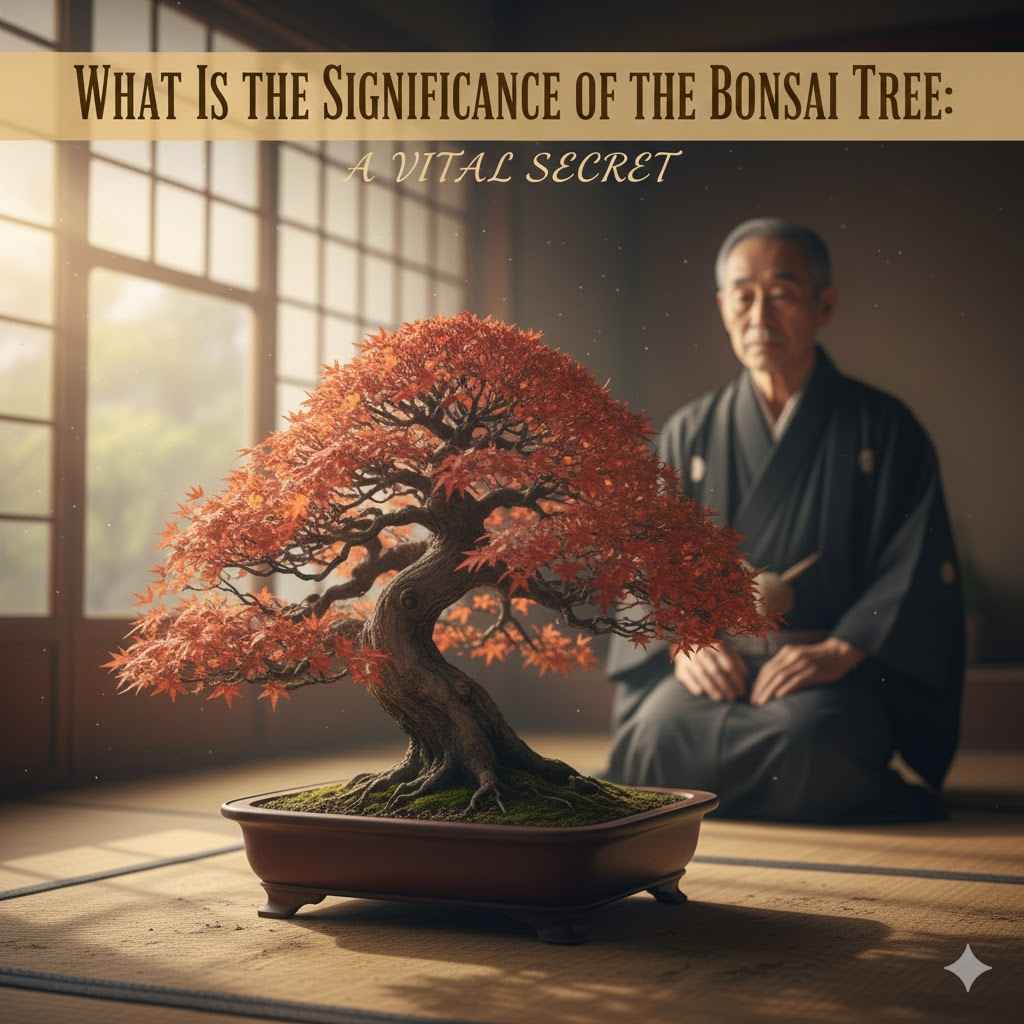
The significance of a bonsai tree lies in its deep symbolism of harmony, balance, patience, and the connection between humanity, nature, and the spiritual world. It is more than a plant; it is a living art form that represents peace, tranquility, and the grower’s long-term dedication and mindfulness.
Have you ever seen a tiny, perfectly formed tree in a shallow pot and felt a sense of calm? That’s the magic of a bonsai tree. Many people think they are just miniature plants, but there is a profound story and a vital secret hidden within their twisted trunks and delicate leaves. It’s a story of art, nature, and incredible patience.
If you’ve ever felt curious about what makes these little trees so special, you’re in the right place. In this guide, I’ll walk you through the true significance of the bonsai tree. We’ll uncover its secrets together, and you’ll see why it’s so much more than just a houseplant. Let’s begin this wonderful journey!
The Living Art: Unpacking the Meaning of Bonsai
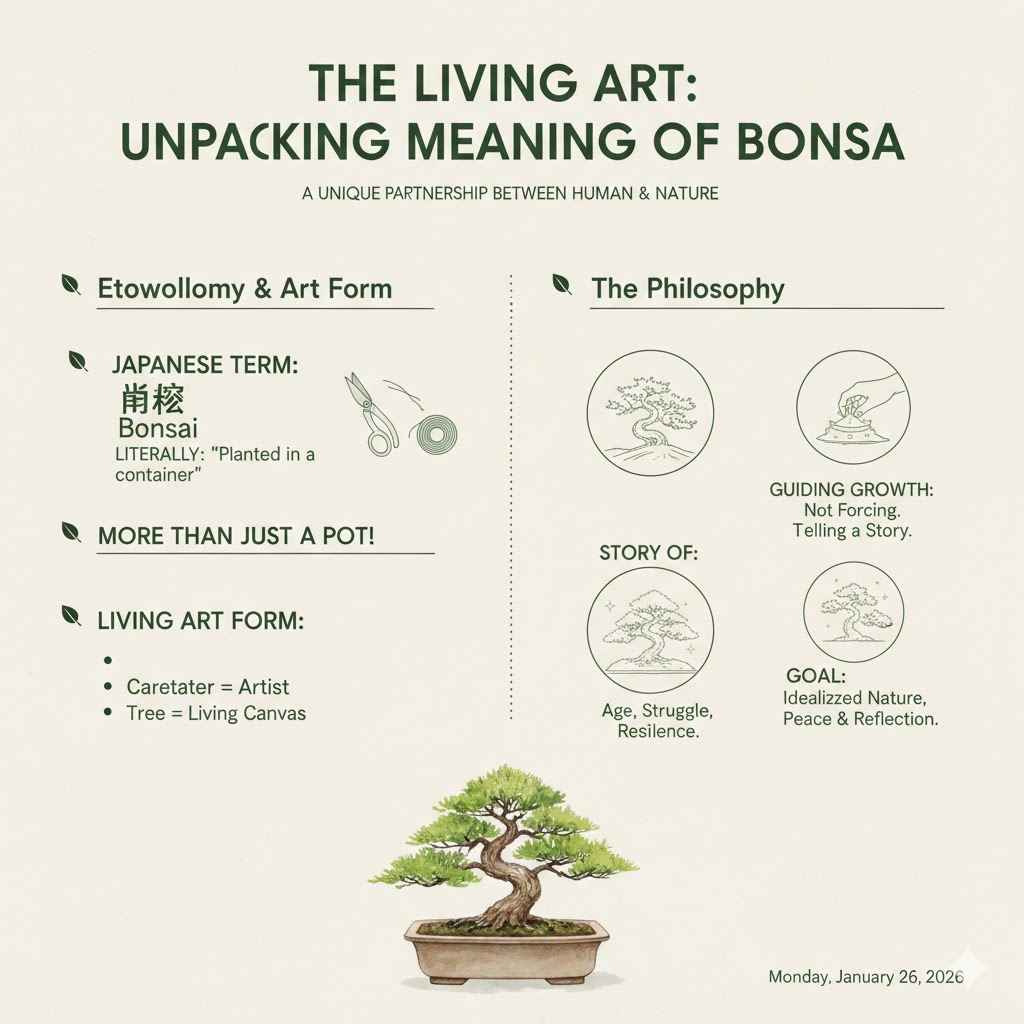
Before we dive deep, let’s start with the name itself. The word “Bonsai” (盆栽) is Japanese and literally translates to “planted in a container.” But this simple translation doesn’t capture the full picture. Bonsai is not just about growing a tree in a pot; it’s a living, breathing art form. It is a unique partnership between you, the caretaker, and the tree itself.
Think of yourself as a painter, but your canvas is alive. Your paintbrush and tools are pruning shears and wire. With every gentle cut and careful bend, you are guiding the tree’s growth, not forcing it. You are helping it tell a story—a story of age, of struggle against the elements, and of quiet resilience. This collaboration creates a miniature, idealized version of nature that can inspire peace and reflection in your home.
A Journey Through Time: The History and Origins of Bonsai
To truly understand the significance of bonsai, we have to look back at its roots. The practice didn’t actually start in Japan. It began over a thousand years ago in China, under the name “penjing” (盆景), which means “tray scenery.” The Chinese art of penjing involved creating entire miniature landscapes in a container, complete with trees, rocks, and water.
It was Zen Buddhist monks who brought this practice to Japan. They embraced it as a form of meditation and religious expression. In Japan, the art form was refined and simplified, focusing more on the single tree as a representation of nature’s essence. For centuries, bonsai was an art reserved for the elite—monks, nobles, and samurai. It was a symbol of status, refinement, and a deep connection to the natural world. Over time, it slowly became accessible to everyone, but it never lost its profound spiritual and cultural meaning.
The Core Principles: What Every Bonsai Represents
At the heart of every bonsai tree are several powerful principles. These ideas are what elevate it from a simple plant to a piece of living philosophy. Understanding them is the key to appreciating its true significance.
Harmony and Balance
Harmony is perhaps the most important concept in bonsai. It’s about creating a sense of balance between all the elements. The size and shape of the tree should be in harmony with its pot. A massive, powerful tree looks out of place in a tiny, delicate container. Likewise, a small, graceful tree would be lost in a large, bulky pot.
This balance extends to the tree itself. The trunk, branches, leaves, and even the visible roots must work together to create a pleasing and natural whole. Interestingly, bonsai artists often use asymmetry to achieve this balance. A perfectly symmetrical tree can look rigid and unnatural. An asymmetrical design, with branches of different lengths and a slightly off-center trunk, feels more organic and dynamic, just like a tree you would find in nature.
Patience and Dedication
In our fast-paced world, the bonsai tree is a powerful reminder of the virtue of patience. A bonsai is not created overnight. It takes years, sometimes decades, of dedicated care to shape a tree into a beautiful work of art. This slow, deliberate process teaches the grower to slow down, to observe, and to be present in the moment.
Watering, pruning, and wiring are not chores; they are meditative acts. They require focus and a gentle hand. Through this long-term commitment, the grower develops a deep bond with their tree. This journey of dedication is a reward in itself, fostering a sense of peace and accomplishment that is hard to find elsewhere.
Connection to Nature
For many of us who live in cities or spend most of our time indoors, bonsai offers a tangible connection to the natural world. It is a miniature snapshot of a wild, ancient tree standing proud on a mountainside or a riverbank. The gnarled trunk suggests a long life of enduring harsh winds and storms. The delicate leaves represent the constant cycle of growth and renewal.
By bringing a bonsai into your home, you are bringing a piece of nature’s soul with you. Caring for it encourages you to pay closer attention to the changing seasons and the simple, beautiful rhythms of life. This can foster a profound sense of respect and appreciation for the environment around us.
The Union of Heaven, Earth, and Humanity
One of the deepest symbolic meanings in bonsai is the representation of the union of three elements: heaven, earth, and humanity. This is often expressed through the triangular structure of the tree’s design. In many classic bonsai styles, you can see three distinct points:
- Shin (天): The highest point of the tree, representing heaven or the divine.
- Soe (人): The middle point, representing humanity.
- Tai (地): The lowest point, representing the earth.
This “Shin-Zoe-Tai” structure creates a visual flow that connects the sky to the ground, with humanity acting as the bridge between them. It’s a beautiful and powerful symbol of our place in the universe, reminding us that we are part of a larger, interconnected whole.
Bonsai Styles and Their Hidden Meanings
The story a bonsai tells is often conveyed through its style. Each classic shape has its own unique meaning, symbolizing a different aspect of nature’s strength and beauty. Here are a few common styles and the stories they tell:
| Style Name | Description | Symbolism |
|---|---|---|
| Formal Upright (Chokkan) | A perfectly straight, vertical trunk that tapers evenly from the base to the apex. | Represents strength, dignity, stability, and formality. It’s like a tall, proud soldier standing at attention. |
| Informal Upright (Moyogi) | The trunk has gentle, graceful curves, with the apex of the tree still located directly above the base. | Symbolizes resilience, grace, and the ability to adapt and overcome adversity while staying rooted. |
| Slanting (Shakan) | The entire trunk leans at a sharp angle, as if pushed by a constant, strong wind. | Represents persistence and the struggle to survive against the elements. A very dynamic and dramatic style. |
| Cascade (Kengai) | The trunk grows upright for a short distance and then turns downward, flowing over the side of the pot. | Symbolizes tenacity and survival, like a tree growing on the face of a steep cliff, reaching for light. |
| Windswept (Fukinagashi) | All the branches and the trunk itself are shaped as if they are being blown in one direction by a powerful gale. | This is the ultimate symbol of the struggle against nature, representing endurance and a rugged spirit. |
Bringing a Bonsai Home: What It Means for You
So, what does all this deep symbolism mean for you, the modern-day gardener? Bringing a bonsai into your life is about more than just owning a beautiful plant. It’s an invitation to embrace these principles in your own way.
A Tool for Mindfulness and Stress Relief
The act of caring for a bonsai can be incredibly therapeutic. The daily ritual of checking the soil, providing water, and observing its growth can become a powerful mindfulness practice. When you are focused on pruning a tiny branch or gently wrapping a wire, your mind is cleared of everyday worries and distractions.
This focused attention helps lower stress and anxiety. Scientific studies have shown that interacting with indoor plants and engaging in gardening activities can have a significant positive impact on mental health. As noted in research published by the National Institutes of Health, gardening can reduce cortisol levels and improve mood. A bonsai tree offers a perfect, contained way to experience these benefits year-round.
A Symbol of Your Personal Growth
A bonsai tree’s journey can be a beautiful mirror for your own life. Just as the tree faces challenges—pruning, wiring, pests—and grows stronger because of them, so do we. Watching your bonsai develop over the years, seeing it heal from a hard pruning or flourish after a repotting, can be a powerful reminder of your own resilience and capacity for growth.
Your tree becomes a living diary of your own journey. You remember the seasons of your life by the seasons of its growth. It’s a constant, living symbol of progress, patience, and the beauty of an imperfect journey.
An Heirloom to Pass Down
One of the most remarkable things about bonsai trees is their longevity. With proper care, many species can live for hundreds of years, far outliving their human caretakers. This transforms a bonsai from a personal hobby into a living heirloom. A tree that you start today can be passed down to your children and grandchildren, carrying with it the story of your family.
Imagine a great-grandchild caring for the very same tree you nurtured, feeling a connection to you through its living branches. This sense of legacy and continuity is one of the most profound aspects of the bonsai tradition.
Choosing Your First Bonsai: A Beginner’s Guide to Significance
When you choose your first bonsai, I encourage you to think about the meaning you want to bring into your life. Different tree species carry their own unique symbolism. Finding one that resonates with you can make the experience even more special.
- Juniper: One of the most classic and popular bonsai choices, especially for beginners. It symbolizes protection, strength, and longevity. Its hardy nature makes it a great starter tree.
- Ficus (Fig): A wonderful indoor bonsai that is very forgiving. It represents unity, new beginnings, and abundance. It’s a great choice for bringing positive energy into your home.
- Japanese Maple: Famous for its stunning seasonal color changes and delicate, palm-shaped leaves. It symbolizes grace, peace, and balance. It’s a true showstopper.
- Pine: A powerful symbol of endurance, courage, and a long, healthy life. Pine bonsai are revered for their rugged, ancient appearance.
Here is a simple table to help you compare these beginner-friendly options:
| Tree Type | Best For | Care Level | Symbolism |
|---|---|---|---|
| Juniper | Outdoors | Beginner | Protection, Strength, Longevity |
| Ficus | Indoors | Beginner | Unity, Abundance, New Beginnings |
| Japanese Maple | Outdoors | Intermediate | Grace, Peace, Balance |
| Pine | Outdoors | Intermediate | Endurance, Courage, Long Life |
Caring for More Than Just a Plant
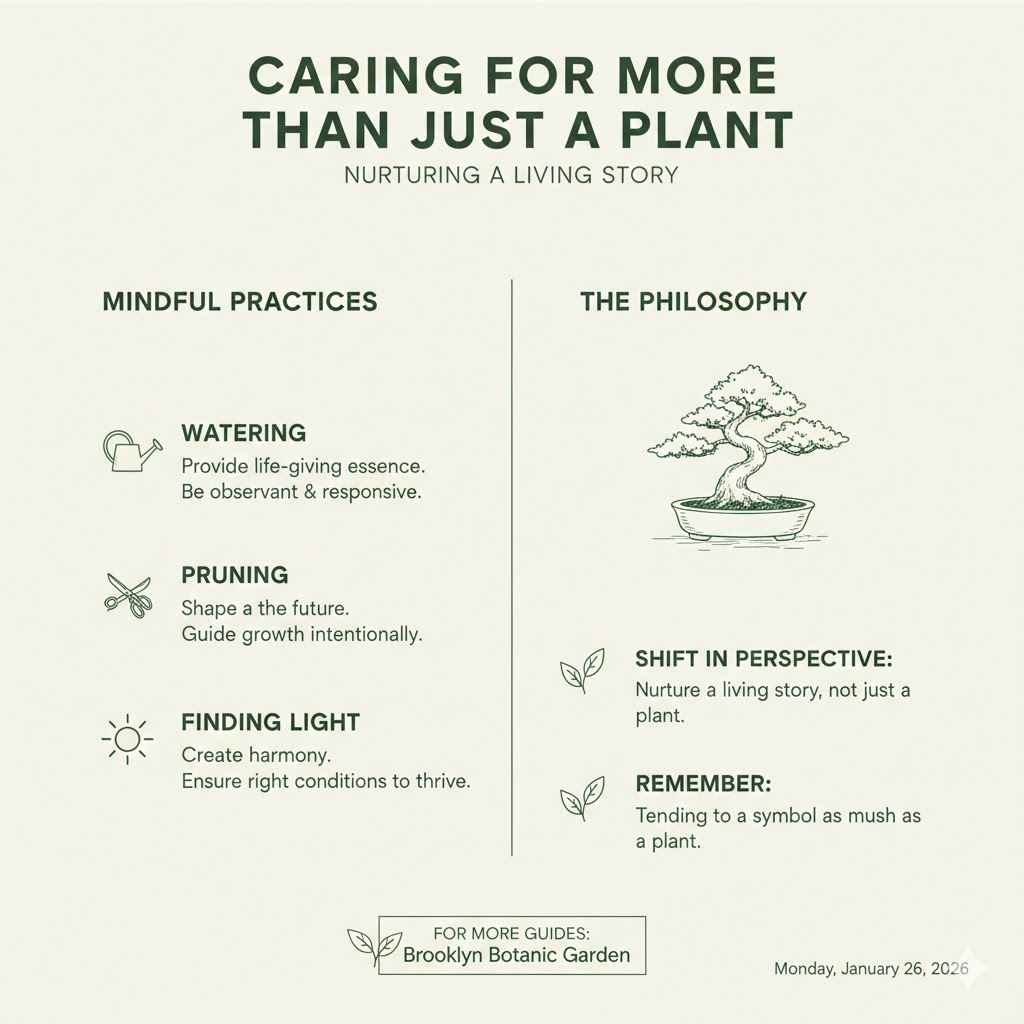
When you begin to care for your bonsai, try to approach each task with intention. You are not just performing maintenance; you are nurturing a living story. This shift in perspective can transform your entire experience.
Watering is not just about hydration; it’s about providing the life-giving essence that sustains your tree. Pay attention to the soil and water only when needed. This teaches you to be observant and responsive.
Pruning is not just cutting away branches; it’s about shaping the tree’s future and telling its story of resilience. Each cut is a deliberate decision that guides its growth for years to come.
Finding the right light is about creating a harmonious environment where your tree can thrive. It’s a reminder that all living things need the right conditions to reach their full potential.
For more detailed care guides on specific species, resources like the Brooklyn Botanic Garden offer excellent advice for beginners and experts alike. Remember, you are tending to a symbol as much as a plant.
Frequently Asked Questions (FAQ)
What is the main spiritual meaning of a bonsai tree?
The main spiritual meaning of a bonsai tree is harmony between nature, humanity, and the divine. It represents peace, balance, and patience, and is often used as an object of meditation to reflect on life’s journey and our connection to the universe.
Is it bad luck to have a bonsai tree?
No, quite the opposite! In many cultures, especially in Feng Shui, bonsai trees are considered symbols of good luck, fortune, and positive energy. They are believed to bring a sense of calm, peace, and nature’s harmony into the home.
What does gifting a bonsai tree mean?
Gifting a bonsai tree is a very meaningful gesture. It symbolizes respect, love, and a wish for the recipient’s long life, peace, and happiness. Because it requires care and dedication, it is also a gift of a long-term, rewarding journey.
Can any tree be a bonsai?
Theoretically, yes. Almost any tree or shrub species with a woody stem can be grown as a bonsai. The key is to use horticultural techniques like pruning and wiring to keep it small. However, some species, like juniper, maple, and ficus, are more popular because their small leaves and natural growth habits are well-suited for miniaturization.
How long do bonsai trees live?
With proper care, bonsai trees can live for an incredibly long time—often for several hundred years. Some of the oldest bonsai in the world are over 800 years old! Their lifespan is a testament to the dedication of generations of caretakers.
Why are bonsai trees so expensive?
The price of a bonsai tree reflects the amount of time, skill, and artistry invested in it. An older, well-styled tree may have been under careful cultivation for decades. The artist’s expertise, the age of the tree, and the quality of the pot all contribute to its value.
Does a bonsai tree bring good energy?
Yes, according to the principles of Feng Shui, bonsai trees are excellent for bringing positive life energy, or “chi,” into a space. They represent growth, harmony, and the beauty of nature, which helps create a calm and balanced atmosphere in any room.
Your Own Living Legacy
As we’ve discovered, the significance of the bonsai tree goes far beyond its small size. It is a profound symbol of harmony, a teacher of patience, and a bridge to the natural world. It holds within its tiny form the wisdom of centuries and the story of a unique partnership between a person and a plant.
Owning a bonsai is more than a hobby; it’s an invitation to slow down, to appreciate the quiet beauty of growth, and to create something that is both living and a work of art. Whether you are seeking a touch of tranquility for your home, a new mindfulness practice, or a living heirloom to pass down through your family, the bonsai offers a rich and rewarding journey.
I hope this guide has revealed the vital secret of the bonsai for you. Now, you can look at these miniature marvels not just as tiny trees, but as keepers of a powerful and peaceful story. Perhaps it’s time to start writing a story of your own.