
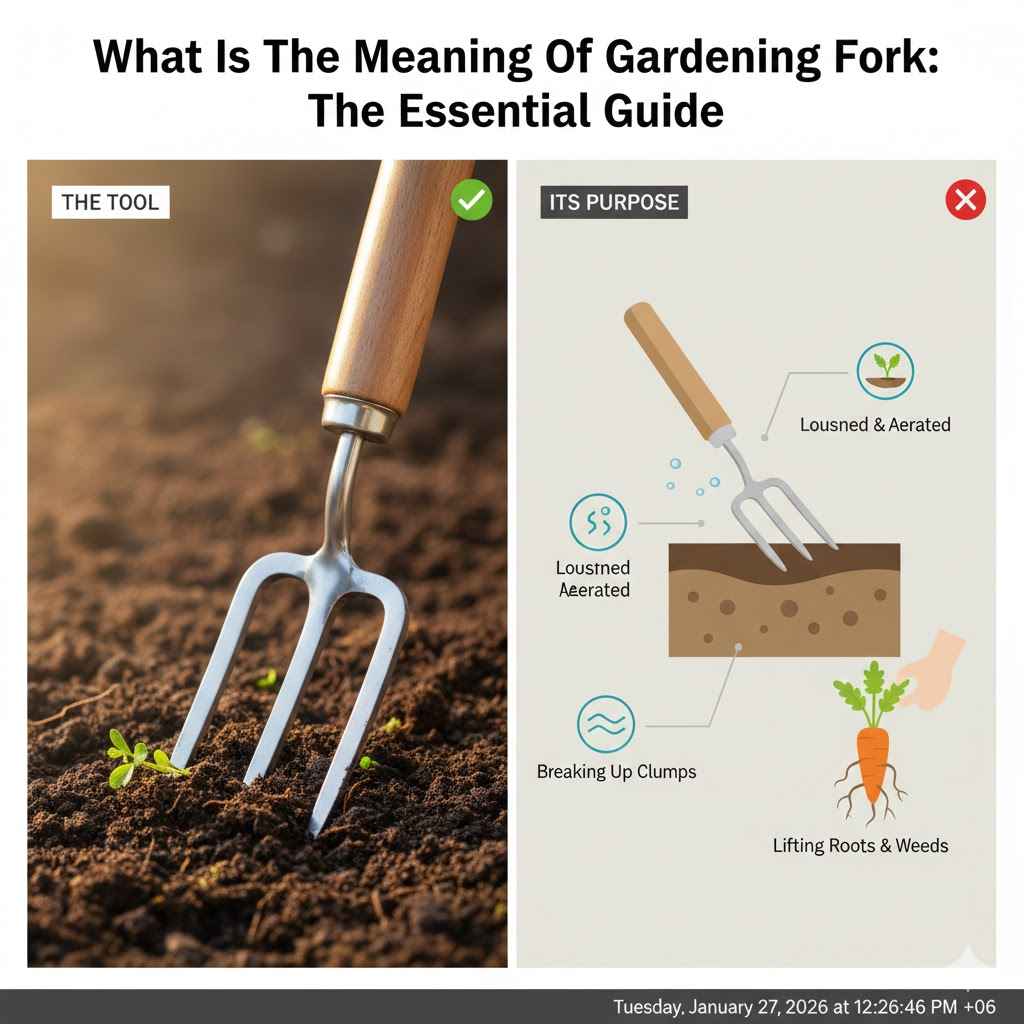
A gardening fork is a sturdy tool with strong, thick prongs (tines) designed for breaking up, loosening, and aerating compacted or rocky soil. Unlike a pitchfork used for lifting hay, a garden fork is essential for heavy-duty digging, turning compost piles, and preparing garden beds where a spade might struggle.
Hello, fellow gardeners! My name is Md Saiful Islam, and I’m here to help you grow with confidence. Have you ever stood in a garden store, looked at a wall of tools, and felt a little overwhelmed? You see a spade, a shovel, and something that looks like a giant dinner fork. That’s the gardening fork, and it’s one of the most misunderstood yet valuable tools you can own. Many beginners skip it, thinking a spade does it all. But they soon find themselves struggling with hard, clay-like, or rocky ground.
Don’t worry! I’m going to clear up all the confusion. In this guide, we’ll explore the meaning of a gardening fork, why it’s a gardener’s best friend, and how to use it to make your work easier and your garden healthier. Let’s dig in!
Understanding the Core Purpose of a Garden Fork
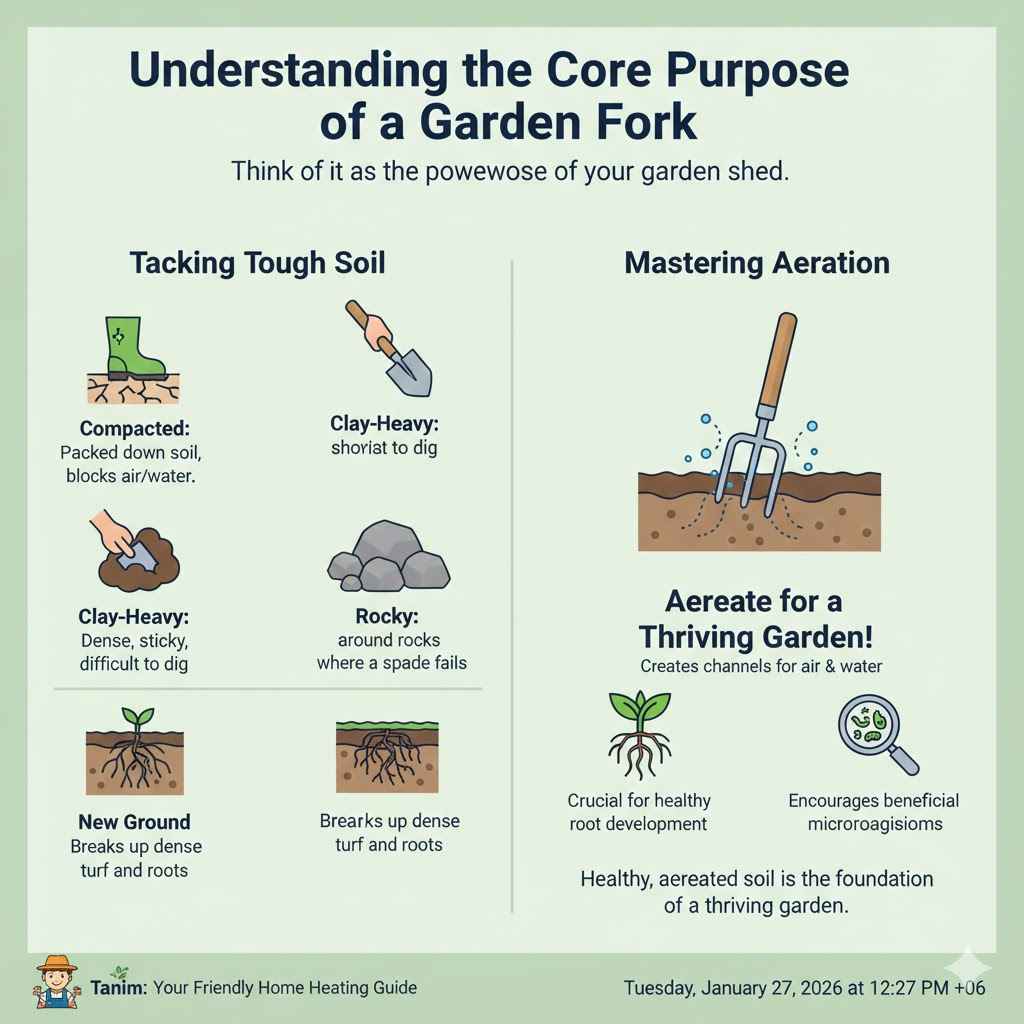
So, what is the meaning of a gardening fork in a practical sense? Think of it as the powerhouse of your garden shed. Its main job is to tackle the tough stuff. While a spade is great for slicing through soft soil and creating clean edges, a garden fork excels at brute force and aeration.
Its primary purpose is to penetrate and break apart soil that is:
- Compacted: Soil that has been packed down by foot traffic or heavy rain, preventing water and air from reaching plant roots.
- Clay-Heavy: Dense, sticky clay soil is notoriously difficult to dig with a spade, which often gets stuck. A fork’s tines can pry it apart.
- Rocky: A spade will hit a rock and stop dead. A fork’s tines can often work around the rocks, loosening the soil between them.
- Untouched or New Ground: When you’re starting a new garden bed in an area that was previously lawn, a fork is perfect for breaking up the dense network of turf and roots.
Beyond just digging, it’s a master of aeration. Pushing the fork into the ground and gently rocking it back and forth creates channels for air and water to penetrate deep into the soil. This process is crucial for healthy root development and encourages beneficial microorganisms. A healthy, aerated soil structure is the foundation of a thriving garden.
Garden Fork vs. Pitchfork: A Critical Distinction
One of the most common points of confusion for new gardeners is the difference between a garden fork and a pitchfork. Using the wrong one can lead to frustration and a broken tool. They may look similar from a distance, but their design and purpose are completely different.
A garden fork is built for digging into the earth. Its tines are thick, strong, and relatively blunt. They are usually square or rectangular in cross-section to withstand the pressure of prying up soil and rocks. A pitchfork, on the other hand, is designed for lifting and moving light, loose materials like hay, straw, or mulch. Its tines are thin, widely spaced, and often sharp to easily pierce the material without getting stuck.
Here’s a simple table to highlight the key differences:
| Feature | Gardening Fork | Pitchfork |
|---|---|---|
| Primary Use | Digging, aerating, and turning soil | Lifting and moving light materials (hay, straw, mulch) |
| Tines (Prongs) | Thick, strong, and square or flat | Thin, sharp, and round |
| Number of Tines | Typically 4 | Typically 2 to 12, depending on the type |
| Tine Shape | Slightly curved, built for leverage | Often very curved or “scooped” to hold material |
| Durability | Extremely strong, designed for heavy force | Lighter and more flexible; will bend or break if used for digging |
Remember: Never try to dig in the soil with a pitchfork. The tines will almost certainly bend or snap, and you could injure yourself.
The Different Types of Gardening Forks and Their Jobs
Just like there are different types of screwdrivers for different screws, there are several kinds of gardening forks, each designed for a specific task. Understanding them will help you choose the right tool for the job, making your gardening much more efficient and enjoyable.
1. The Digging Fork (The All-Rounder)
This is the classic garden fork and the one most people refer to. It typically has four thick, strong tines that are square or rectangular. This is your go-to tool for breaking up new ground, turning over large areas of soil in the spring or fall, and double-digging. It’s also fantastic for incorporating compost or manure into your garden beds and for harvesting root vegetables like potatoes and carrots.
- Best for: Breaking compacted soil, turning compost, general digging.
- Tines: 4, thick and strong.
2. The Border Fork (The Precision Tool)
A border fork is essentially a smaller, lighter version of the digging fork. As its name suggests, it’s designed for working in established flower beds or vegetable borders where you need more precision. Its smaller head and shorter shaft allow you to work between existing plants without damaging their root systems. It’s perfect for loosening soil around shrubs, weeding in tight spaces, and lifting perennials for division.
- Best for: Working in tight spaces, aerating soil around existing plants.
- Tines: 4, slightly smaller and lighter than a digging fork.
3. The Compost or Manure Fork (The Lifter)
This fork is designed for moving bulky, loose materials, not for digging. It has more tines than a digging fork (usually 5 to 6), and they are thinner and more curved, forming a “scoop” shape. This design makes it easy to pick up large amounts of compost, manure, mulch, or leaves without them falling through the tines. It is the perfect tool for turning your compost pile to aerate it or for spreading mulch over your garden beds.
- Best for: Moving compost, mulch, manure, and other light materials.
- Tines: 5+, thinner and curved.
4. The Potato Fork (The Gentle Harvester)
This is a specialized fork designed to make harvesting potatoes and other root crops a breeze. Its key feature is the shape of its tines. They are usually flat or have blunt, ball-like tips. This clever design allows you to lift the vegetables out of the ground without piercing or bruising them, which is a common problem when using a sharp digging fork or spade. If you grow a lot of potatoes, this tool is a game-changer.
- Best for: Harvesting potatoes and other root vegetables without damage.
- Tines: 4+, blunt or ball-tipped.
5. The Hand Fork (The Detailer)
A hand fork is a small, handheld tool that belongs in every gardener’s tool bucket. It’s perfect for detailed work in small areas. Use it for weeding between plants, loosening soil in pots and containers, aerating the surface around seedlings, and planting small bulbs. It’s essentially a miniature version of a digging fork that you can use with one hand.
- Best for: Weeding, planting small bulbs, working in containers.
- Tines: Typically 3, small and strong.
Here is a summary table to help you decide which fork you need:
| Fork Type | Primary Function | Ideal Environment | Key Feature |
|---|---|---|---|
| Digging Fork | Heavy-duty soil breaking & turning | New beds, compacted soil, compost piles | 4 thick, strong tines |
| Border Fork | Loosening soil in tight spaces | Established flower beds, between plants | Smaller and lighter than a digging fork |
| Compost Fork | Lifting and moving loose materials | Compost bins, mulch piles | 5+ scooped tines |
| Potato Fork | Harvesting root crops | Vegetable patches with potatoes, carrots | Blunt or ball-tipped tines |
| Hand Fork | Weeding and container gardening | Pots, window boxes, small garden areas | Small, handheld design |
How to Use a Gardening Fork Correctly and Safely
Using a garden fork is simple, but a good technique will save your back and get the job done more effectively. Let’s walk through the steps for using a standard digging fork to turn over a patch of soil.
- Stand Correctly: Position yourself facing the area you want to dig. Stand with your feet about shoulder-width apart for a stable base.
- Insert the Fork: Hold the fork handle with both hands. Place the tines on the ground and push them straight down into the soil. Use your body weight. If the ground is hard, you can place your foot on the top of the fork’s head (the crown) and press down firmly.
- Leverage is Key: Once the tines are fully inserted, pull the handle back towards you. This uses the principle of leverage to break apart and loosen the chunk of soil. You will feel the ground give way. Avoid yanking or twisting, as this can strain your back. Let the tool do the work.
- Lift and Turn: With the soil loosened, lift the clump with the fork. In one smooth motion, turn the fork over to deposit the soil upside down a little ahead of you. This buries any surface weeds and aerates the soil.
- Repeat in a Rhythm: Take a small step back and repeat the process, working your way backward across the garden bed. This prevents you from walking on and re-compacting the soil you just loosened.
Essential Safety Tips
Gardening should be relaxing, not risky! Always keep safety in mind.
- Wear Sturdy Shoes: Always wear closed-toe shoes or boots to protect your feet, especially when pressing down on the fork.
- Bend Your Knees: When lifting, bend at your knees, not your waist. This protects your lower back from strain.
- Know Your Limits: Don’t try to lift a clump of soil that is too heavy. It’s better to break it into smaller, more manageable pieces.
- Keep Tools Clean: Clean the soil off your fork after each use. This prevents rust and stops the spread of soil-borne diseases.
- Store Properly: Store your fork in a dry place, with the tines pointing down or against a wall to prevent accidental injury.
Why a Garden Fork Can Be Better Than a Spade
While a spade is an indispensable tool, there are many situations where a garden fork is not just a good choice, but a superior one. The main advantage lies in how it interacts with the soil.
A spade acts like a knife, slicing through the soil. This is great for creating sharp edges or digging planting holes in soft ground. However, in hard, compacted, or rocky soil, this slicing action works against you. A spade can compact clay soil further as it’s pushed in, and it will jar your arms when it hits a rock.
A fork, on the other hand, acts like a comb. Its tines can:
- Penetrate Hard Ground More Easily: The four points of pressure make it easier to push into compacted soil than the single wide edge of a spade.
- Work Around Obstacles: Tines can find paths of least resistance, moving around rocks and tough roots that would stop a spade.
- Preserve Soil Structure: Loosening the soil rather than slicing it is much gentler on the overall soil structure. According to many agricultural experts, like those at the Penn State Extension, maintaining good soil structure is vital for drainage and root health. A fork helps with this by not creating hard “slices” in the soil profile.
- Protect Earthworms: A fork is less likely to harm the earthworm population, which is crucial for natural soil aeration and fertility.
- Aerate Effectively: The very action of pushing the fork in and loosening the soil introduces vital air pockets deep into the ground.
The best approach for any gardener is to have both a good spade and a good digging fork. Use the fork to do the initial heavy breaking and aeration, and then use the spade for finer work like shaping the bed and digging individual holes.
Choosing the Right Gardening Fork for You
When you’re ready to buy a garden fork, you’ll find a range of options. Here’s what to look for to ensure you get a tool that will last a lifetime.
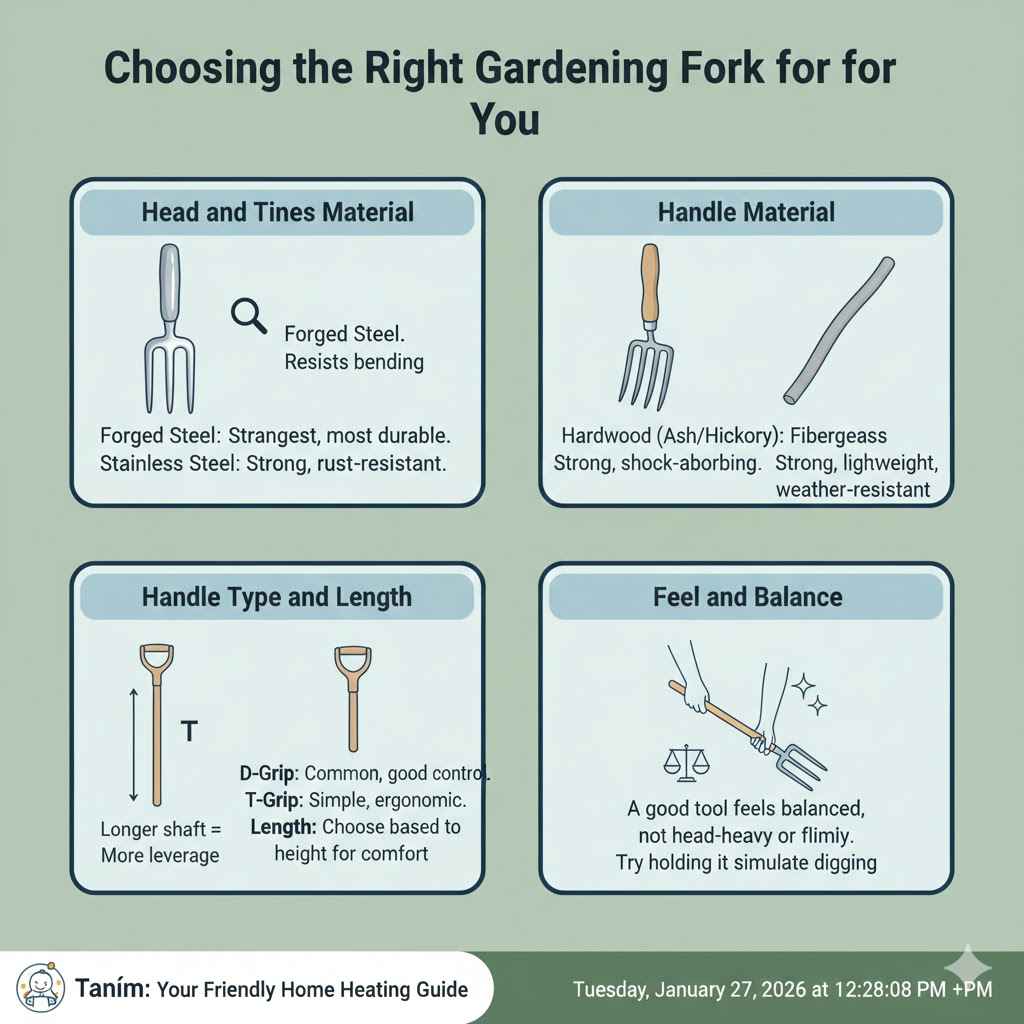
- Head and Tines Material: This is the most important part. Look for a fork with a head made of “forged” steel. Forging is a process that makes the metal incredibly strong and durable. Cheaper forks with stamped or welded heads are much more likely to bend or break under pressure. Stainless steel is an excellent option as it is strong and highly resistant to rust, but forged carbon steel is often considered the strongest.
- Handle Material: Traditional handles are made from hardwoods like ash or hickory. They are strong, durable, and absorb shock well. Modern handles are often made of fiberglass, which is very strong, lightweight, and weather-resistant. The choice is often personal preference.
- Handle Type and Length: The handle will typically end in a D-grip or a T-grip. The D-grip is the most common and offers good control for turning and lifting. The length of the shaft should feel comfortable for your height. Try holding it in the store to see what feels right. A longer shaft provides more leverage but can be heavier.
- Feel and Balance: A good tool should feel balanced in your hands. It shouldn’t feel too heavy at the head or too flimsy in the shaft. Pick it up and simulate a digging motion. A well-balanced tool will feel like an extension of your body and will cause less fatigue.
Frequently Asked Questions (FAQ)
What is the difference between a garden fork and a pitchfork?
A garden fork has thick, strong tines for digging into soil. A pitchfork has thin, sharp tines for lifting light materials like hay or straw. Never use a pitchfork for digging, as it will break.
Can I use a garden fork to remove weeds?
Yes, absolutely! A garden fork is excellent for removing deep-rooted weeds like dandelions or thistle. The tines can loosen the soil deep around the root, allowing you to pull the entire weed out without breaking it.
How do I clean and maintain my garden fork?
After each use, scrape off any mud with a wire brush or putty knife. Wash it with water and dry it thoroughly with an old rag to prevent rust. Once a year, you can lightly sand any rough spots on the wooden handle and rub it with boiled linseed oil to keep it from cracking.
Is a stainless steel or carbon steel fork better?
Both are excellent choices. Stainless steel is highly rust-resistant and stays clean easily. Forged carbon steel is often slightly stronger and can hold a sharper edge if needed, but it will rust if not kept dry and clean. For most gardeners, a good quality stainless steel fork is a perfect, low-maintenance option.
What is a border fork used for?
A border fork is a smaller, lighter version of a digging fork. It’s designed for working in tight spaces, such as between plants in an established flower bed, without damaging them. It’s great for light cultivation and aeration in crowded areas.
Why are the tines on my garden fork square?
The square or rectangular shape of the tines provides maximum strength and rigidity. This shape prevents them from bending or twisting when you apply pressure to pry up heavy, compacted soil or rocks. Round tines, like those on a pitchfork, would bend easily under such force.
When should I use a spade instead of a fork?
Use a spade for tasks that require a clean, slicing cut. This includes creating new bed edges, skimming off turf, digging planting holes in soft soil, and dividing perennials. Use a fork for breaking up hard, compacted, or rocky ground and for general soil aeration.
Conclusion: Your Garden’s Best Friend
The garden fork is far more than just a big fork for the dirt. It is a fundamental tool that makes the toughest gardening jobs manageable. Understanding the meaning of a gardening fork is understanding its power to transform your soil from a hard, lifeless block into a loose, aerated, and welcoming home for your plants‘ roots.
From breaking new ground with a sturdy digging fork to gently weeding with a hand fork, there is a version of this tool for nearly every task. By choosing the right one and using it correctly, you not only save your back but also create a healthier foundation for your entire garden. A good fork is an investment that will pay you back with every clump of soil you turn and every healthy plant you grow.
So, the next time you’re facing a patch of stubborn ground, don’t struggle with a spade. Reach for your garden fork, and you’ll find that the work becomes not just easier, but truly rewarding. Happy gardening!