

The benefits of a bonsai tree extend far beyond its small size. It acts as a natural air purifier, a powerful stress reliever through its meditative care, and a long-term hobby that fosters patience and creativity. This living art form enhances your home’s beauty and connects you with nature in a unique and rewarding way.
Have you ever admired a beautiful bonsai tree and wondered what it’s like to own one? These miniature trees are more than just tiny plants in a pot. They are living works of art that bring a sense of peace and nature into our homes. Many people feel intimidated, thinking bonsai care is too complicated. But I’m here to tell you that anyone can enjoy this wonderful hobby.
Caring for a bonsai is a journey, not a chore. It offers incredible rewards for your mind, body, and home environment. In this guide, I will walk you through the five most important benefits of having a bonsai tree. We’ll explore how this simple plant can reduce stress, clean your air, and unlock your creativity. Let’s get started and discover the magic of bonsai together!
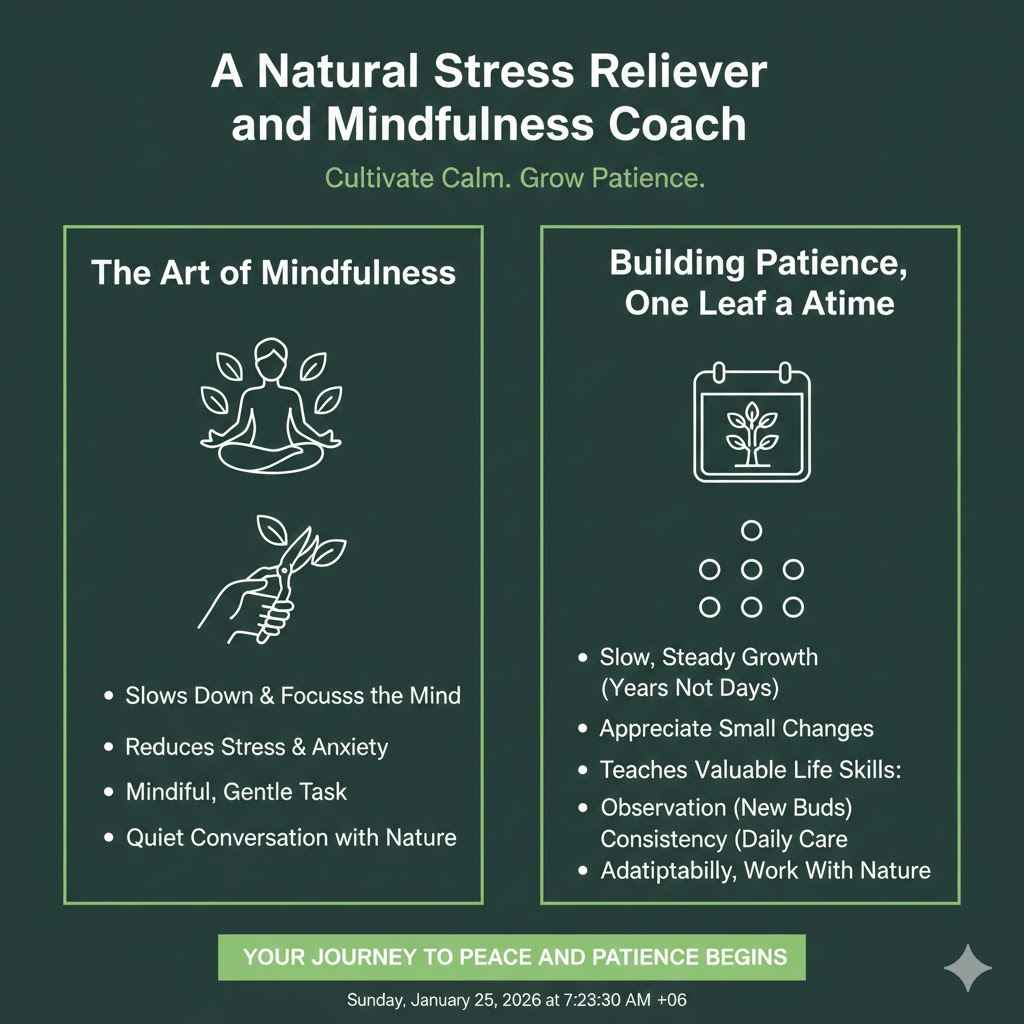
A Natural Stress Reliever and Mindfulness Coach
In our busy world, finding a quiet moment can be tough. The art of bonsai offers a perfect escape. Caring for a tiny tree is a wonderfully meditative process. It encourages you to slow down, breathe, and focus on a simple, gentle task. When you are pruning a branch or watering the soil, your mind is cleared of daily worries. This practice of being present is the heart of mindfulness.
Each action you take—from trimming leaves to shaping branches with wire—requires your full attention. This focused activity helps lower stress and anxiety. It’s a quiet conversation between you and your tree. You learn to listen to its needs and respond with gentle care. This connection to a living thing brings a deep sense of calm and accomplishment.
Building Patience One Leaf at a Time
Bonsai is not about instant results. It is the ultimate teacher of patience. A tree takes years, sometimes decades, to mature into the vision you have for it. This slow, steady process teaches you to appreciate small changes and celebrate gradual progress. In a world that demands everything now, bonsai reminds us of the beauty in waiting and nurturing.
This hobby helps you develop skills that are valuable in all parts of life:
- Observation: You learn to notice the smallest details, like a new bud or a change in leaf color.
- Consistency: Your tree depends on you for regular watering and care. This builds a routine of responsibility and dedication.
- Adaptability: Sometimes, the tree has its own ideas. You learn to adapt your plans and work with nature, not against it.
By investing your time and care into a bonsai, you are also investing in your own mental well-being. It becomes a peaceful ritual that grounds you and brings a little piece of nature’s tranquility into your day.
An Effective Indoor Air Purifier
We often think of our homes as safe havens, but indoor air can contain pollutants from furniture, cleaning products, and electronics. Houseplants are nature’s air filters, and bonsai trees are no exception. They work quietly in the background to improve the air you breathe every day.
Like other plants, bonsai trees absorb carbon dioxide and release fresh oxygen through photosynthesis. But they do more than that. According to research, including famous studies conducted by NASA, plants can also absorb common household toxins like formaldehyde, benzene, and trichloroethylene from the air. The U.S. Environmental Protection Agency (EPA) also confirms that indoor plants can be part of a strategy for cleaner indoor air.
Placing a bonsai in your living room, bedroom, or office can contribute to a healthier environment. While one small tree won’t purify an entire house, it will certainly improve the air quality in its immediate vicinity. It’s a beautiful, living air purifier that asks for very little in return.
Common Indoor Pollutants and How Bonsai Can Help
Here’s a simple table showing some common toxins found in homes and how plants like bonsai can help reduce them.
| Pollutant | Common Sources | How Plants Help |
|---|---|---|
| Formaldehyde | Carpets, particleboard furniture, cleaning supplies | Absorbed through the leaves and neutralized |
| Benzene | Plastics, detergents, paints, tobacco smoke | Filtered out of the air by the plant’s natural processes |
| Trichloroethylene | Adhesives, paint removers, spot removers | Broken down by microbes in the soil and roots |
| Xylene | Markers, printers, rubber, leather | Removed from the atmosphere via leaf absorption |
Adding a bonsai to your space is an easy and beautiful step toward a healthier home. It’s a small change that can make a big difference in your daily environment.
A Lifelong Hobby and a Living Legacy
Many hobbies come and go, but bonsai is a journey that can last a lifetime. Unlike a painting or a sculpture, a bonsai is a living piece of art that is never truly finished. It grows and changes with the seasons and evolves with your care. This makes it an incredibly rewarding and engaging long-term pursuit.
When you start with a young bonsai, you are at the beginning of a long and beautiful relationship. You will watch it develop from a sapling into a mature, character-filled tree. Every pruning cut and wiring choice you make adds to its story. Over the years, your tree becomes a reflection of your dedication and artistic vision.
Some bonsai trees are passed down through generations, becoming treasured family heirlooms. There are trees in Japan that are over 800 years old! The National Bonsai & Penjing Museum in Washington, D.C., houses a Japanese white pine that survived the atomic bomb at Hiroshima and was later gifted to the United States. These trees carry history within their branches. Your bonsai can become a living legacy that connects your family to nature for years to come.
Choosing a Tree for Your Journey
Starting with the right tree is key to a successful bonsai hobby. Some species are much more forgiving for beginners. Here are a few popular choices:
- Ficus (Ficus retusa): Extremely resilient and great for indoors. It tolerates low light and occasional over-watering, making it a perfect first tree.
- Juniper (Juniperus procumbens nana): A classic outdoor bonsai choice. It’s hardy, easy to shape, and develops beautiful, rugged-looking bark.
- Chinese Elm (Ulmus parvifolia): A versatile tree that can be grown indoors or outdoors. It has small leaves and a nice branching structure, making it ideal for the miniature look.
This hobby doesn’t require a huge investment to start. A simple starter tree and a few basic tools are all you need to begin a relationship that will bring you joy for many, many years.
A Wonderful Outlet for Creativity and Artistry
Bonsai is where horticulture meets art. It gives you a living medium to express your creativity. Shaping a bonsai tree is like being a sculptor, but your material is alive and growing. You decide which branches to keep, which to remove, and how to guide their growth to create a beautiful, naturalistic form.
There are many traditional bonsai styles, each mimicking a way that trees grow in nature. For example, the “Formal Upright” style has a straight, tapering trunk, while the “Cascade” style depicts a tree growing down the side of a mountain. You can choose to follow these styles or develop your own unique vision.
This creative process is deeply satisfying. It involves both planning and spontaneity. You might have a long-term vision for your tree, but you also have to respond to how it grows each season. It’s a collaboration with nature that results in a one-of-a-kind masterpiece that is entirely your own.
The Basic Tools for Your Artistic Expression
You don’t need a lot of fancy equipment to get started. Here are the three essential tools for any beginner bonsai artist:
- Concave Pruners: These special cutters make a hollowed-out cut that heals quickly and leaves a less visible scar. They are perfect for removing branches cleanly.
- Bonsai Shears: Think of these as fine-tipped scissors. They are used for trimming small twigs, leaves, and buds with precision.
- Anodized Aluminum Wire: This soft wire is used to gently bend and position branches. It’s easy for beginners to work with and won’t damage the bark if applied correctly.
As you get more involved, you can add more specialized tools, but these three are all you need to begin shaping your living sculpture. Unleashing your inner artist through bonsai is a uniquely rewarding experience.
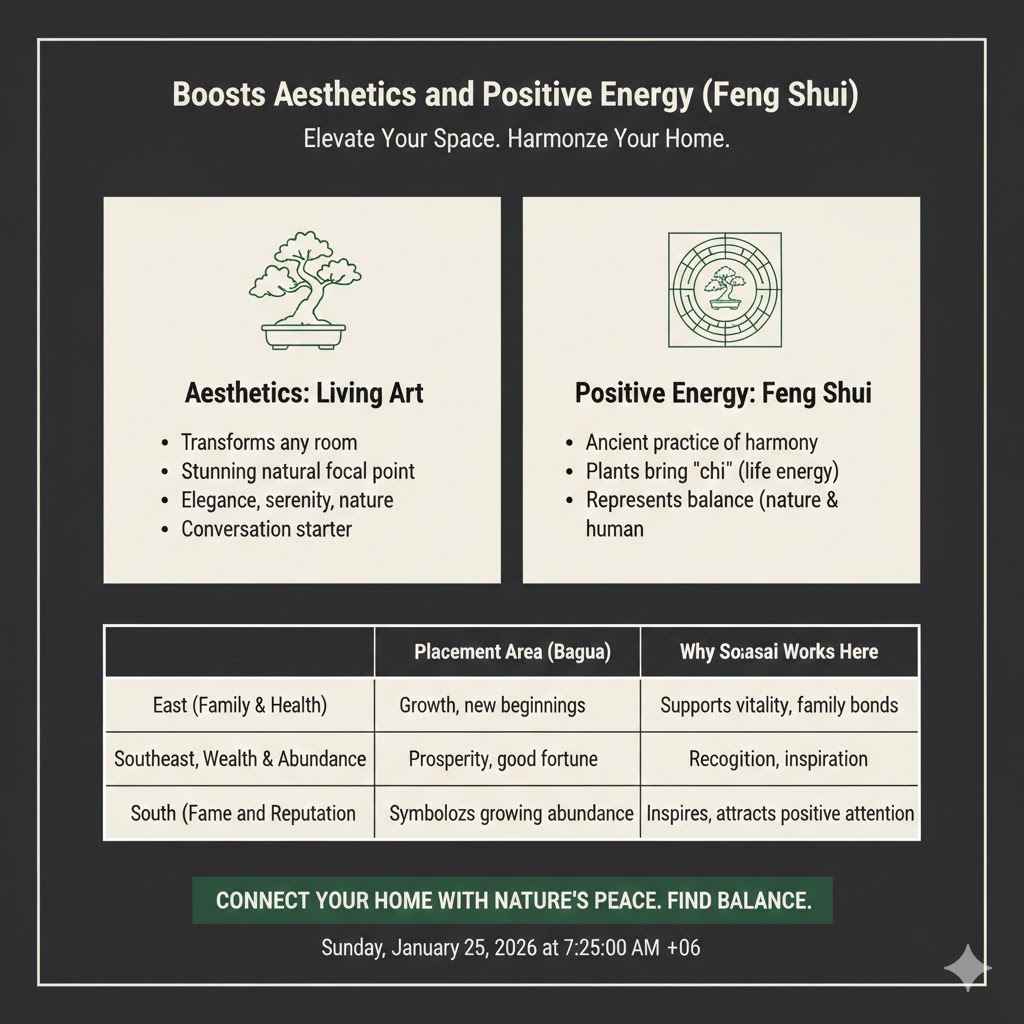
Boosts Aesthetics and Positive Energy (Feng Shui)
A well-placed bonsai tree can transform the look and feel of any room. It serves as a stunning natural focal point, bringing elegance, serenity, and a touch of nature indoors. A bonsai tree is more than just a decoration; it’s a conversation starter and a piece of living art that adds character and sophistication to your home or office.
Beyond its visual appeal, the bonsai tree holds a special place in the ancient practice of Feng Shui. In this philosophy, living plants bring “chi,” or positive life energy, into a space. Bonsai trees are particularly valued because they represent a harmonious balance between nature and human effort.
According to Feng Shui principles, placing a bonsai tree in certain areas of your home can attract different kinds of positive energy:
| Placement Area (Bagua) | Associated Energy | Why Bonsai Works Here |
|---|---|---|
| East (Family & Health) | Growth, new beginnings, health | The tree’s living energy supports vitality and family bonds. |
| Southeast (Wealth & Abundance) | Prosperity, wealth, good fortune | A thriving plant symbolizes growing abundance. |
| South (Fame & Reputation) | Recognition, inspiration, passion | The beauty and artistry of the bonsai can inspire and attract positive attention. |
Whether you follow Feng Shui or simply appreciate good design, a bonsai tree adds a powerful element of natural beauty to your surroundings. It connects your indoor space with the calming, grounding energy of the great outdoors. It’s a simple way to make your home feel more balanced, peaceful, and alive.
Frequently Asked Questions (FAQ)
1. Are bonsai trees hard to take care of for a beginner?
Not at all! The key is to choose a beginner-friendly species like a Ficus or Chinese Elm. These trees are very forgiving. The most important thing is learning the basics of watering correctly—not too much, not too little. With a little consistency, anyone can succeed.
2. Can bonsai trees live indoors?
Yes, many types of bonsai can thrive indoors. Tropical and subtropical species, such as Ficus, Jade, and Schefflera (Dwarf Umbrella Tree), are excellent choices for indoor growing because they don’t require a cold winter dormancy period.
3. How often should I water my bonsai tree?
There is no fixed schedule. You should water your bonsai when the top inch of soil feels dry to the touch. The frequency will depend on the tree species, pot size, soil type, and the environment (light, humidity). It’s always best to check the soil first.
4. How long do bonsai trees live?
With proper care, bonsai trees can live for an incredibly long time—often much longer than their full-sized counterparts in the wild. It’s not uncommon for a well-cared-for bonsai to live for over 100 years and be passed down through generations.
5. Do I need to use special bonsai fertilizer?
Yes, using a fertilizer formulated for bonsai is recommended. Because they are grown in small pots, their soil has limited nutrients. Regular, gentle feeding during the growing season (spring and summer) is essential to keep your tree healthy and vibrant.
6. Is it cruel to keep a tree in a small pot?
This is a common misconception. Bonsai is a horticultural art form that respects the tree. Through careful root pruning and providing all necessary nutrients and water, a bonsai tree can live a long and healthy life. The practice does not harm the tree; it is a form of attentive cultivation.
Conclusion: Your Journey with a Tiny Tree Awaits
As we’ve seen, the benefits of a bonsai tree are as deep as its roots. It is so much more than a simple houseplant. It is a companion that teaches you patience, a natural tool for reducing stress, and a living sculpture that allows you to express your creativity. It purifies the air you breathe and adds a touch of timeless elegance to your home.
Don’t be afraid to start your own bonsai journey. Begin with a simple, forgiving tree and enjoy the process of learning and growing together. The connection you build with your tiny tree will provide you with a sense of peace, accomplishment, and a lasting connection to the natural world. Happy growing!