
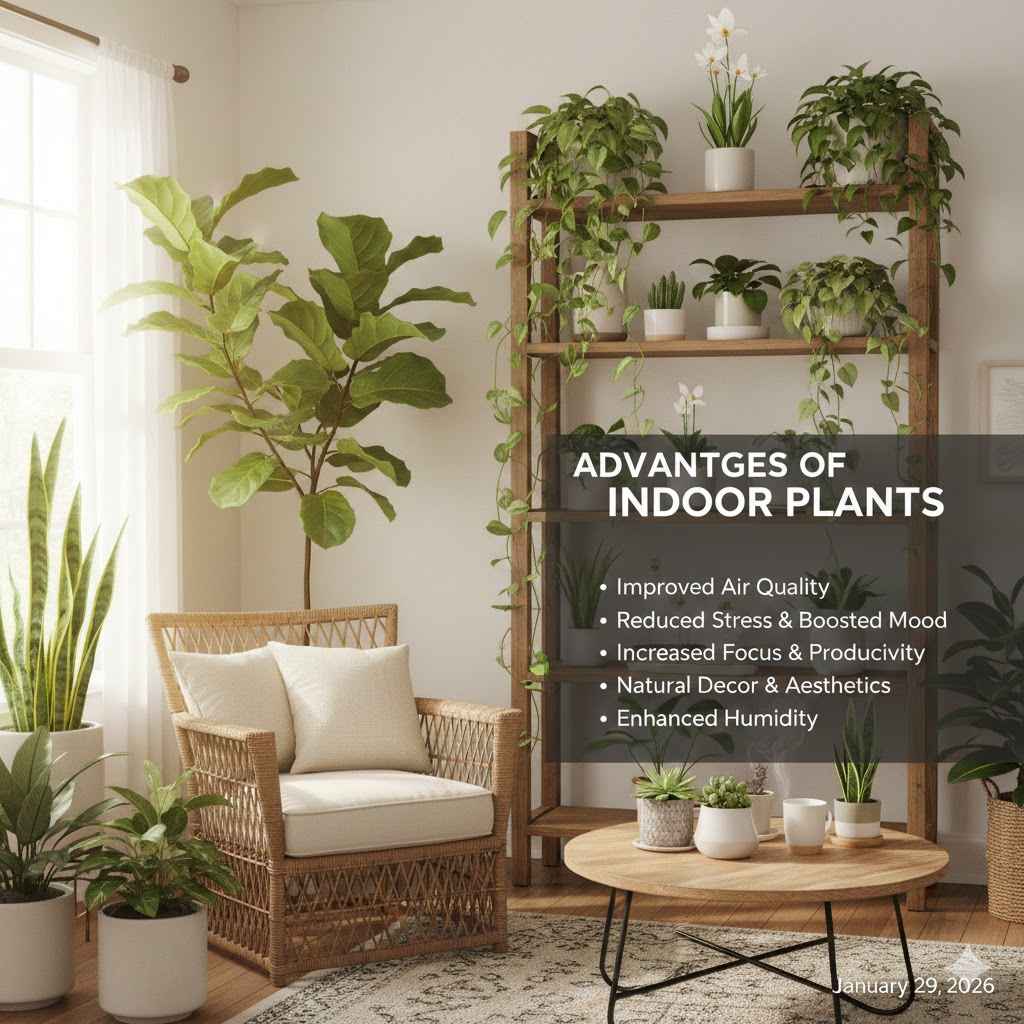
Quick Summary Indoor plants at home offer many advantages, including cleaner air by removing toxins, lower stress levels, better mood and focus, increased productivity, and a beautiful, natural touch to your living space. They make your home healthier and happier with little effort.
Do you spend a lot of time indoors? Many of us do, especially in busy homes or during bad weather. Poor air, stress, and dull rooms can make you feel tired or down. The good news is simple: adding indoor plants can change that. These green friends clean the air a bit, calm your mind, and make your home feel alive and welcoming. In this guide, I will show you the real advantages of having indoor plants at home. You will see why they help your health, mood, and space. Let’s explore the benefits step by step so you can start enjoying them today.
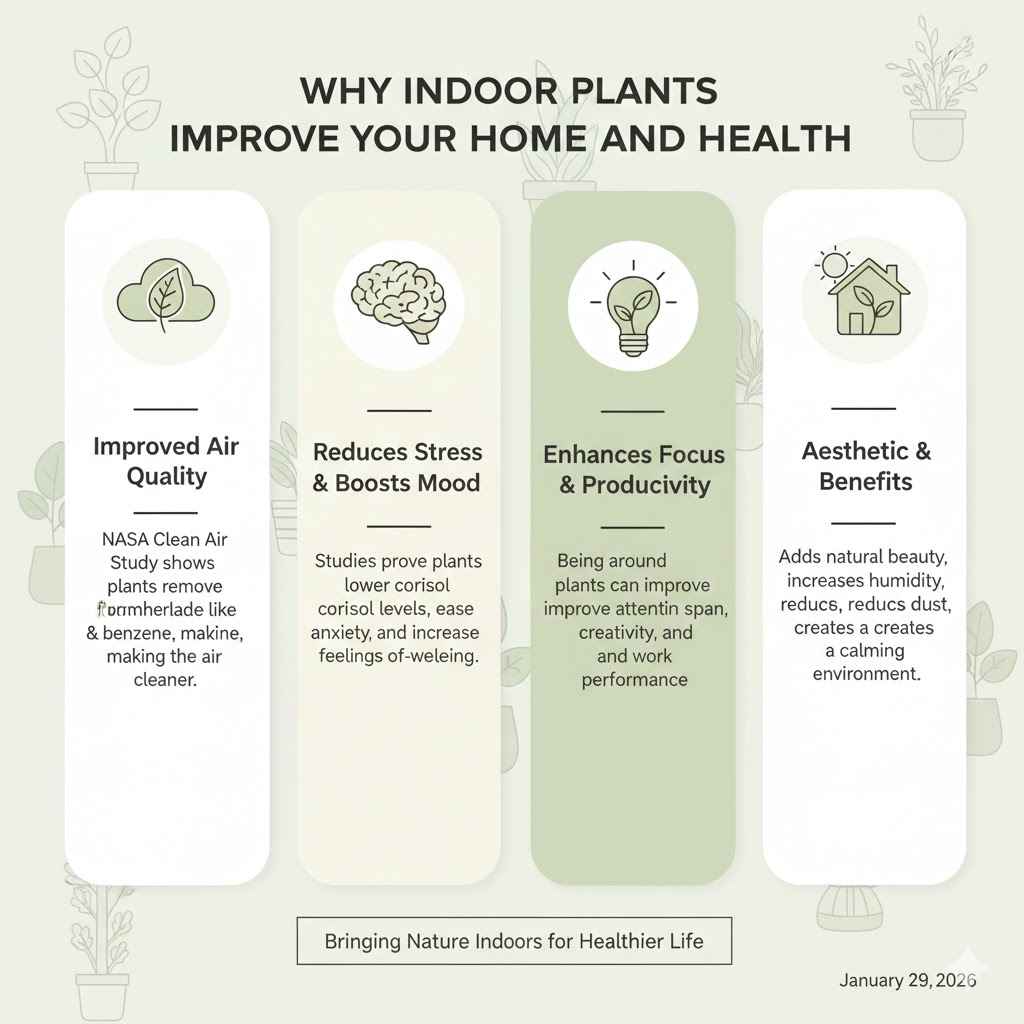
Why Indoor Plants Improve Your Home and Health
Indoor plants bring nature inside. They do more than look pretty. Research shows they help in many ways. From the famous NASA Clean Air Study, we know some plants remove harmful chemicals from the air. Other studies prove they ease stress and boost happiness.
Let’s look at the main advantages one by one.
Better Indoor Air Quality
Modern homes have paints, furniture, and cleaners that release chemicals like formaldehyde and benzene. These are volatile organic compounds (VOCs). They can cause headaches or tired feelings.
Plants act as natural filters. Through their leaves and roots, they absorb some toxins and release fresh oxygen. The NASA study found plants like peace lilies and snake plants help remove these pollutants in closed spaces.
Even in regular homes, plants add moisture to dry air. This helps with dry skin and breathing. While you need many plants for big changes, even a few make the air feel fresher.
Table: Common Indoor Pollutants and Plants That Help Reduce Them
| Pollutant | Sources in Home | Helpful Plants | Benefit |
|---|---|---|---|
| Formaldehyde | Paints, furniture, carpets | Peace Lily, Spider Plant, Boston Fern | Removes up to 50-90% in studies |
| Benzene | Smoke, plastics, detergents | Snake Plant, English Ivy, Dracaena | Lowers levels, improves breathing |
| Trichloroethylene | Adhesives, paints, varnishes | Pothos, Philodendron, Areca Palm | Helps filter in sealed rooms |
| Carbon Dioxide | People breathing, cooking | Most plants (e.g., Aloe Vera) | Releases oxygen during day |
Source: Based on NASA Clean Air Study and related research.
Reduced Stress and Better Mental Health
Life can feel busy and tense. Caring for plants or just looking at them helps calm you. Studies show plants lower cortisol (the stress hormone). One study in the Journal of Physiological Anthropology found people felt more relaxed after working with plants.
Being around greenery makes you feel soothed and natural. It cuts anxiety and lifts your mood. For beginners, this is easy to feel — just place a plant nearby and notice how peaceful it makes the room.
Plants also help with focus. In offices or study areas, they reduce mental tiredness. You think clearer and feel happier.
Boost in Productivity and Creativity
Want to get more done at home? Add plants! Research from the University of Exeter showed workers with plants were 15% more productive. They took fewer sick days too.
Plants spark creativity. The green color and living nature inspire new ideas. In your home office or kitchen, they make tasks feel easier and more fun.
List: Ways Plants Boost Productivity
- Improve focus and attention
- Reduce fatigue and headaches
- Increase job satisfaction and mood
- Lower stress for better work flow
- Help you feel more creative
Beautiful Home Decor and Natural Feel
Plants make any room look better. They add color, texture, and life. A plain corner becomes special with a tall palm or trailing pothos.
You can match plants to your style — modern with succulents, cozy with ferns. They soften hard lines from furniture and make spaces feel warm.
Best of all, they connect you to nature. Even in a city home, plants bring the outdoors in.
Other Health Wins
Plants do even more:
- Raise humidity to ease dry throats and skin
- Reduce noise slightly by absorbing sound
- Help recovery — hospital studies show patients heal faster with plants
- Encourage gentle activity — watering and caring builds good habits
These small things add up to a healthier, happier home.
Best Beginner-Friendly Indoor Plants for These Benefits
Start with easy ones. Here are great choices that give good air cleaning and beauty:
- Snake Plant — Tough, low light, great air purifier
- Pothos — Trails beautifully, easy care
- Peace Lily — Pretty flowers, removes toxins
- Spider Plant — Fun babies, safe and simple
- ZZ Plant — Almost no care needed
Pick one or two and watch your home change.
How to Get Started with Indoor Plants
Choose a spot with right light. Water when soil feels dry. Use pots with holes. Talk to your plants — it helps you notice needs!
Start small. One plant can make a difference. Soon you will want more.

FAQ
Do indoor plants really clean the air in my home?
Yes, they help remove some toxins like formaldehyde and benzene. The NASA study showed this in closed spaces. In normal homes, they improve air a little and add oxygen. Many plants work best together.
Can indoor plants reduce my stress?
Yes! Studies show looking at or caring for plants lowers stress hormones and makes you feel calm. They promote relaxed feelings and better mood.
Will plants make me more productive at home?
They can! Research finds plants boost focus, cut fatigue, and raise productivity by up to 15%. Great for home offices.
Are indoor plants good for beginners?
Very good! Easy plants like snake plant or pothos forgive mistakes. They grow well with basic care and give quick wins.
How many plants do I need for benefits?
Start with 1-2 per room. For better air, aim for more over time. Even a few help mood and decor right away.
Do plants help with dry air in winter?
Yes, they release moisture through leaves. This raises humidity and eases dry skin or coughs.
Are there any plants that are not safe for pets or kids?
Some like peace lily can be toxic if eaten. Choose safe ones like spider plant or Boston fern if you have pets.
Conclusion
Indoor plants bring so many advantages to your home. They clean the air gently, ease stress, lift your mood, boost focus, and make your space beautiful. Science backs these benefits, from NASA studies to modern research on well-being.
As your gardening mentor, I encourage you to try it. Pick an easy plant today. Care for it with love. Watch how it grows — and how it makes you feel better. Your home will thank you, and so will your mind and body. Gardening indoors is simple, joyful, and rewarding. You can do this. Start small, enjoy the green, and let nature bring peace to your everyday life.