

To use garden soil effectively, start by preparing your garden bed. Clear any weeds or debris, then spread a 2- to 4-inch layer of garden soil over your existing earth. Mix this new soil into the top 6 to 8 inches of your native soil. This process improves structure and adds vital nutrients for healthy plant growth.
Hello, fellow gardeners! My name is Md Saiful Islam, and I’m here to help you grow a garden you can be proud of. One of the first things you’ll see at a garden center is a big bag labeled “Garden Soil.” It seems simple, right? But using it the wrong way can lead to sad, struggling plants. Many new gardeners feel a little lost when faced with all the different types of soil.
Don’t worry! It’s much easier than it looks. The secret is knowing that garden soil isn’t meant to be used by itself. It’s designed to make your existing garden bed better. In this guide, I’ll walk you through exactly how to use it, step by step. We’ll turn that patch of dirt into a thriving home for your plants. Let’s get our hands dirty!
What Exactly Is Garden Soil?
Before we start digging, let’s clear up what garden soil actually is. Think of it as a soil enhancer, not a standalone product. It’s a special blend created to be mixed with the native soil already in your yard.
Typically, a bag of garden soil contains a mix of:
- Topsoil: The upper layer of earth, which contains some organic matter.
- Organic Matter: This is the good stuff! It includes compost, aged manure, peat moss, or decomposed bark. These ingredients provide nutrients and improve soil structure.
- Fertilizer: Many brands add a small amount of starter fertilizer to give your plants an initial boost.
The goal of garden soil is to improve the texture, fertility, and drainage of your existing ground. It helps break up heavy clay soil or adds substance to sandy soil, creating a balanced environment where plant roots can grow strong.
Garden Soil vs. Potting Mix vs. Topsoil: What’s the Difference?
This is where most beginners get stuck. Using the wrong product can cause big problems. Let’s make it simple. Here is a table to help you understand the key differences.
| Feature | Garden Soil | Potting Mix | Topsoil |
|---|---|---|---|
| Best Use | Amending in-ground garden beds and raised beds. | Containers, pots, and hanging baskets. | Filling holes or leveling areas in the lawn. |
| Composition | Blend of topsoil and heavy organic matter like compost. | Soilless mix of peat moss, perlite, and vermiculite. | Basic screened dirt, may contain clay, sand, or silt. |
| Drainage | Moderate; designed to hold moisture in the ground. | Excellent; designed to drain quickly in a pot. | Varies greatly; can be heavy and dense. |
| Weight | Heavy and dense. | Lightweight and fluffy. | Very heavy and dense. |
The most important rule to remember: Never use garden soil in pots or containers. It is too dense and will compact quickly, suffocating plant roots and preventing water from draining. For any container gardening, always choose a product labeled “Potting Mix.
Preparing Your Garden Bed for Planting
Now for the fun part! Properly preparing your garden bed is the single most important step for success. This is where you create the foundation for a healthy garden. Follow these steps, and you’ll be on the right path.
Step 1: Choose and Clear Your Spot
First, pick a location that gets the right amount of sunlight for the plants you want to grow. Most vegetables and flowering plants need at least 6-8 hours of direct sun each day. Once you have your spot, it’s time to clear it.
- Remove all weeds, grass, rocks, and other debris from the area.
- Make sure you pull weeds out by the root so they don’t grow back.
- Use a sturdy rake to clear away any remaining small stones or clumps of grass.
You want a clean slate to work with. This prevents your new plants from competing with weeds for water and nutrients.
Step 2: Test Your Existing Soil (Optional but Recommended)
You don’t have to do this, but it can save you a lot of guesswork! A simple soil test tells you about your soil’s pH and nutrient levels. Knowing this helps you choose the right amendments and plants.
- DIY Test Kits: You can buy simple test kits at any garden center. They are easy to use and give you a general idea of your soil’s condition.
- Professional Lab Testing: For a more detailed analysis, consider sending a soil sample to your local cooperative extension office. These labs provide precise information and recommendations. You can find your local office through the USDA’s directory.
Don’t worry if your soil isn’t perfect. Almost no one’s is! The whole point of adding garden soil is to improve what you already have.
Step 3: Loosen the Native Soil
Next, you need to loosen the existing soil in your garden bed. Compacted soil makes it hard for plant roots to grow deep and find water. You want to dig down about 8 to 12 inches.
- For small beds, a garden fork or a spade works perfectly. Simply push the tool into the ground and rock it back and forth to break up the soil.
- For larger areas, you might consider renting a rototiller. This machine will do the hard work for you, quickly churning up the soil.
The goal is to create a loose, crumbly texture. This allows roots, water, and air to move freely through the soil.
Step 4: Add and Mix in the Garden Soil
Now it’s time to add your bagged garden soil. Do not just dump it on top! The key is to mix it thoroughly with your native soil.
- Spread a 2- to 4-inch layer of garden soil evenly over the entire loosened bed.
- Use your garden fork, spade, or tiller to mix the new garden soil into the top 6 to 8 inches of your existing soil.
- Work the area until the color and texture are consistent. You shouldn’t see distinct layers of old and new soil.
- Once everything is mixed, rake the surface smooth and level it out.
By blending the two soils together, you create a seamless transition for plant roots. This encourages them to grow down into the native earth, creating stronger, more drought-resistant plants.
How Much Garden Soil Do You Need?
Figuring out how many bags of soil to buy can be tricky. A simple formula can help you calculate the amount you need. You want to find the volume of your garden bed in cubic feet.
Formula: Length (in feet) x Width (in feet) x Depth (in feet) = Cubic Feet of Soil Needed
Remember to convert your desired depth from inches to feet. For a 3-inch layer, you would use 0.25 feet in your calculation (3 ÷ 12 = 0.25).
Here’s a quick reference table for a 3-inch deep layer of garden soil:
| Garden Bed Size (Length x Width) | Cubic Feet Needed | Typical Bags of Soil (1.5 cu. ft. each) |
|---|---|---|
| 4 ft x 4 ft | 4 cubic feet | Approx. 3 bags |
| 4 ft x 8 ft | 8 cubic feet | Approx. 6 bags |
| 5 ft x 10 ft | 12.5 cubic feet | Approx. 9 bags |
It’s always a good idea to buy one extra bag, just in case. You can always use it to top up other areas later!
A Step-by-Step Guide to Planting in Your New Garden Bed
With your garden bed perfectly prepared, you are ready to plant! This is the most rewarding part of the process. Follow these simple steps to give your plants the best possible start.
- Dig the Right Size Hole: Dig a hole that is about twice as wide as the plant’s root ball and just as deep. This gives the roots plenty of loosened soil to spread into.
- Gently Remove the Plant from its Pot: Tip the container on its side and gently tap or squeeze it to loosen the plant. Support the base of the plant with one hand and slide it out. Never pull a plant out by its stem.
- Loosen the Roots: If the roots are tightly wound in a circle (this is called “root-bound”), gently tease them apart with your fingers. This encourages them to grow outward into the new soil instead of continuing to circle.
- Position the Plant: Place the plant in the center of the hole. The top of the root ball should be level with or slightly above the surrounding soil surface. Planting too deep can cause the stem to rot.
- Backfill the Hole: Fill the hole with the amended soil you just prepared. Gently pat the soil down around the root ball to remove any large air pockets. Don’t pack it down too tightly.
- Water Thoroughly: Give your new plant a deep, slow watering right after planting. This helps settle the soil around the roots and reduces transplant shock. Water the base of the plant, not the leaves.
- Add Mulch: Spread a 2- to 3-inch layer of organic mulch (like shredded bark, straw, or compost) around the base of the plant. Keep the mulch an inch or two away from the stem. Mulch helps retain moisture, suppress weeds, and regulate soil temperature.
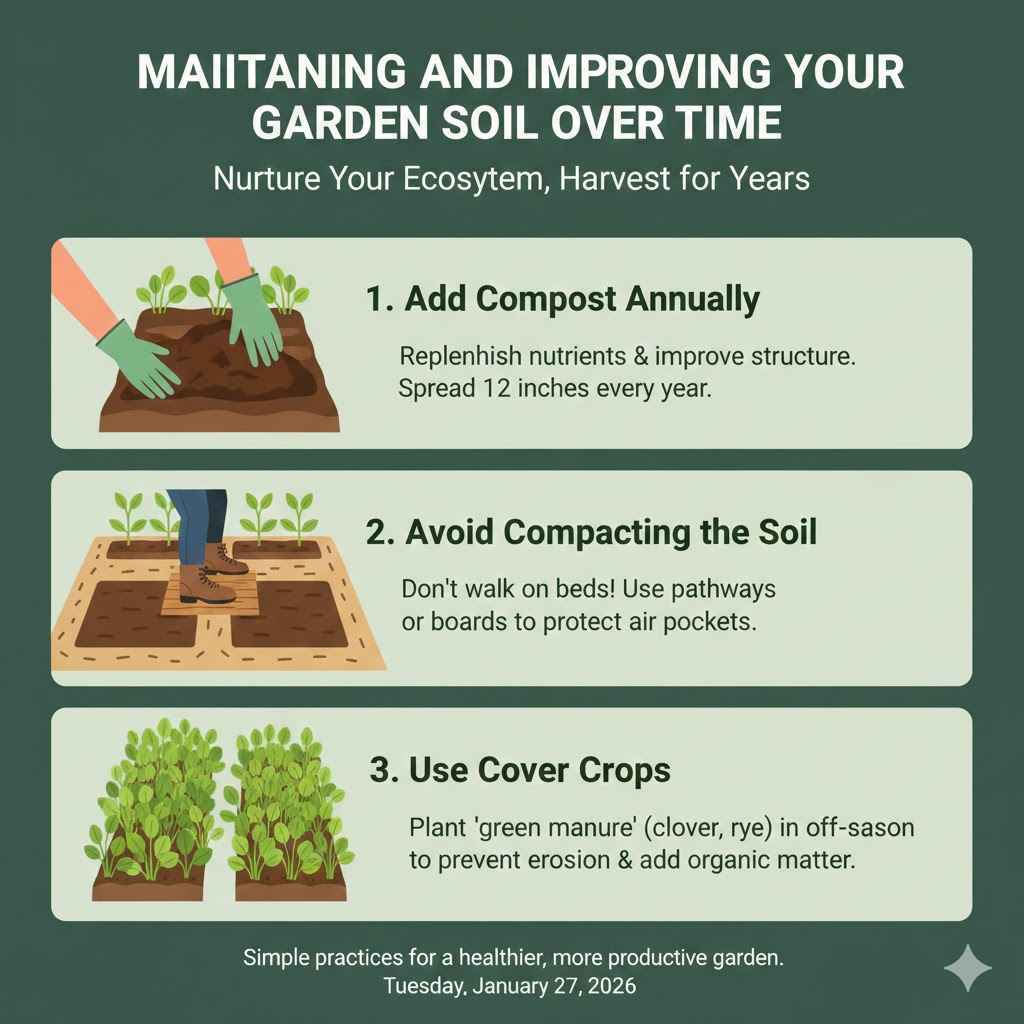
Maintaining and Improving Your Garden Soil Over Time
Gardening is an ongoing conversation with nature. Your soil is a living ecosystem that needs care to stay healthy and productive season after season. Here are a few simple ways to keep your garden soil in great shape.
Add Compost Annually
Compost is the single best thing you can add to your garden. Each year, before planting, spread a 1- to 2-inch layer of finished compost over your garden beds and gently work it into the top few inches of soil. This replenishes nutrients, improves soil structure, and feeds the beneficial microbes that keep your soil healthy.
Avoid Compacting the Soil
Try not to walk on your garden beds. Compaction squeezes out the air pockets that roots and microorganisms need to breathe. Create designated pathways around your planting areas. If you do need to step in the bed, use a small board to distribute your weight more evenly.
Use Cover Crops
During the off-season (like fall and winter), consider planting a cover crop like clover, vetch, or winter rye. These plants prevent erosion, suppress weeds, and add organic matter back into the soil when you till them under in the spring. They are often called “green manure” for a reason!
Frequently Asked Questions (FAQ)
1. Can I use garden soil in pots or containers?
No, you should never use garden soil in pots. It is too heavy and will compact, leading to poor drainage and suffocated roots. Always use a lightweight, fast-draining product labeled “Potting Mix” for containers.
2. How deep should my garden soil be?
You should aim to create a rich, amended soil layer that is about 8 to 12 inches deep. You achieve this by spreading 2-4 inches of new garden soil on top and mixing it thoroughly into the top 6-8 inches of your native soil.
3. What is the main difference between garden soil and topsoil?
Topsoil is essentially the top layer of dirt from a piece of land, with minimal amendments. Garden soil is a commercially prepared product that blends topsoil with nutrient-rich organic matter like compost, making it a richer product designed to improve garden beds.
4. How do I know if my garden soil is healthy?
Healthy soil has a dark, crumbly texture, a pleasant earthy smell, and is full of life like earthworms. It should hold some moisture but also drain well after watering. If your plants are growing strong with green leaves, your soil is likely in good shape.
5. Can I make my own garden soil?
Absolutely! You can create your own excellent garden soil by mixing your native soil with plenty of homemade compost. A good starting ratio is two parts native soil to one part compost. You can also add other amendments like peat moss for moisture retention or sand for drainage if needed.
6. Do I need to replace my garden soil every year?
No, you do not need to replace it. Instead, you should amend it each year. Simply add a fresh layer of compost or other organic matter each spring to replenish nutrients and keep the soil structure healthy and productive.
7. What can I add to my garden soil to make it even better?
Compost is always the best choice. Other great additions include aged manure, leaf mold, worm castings, and peat moss. These organic materials add nutrients, improve water retention, and create a healthy environment for plant roots.
Your Journey to a Beautiful Garden Starts Now
You did it! You now have all the knowledge you need to use garden soil with confidence. It’s not about finding a magic “perfect” soil in a bag; it’s about partnering with the earth you already have and making it better. By clearing your bed, loosening the ground, and mixing in rich organic matter, you’re creating a foundation for success.
Remember that every great garden starts with healthy soil. It’s the heart of your entire outdoor space. Don’t be afraid to get your hands dirty, observe how your plants respond, and make small adjustments along the way. That is the true joy of gardening—learning and growing right alongside your plants. Happy planting!