
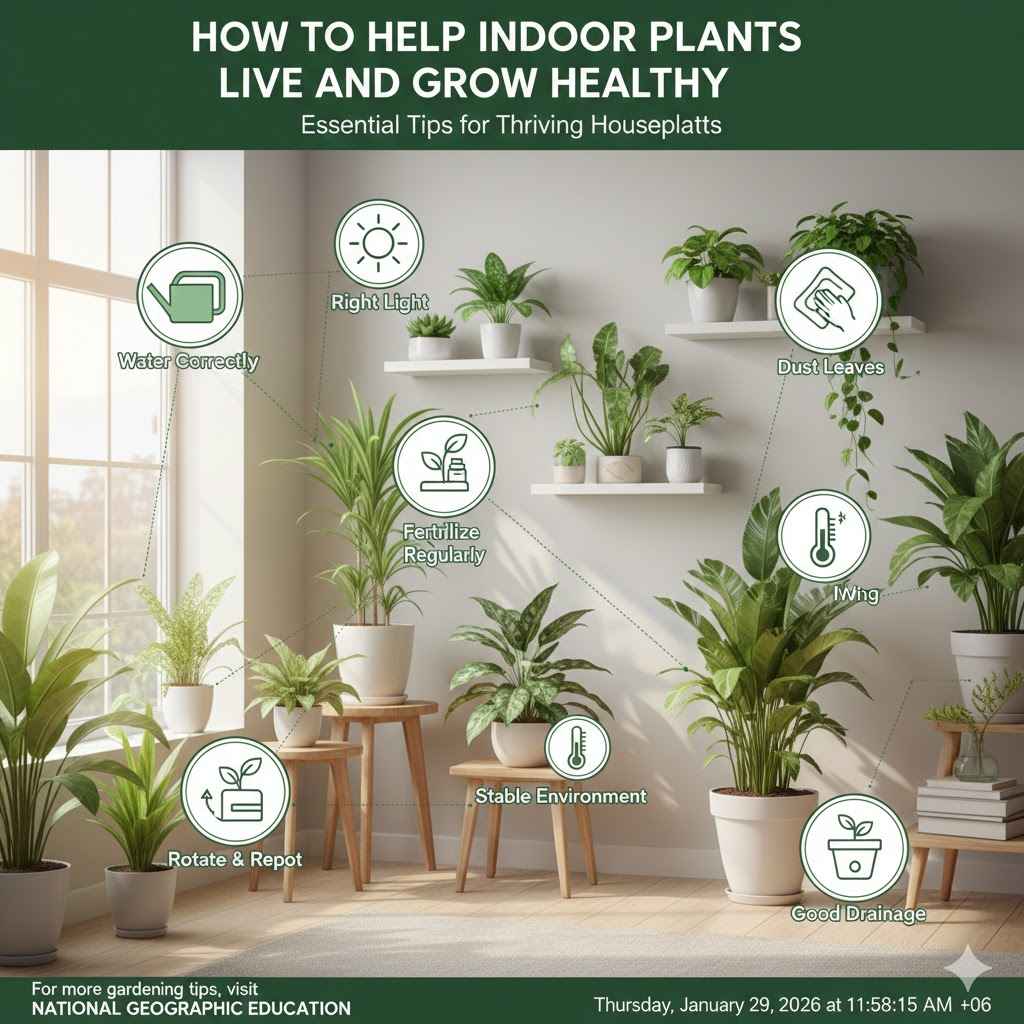
Helping indoor plants live and grow healthy is simple for beginners: give them the right light, water only when the top soil is dry, use well-draining pots, and fertilize lightly during growth seasons. Avoid overwatering—the top killer—and watch for yellow leaves or pests. With these easy steps, your plants will thrive and bring joy to your home.
Many people bring home beautiful indoor plants full of hope, only to watch them wilt or drop leaves after a few weeks. The good news? Most plant problems come from just a few common mistakes, like too much water or not enough light. You don’t need fancy tools or expert skills to fix this. As your friendly gardening mentor, I’ll walk you through clear, step-by-step ways to keep your indoor plants healthy and happy. Soon, you’ll see new growth and feel proud of your green thumb. Let’s start with the basics and build from there.
Why Indoor Plants Matter and How Easy They Are to Care For
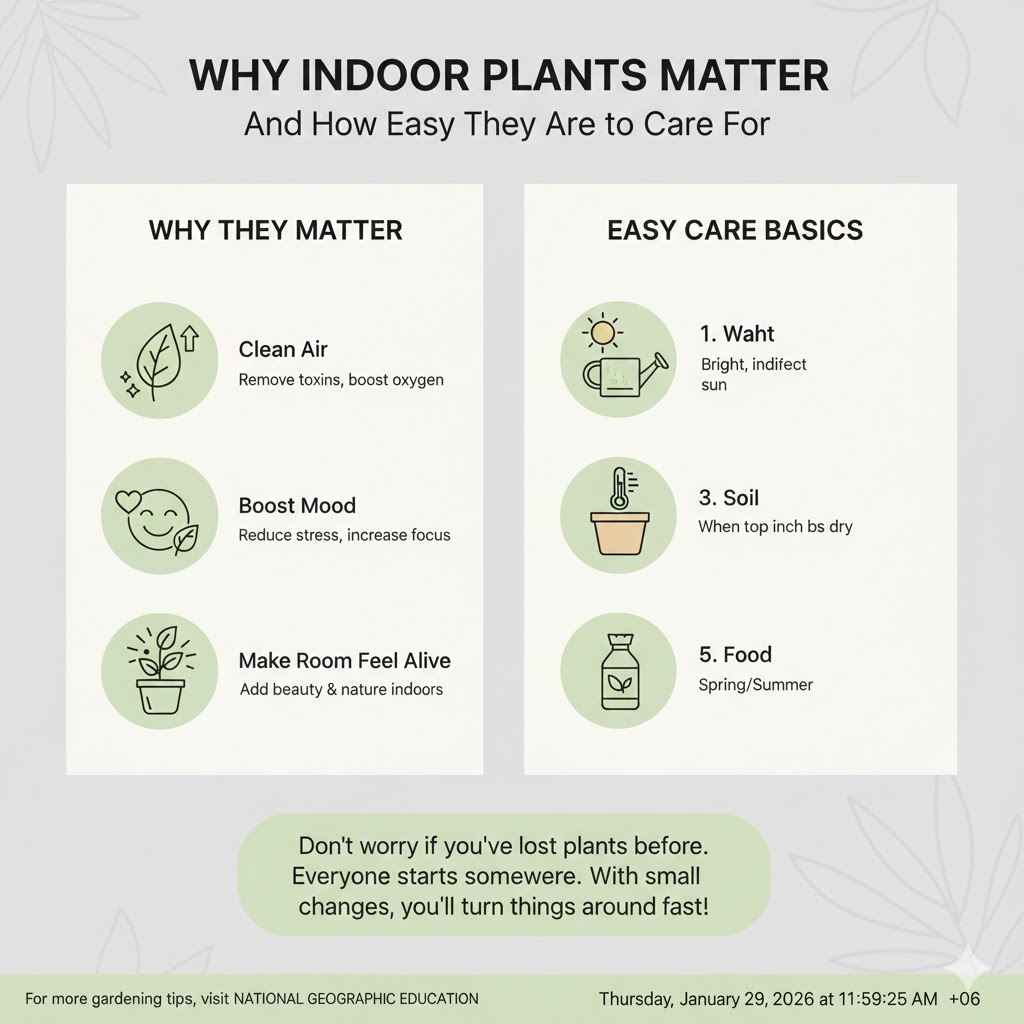
Indoor plants clean the air, boost your mood, and make any room feel alive. But beginners often struggle because plants don’t come with instructions. The key is understanding their basic needs: light, water, soil, temperature, and a little food. Get these right, and most plants reward you with steady growth.
Don’t worry if you’ve lost plants before. Everyone starts somewhere. With small changes, you’ll turn things around fast.
Choose the Right Spot – Light Is Everything
Light helps plants make food through photosynthesis. Too little light makes them weak and leggy. Too much direct sun can burn leaves.
Most indoor plants do best in bright, indirect light. Place them near a window but not in harsh midday sun.
- Low light plants (like snake plant or ZZ plant): North-facing windows or rooms with little direct sun.
- Medium light plants (like pothos or peace lily): East or west windows with filtered light.
- Bright light plants (like succulents or fiddle leaf fig): South-facing windows with some protection from intense rays.
Tip: Rotate your plant every week for even growth. If natural light is low, especially in winter, consider a simple grow light. For more on light needs, check this guide from University of Maryland Extension.
Water Wisely – The #1 Rule for Healthy Roots
Overwatering kills more indoor plants than anything else. Roots need air as much as water. Soggy soil leads to root rot.
Always check the soil first. Stick your finger 1-2 inches down. If it’s dry, water. If moist, wait.
- Water thoroughly until it drains out the bottom.
- Empty the saucer after 15-30 minutes—no plant likes wet feet.
- Use room-temperature water to avoid shocking roots.
- Water less in winter when growth slows.
Signs of overwatering: Yellow leaves, mushy stems, mold on soil. Underwatering: Wilting, dry crispy edges. Adjust based on your home’s humidity and season.
Common Indoor Plant Watering Needs Table
| Plant Type | Watering Frequency (Approx.) | Soil Check Tip | Best For |
|---|---|---|---|
| Snake Plant, ZZ Plant | Every 2-4 weeks | Let dry completely | Beginners, low light |
| Pothos, Philodendron | Every 1-2 weeks | Top 1-2 inches dry | Easy trailing plants |
| Peace Lily | Every 7-10 days | Slightly moist but not wet | Flowering, medium light |
| Succulents, Cacti | Every 3-4 weeks | Fully dry between waterings | Bright light, dry homes |
Pick the Best Soil and Pot
Use a well-draining potting mix made for indoor plants. Add perlite or orchid bark if needed for extra drainage.
Always choose pots with drainage holes. Terracotta pots dry out faster—great for overwaterers. Plastic holds moisture longer.
Repot every 1-2 years when roots fill the pot. Signs: Roots circling or poking out holes, plant drying out fast.
Feed Your Plants – Fertilizer Basics
Plants need nutrients like people need food. Use a balanced liquid fertilizer (like 20-20-20) at half strength.
Fertilize every 4-6 weeks in spring and summer (growing season). Skip or reduce in fall and winter.
Too much fertilizer burns leaves—brown tips are a sign. Always water first, then feed.
For more details on fertilizing, see this resource from Clemson University.
Keep Humidity and Temperature Just Right
Most houseplants like 40-60% humidity. Dry winter air from heaters can cause brown tips.
Easy fixes: Group plants together, use a pebble tray with water, or mist leaves (avoid flowering plants).
Keep temps between 65-75°F (18-24°C). Avoid cold drafts, heaters, or sudden changes.
Watch for Pests and Problems
Common pests: Spider mites (tiny webs), mealybugs (white cotton), aphids.
Check leaves weekly. Wipe with soapy water or use neem oil for control.
Other issues:
- Yellow leaves: Often overwatering or poor light.
- Dropping leaves: Shock from moving or temperature change.
- Brown tips: Low humidity or fluoride in water (use filtered water).
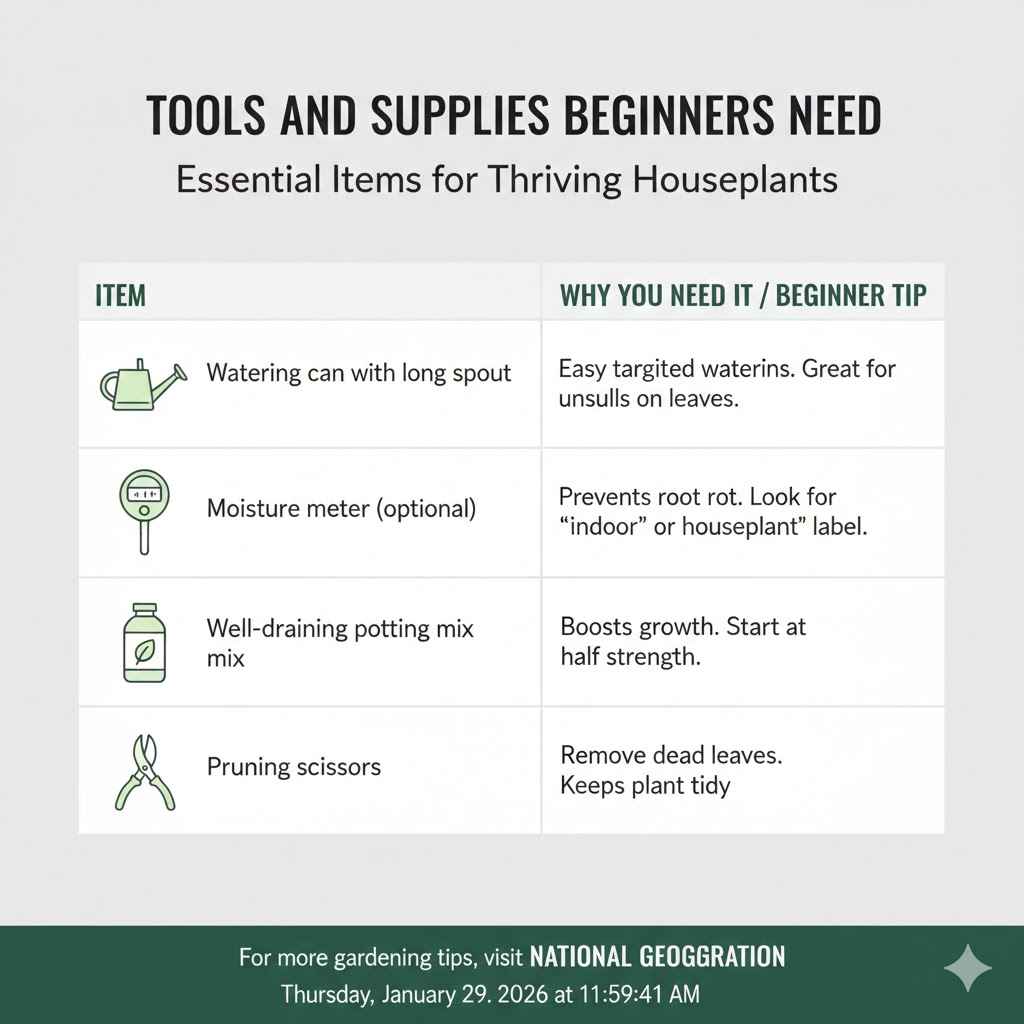
Tools and Supplies Beginners Need Table
| Item | Why You Need It | Beginner Tip |
|---|---|---|
| Watering can with long spout | Easy targeted watering | Avoid spills on leaves |
| Moisture meter (optional) | Checks soil wetness | Great for unsure beginners |
| Well-draining potting mix | Prevents root rot | Look for “indoor” or “houseplant” label |
| Balanced fertilizer | Boosts growth | Start at half strength |
| Pruning scissors | Remove dead leaves | Keeps plant tidy |
FAQ
How often should I water my indoor plants?
There’s no set schedule. Check the top 1-2 inches of soil—if dry, water thoroughly. Most plants need water every 1-3 weeks, less in winter.
Why are my plant leaves turning yellow?
Usually overwatering or poor drainage. Let soil dry out more between waterings and ensure pots have holes.
Can indoor plants survive in low light?
Yes! Snake plants, pothos, and ZZ plants thrive in low light. They grow slower but stay healthy.
How do I know if my plant needs repotting?
Roots crowd the pot, water drains too fast, or growth stops. Move to a pot 1-2 inches larger.
Do I need to mist my plants?
Not always. Grouping plants or using a pebble tray helps humidity. Misting works for some but can cause fungus if overdone.
What’s the best fertilizer for beginners?
A balanced liquid one (like 10-10-10 or 20-20-20) at half strength every month in growing season. Slow-release granules are easy too.
Why do leaves have brown tips?
Low humidity, tap water chemicals, or underwatering. Use filtered water and increase humidity.
In the end, helping your indoor plants live and grow healthy comes down to observing and responding to their needs. Start small—pick one or two easy plants, give them good light, water carefully, and enjoy the process. Soon, you’ll see fresh leaves, stronger stems, and maybe even flowers. Gardening indoors is rewarding and relaxing. You’ve got this! Keep watching your plants, make small adjustments, and celebrate every bit of new growth. Your home will feel greener and brighter because of your care. Happy planting!