
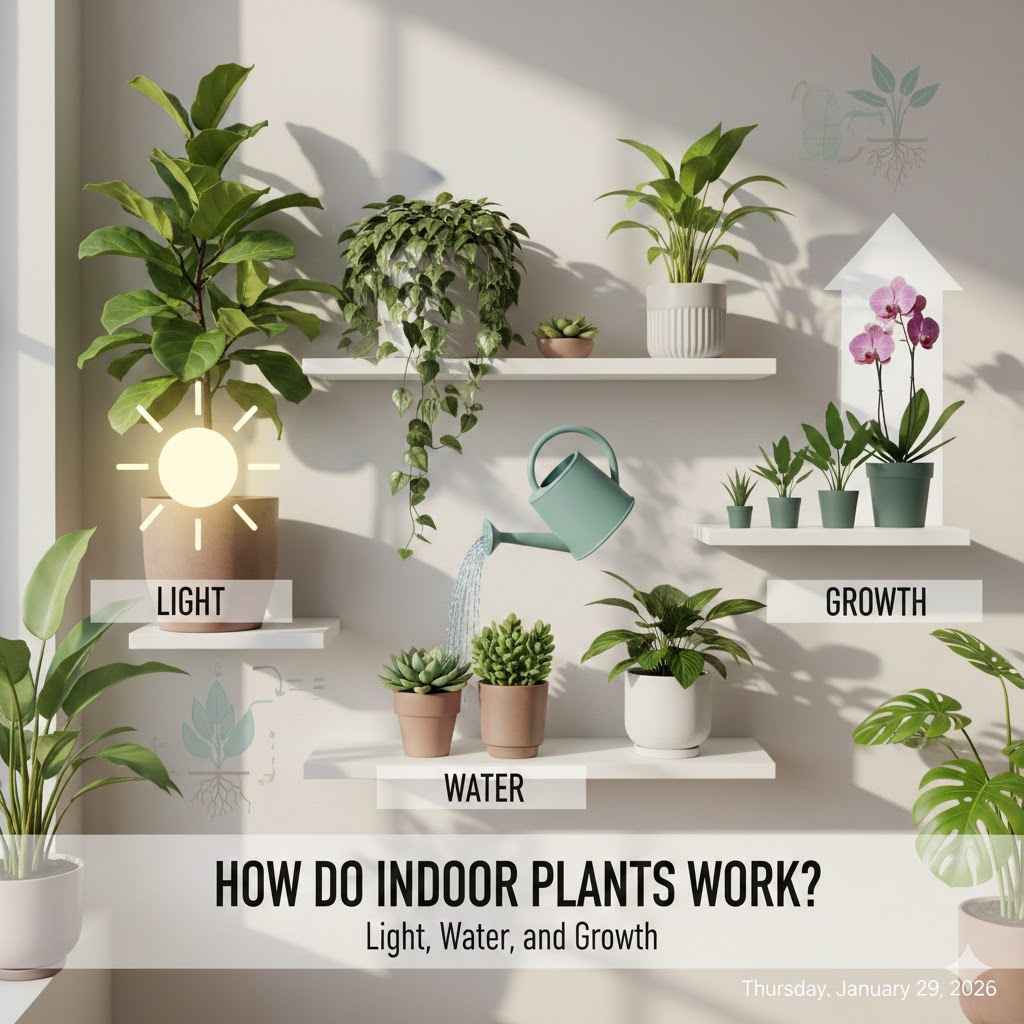
Indoor plants work by using light for photosynthesis to turn water and carbon dioxide into food (sugar) and oxygen. This powers their growth. Give them the right amount of light, proper watering, and they thrive indoors—just like in nature, but simpler!
Have you ever wondered why your indoor plants sometimes look sad, with yellow leaves or slow growth? Many beginners struggle because they don’t know the basics of how plants actually “work” inside. The good news is, it’s not magic—it’s simple science! Indoor plants live and grow through a process called photosynthesis.
They use light, water, and air to make their own food. With the right care, anyone can help their plants stay happy and healthy. In this guide, I’ll walk you through exactly how light, water, and growth connect, step by step, so you can watch your green friends flourish.
How Photosynthesis Powers Indoor Plant Growth
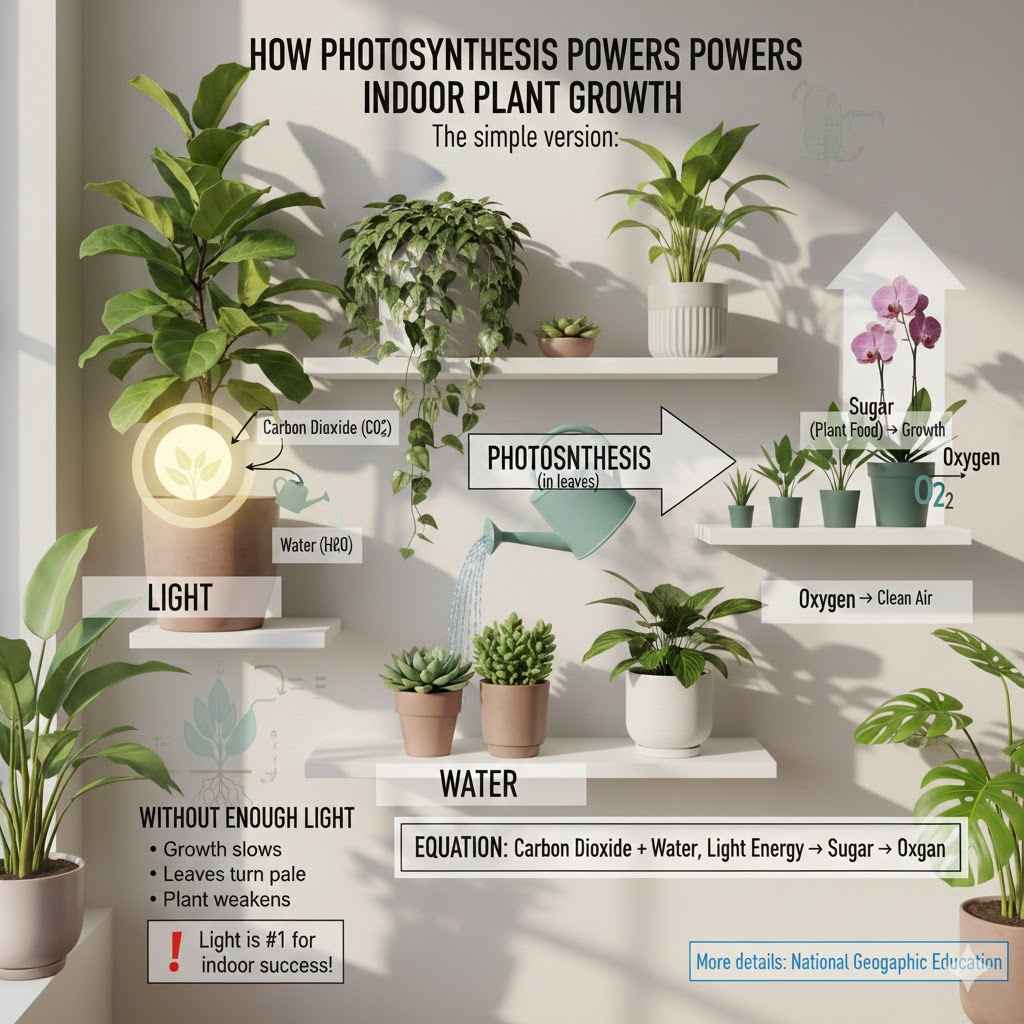
Photosynthesis is the heart of how indoor plants work. It’s how they make food to grow strong leaves, stems, and sometimes flowers.
Here’s the simple version: Plants take in carbon dioxide from the air (the stuff we breathe out) and water from the soil. Using energy from light, they turn these into sugar (their food) and release oxygen (which we breathe in). This happens mostly in the leaves, thanks to a green pigment called chlorophyll.
The basic equation is:
Carbon dioxide + Water + Light energy → Sugar + Oxygen
For more details on this amazing process, check out this explanation from National Geographic Education.
Without enough light, photosynthesis slows down. The plant can’t make enough food, so growth stops, leaves turn pale, and the plant weakens. That’s why light is the #1 factor for indoor success.
Why Light Is the Most Important Factor for Indoor Plants
Light fuels photosynthesis. Indoor plants don’t get as much sun as outdoor ones, so we must choose the right spot or add help.
Plants need light in three ways: intensity (how bright), duration (how long), and quality (the right colors). They love blue and red wavelengths most for growth.
Common indoor light levels:
- Bright indirect light: Near a window with curtains—perfect for most houseplants like pothos or peace lilies.
- Medium light: A few feet from a window—good for snake plants or ZZ plants.
- Low light: Far from windows—tolerated by some tough plants, but growth is slow.
If light is too low, plants stretch toward the window (called leggy growth) or drop leaves. Too much direct sun can burn leaves.
From the University of Minnesota Extension: All plants need light for photosynthesis, or they can’t make energy and will die over time. See their full guide here.
Types of Light for Indoor Plants
| Light Type | Description | Best Plants | Foot-Candles (Approx.) |
|---|---|---|---|
| Direct Sun | Unfiltered sunlight, like south-facing window | Succulents, cacti, some herbs | 1000+ |
| Bright Indirect | Light near window but no direct rays | Fiddle leaf fig, monstera, most common houseplants | 500-1000 |
| Medium | A few hours of sun or filtered light | Snake plant, pothos, philodendron | 250-500 |
| Low | Shaded areas, north window | ZZ plant, cast iron plant | Under 250 |
Use this table to match your home’s light to your plants. Start with bright indirect for beginners—it’s forgiving!
How Water Works in Indoor Plant Growth
Water is key for photosynthesis and keeping the plant hydrated. Roots pull water from soil, carrying nutrients up to leaves.
During photosynthesis, water splits to release oxygen and help make sugar. Water also keeps leaves firm and cool through tiny pores (stomata).
Too little water: Leaves wilt, brown tips appear, growth stops.
Too much water: Roots rot, leaves yellow, plant dies (common beginner mistake).
Rule of thumb: Water when the top 1-2 inches of soil feel dry. Use your finger or a moisture meter.
Step-by-Step: How to Water Indoor Plants Properly
- Check soil moisture—stick your finger in. If dry, water.
- Use room-temperature water to avoid shocking roots.
- Water thoroughly until it drains out the bottom (use pots with holes).
- Empty the saucer after 30 minutes—no sitting in water.
- Adjust based on light: Brighter light = more water needed (faster growth, faster drying).
- Less water in winter when growth slows.
Pro tip: Group plants by water needs—low-water succulents away from thirsty peace lilies.
How Indoor Plants Actually Grow: From Roots to Leaves
Growth happens when photosynthesis provides energy. Sugar moves to roots, stems, and new leaves for building cells.
Roots absorb water and nutrients (like nitrogen for leaves, phosphorus for roots). Stems support and transport. Leaves are factories for food-making.
New growth shows as fresh leaves or stems—proof your care works!
Factors that boost growth:
- Right light for fast photosynthesis
- Balanced watering
- Occasional fertilizer (during spring/summer)
- Stable temperature (65-75°F most plants love)
- Humidity (many like 40-60%)
Common Nutrients Indoor Plants Need
| Nutrient | Role in Growth | Signs of Lack | How to Fix |
|---|---|---|---|
| Nitrogen (N) | Healthy green leaves | Yellow lower leaves | Balanced fertilizer |
| Phosphorus (P) | Strong roots, flowers | Dark green/purple leaves | Bloom booster if flowering |
| Potassium (K) | Overall health, disease resistance | Brown leaf edges | Regular feeding |
Fertilize every 4-6 weeks in growing season with a diluted houseplant fertilizer. Skip in winter.
Putting It All Together: Daily Care Tips for Success
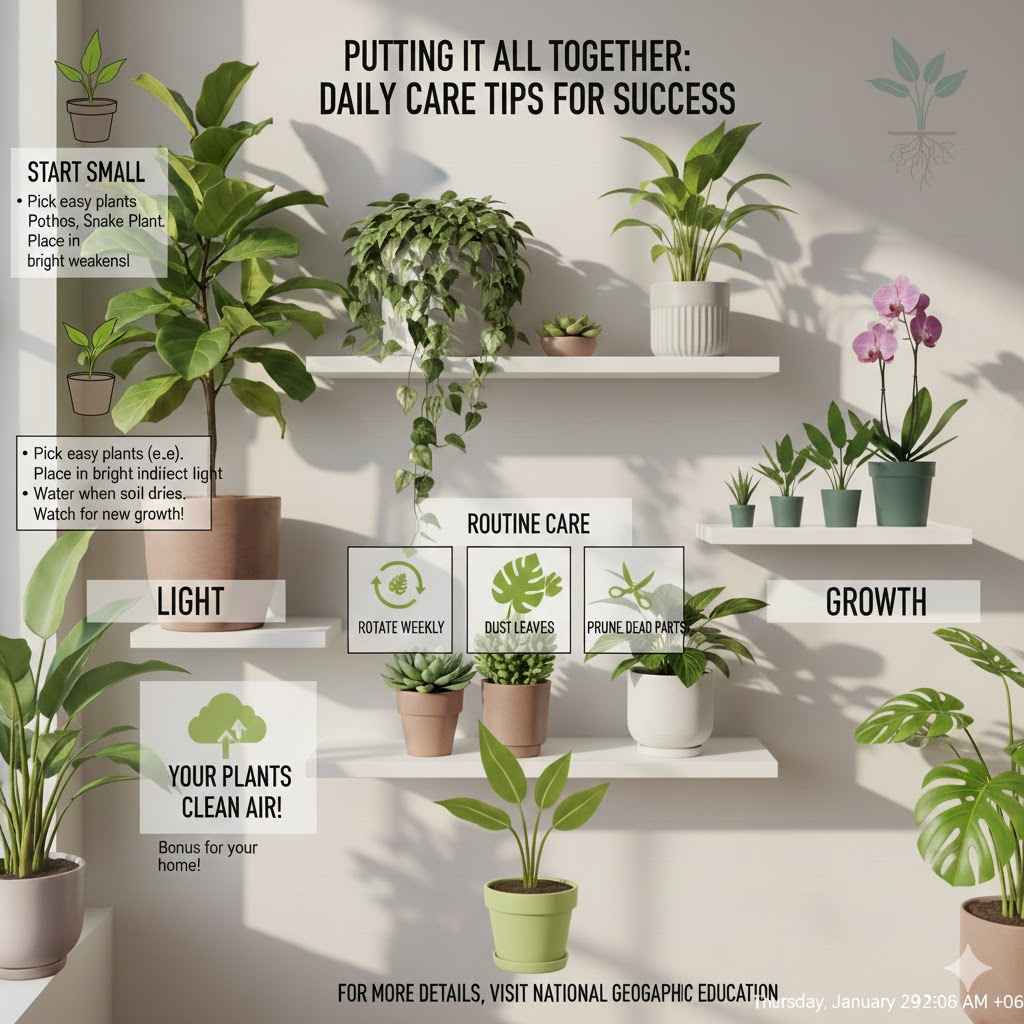
Start small. Pick easy plants like pothos or snake plant. Place in bright indirect light. Water when soil dries. Watch for new growth—it’s rewarding!
Rotate plants weekly for even light. Dust leaves to help them catch more light. Prune dead parts to focus energy on healthy growth.
Your plants clean air too—bonus for your home!
FAQ: Beginner Questions About How Indoor Plants Work
Do indoor plants really need sunlight, or can they grow with room light?
They need light for photosynthesis. Room lights help a little, but natural or grow lights work best. Low light slows growth a lot.
How do I know if my plant gets enough light?
Look for pale leaves, slow growth, or stretching toward windows. These mean more light needed.
Why do plant leaves turn yellow?
Usually overwatering or underwatering. Check soil first. Low light or nutrient lack can cause it too.
How often should I water my indoor plants?
It depends on light and plant type. Check soil every few days—water when top inch is dry.
Can indoor plants grow without soil?
Yes, in water (like lucky bamboo) or hydroponics, but they still need light, water changes, and nutrients.
What is the best light for most indoor plants?
Bright indirect light near an east or west window. Use grow lights if your home is dim.
Do plants sleep at night?
They rest—photosynthesis stops without light, but they use stored energy for basic functions.
Conclusion: Enjoy Watching Your Indoor Plants Thrive
Now you know the secret: Indoor plants work through photosynthesis, turning light, water, and air into energy for beautiful growth. Start with good light, water wisely, and give a little love. Soon, you’ll see new leaves unfurl and your home feel fresher and greener.
Gardening indoors is relaxing and rewarding. Mistakes happen—every brown leaf teaches something. Keep going, and your plants will reward you with health and joy. You’ve got this! Happy growing, friend.