
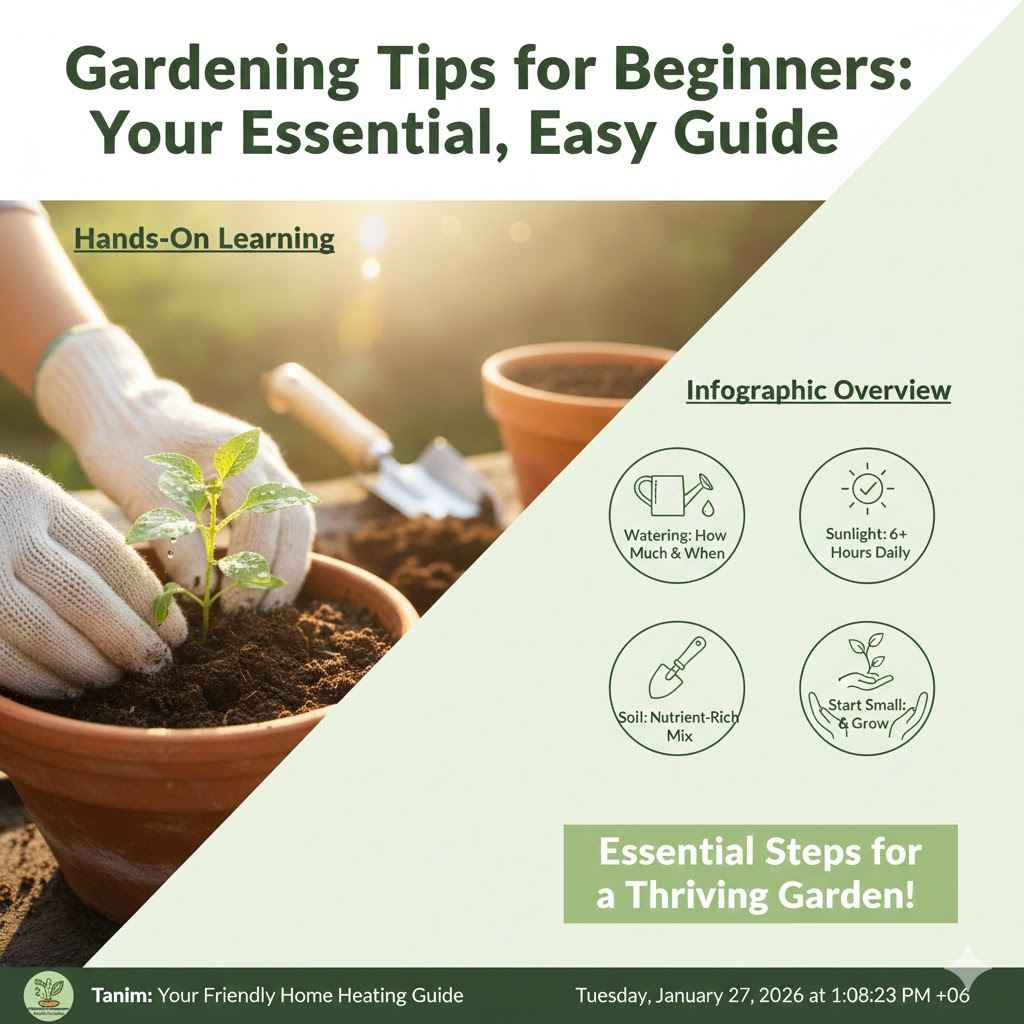
To start gardening, choose a small, sunny spot and improve the soil with compost. Select easy-to-grow plants suited for your area, like sunflowers or tomatoes. Water them deeply when the soil feels dry. With basic tools and consistent care, you can build a thriving garden and enjoy the rewards of your effort.
Have you ever dreamed of growing your own food or beautiful flowers? Many people want to start a garden but feel overwhelmed. They worry about where to begin, what to plant, and how to keep everything alive. It can seem like a big, complicated task, and the fear of failure often stops people before they even start.
But I’m here to tell you that gardening is for everyone. You don’t need a special “green thumb” to succeed. With a little guidance and a few simple steps, you can create a beautiful and productive garden. This guide will walk you through everything you need to know, making the process easy and enjoyable. Let’s grow together!
Start Small and Simple
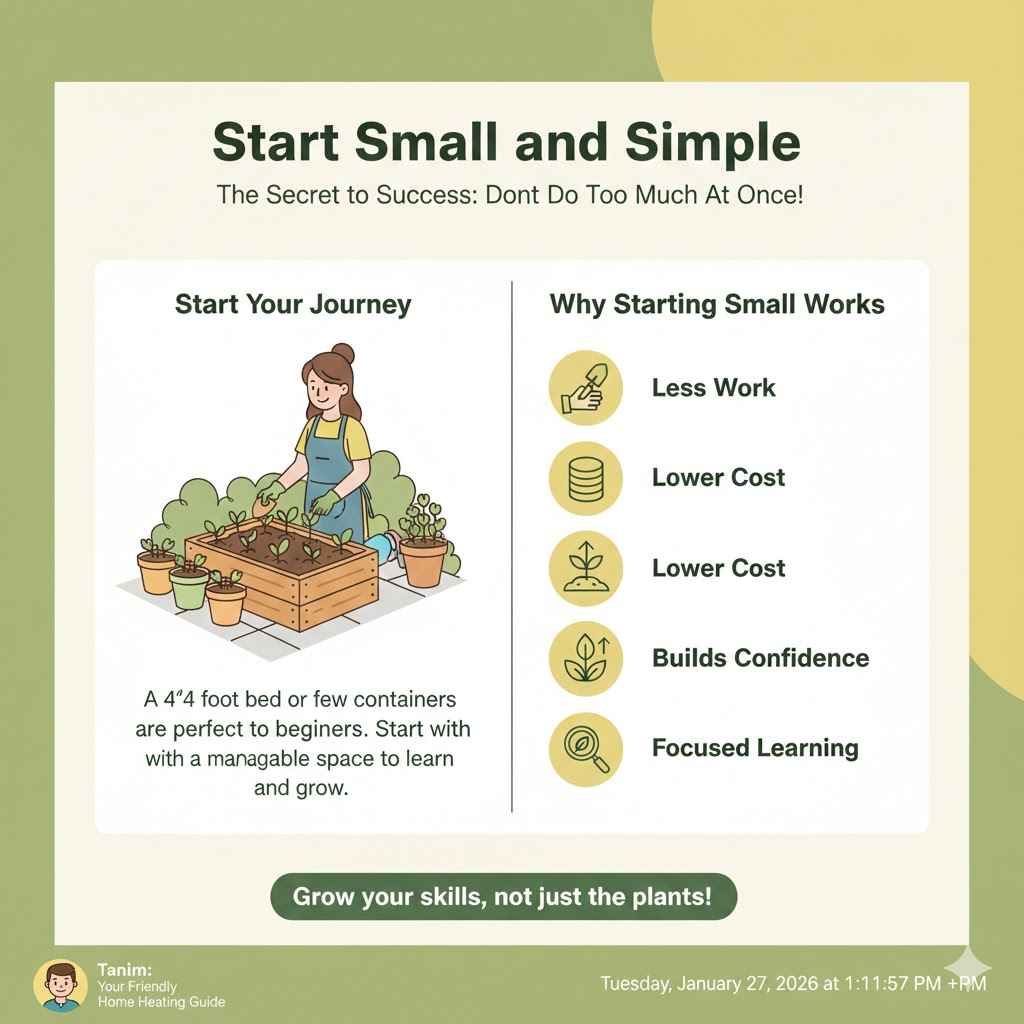
One of the biggest mistakes new gardeners make is trying to do too much at once. An oversized garden can quickly become a chore instead of a joy. The secret to success is to start small. This allows you to learn the basics without feeling overwhelmed.
Consider starting with just a few containers on a patio or a small raised garden bed. A 4×4 foot bed is a perfect size for a beginner. It’s manageable, requires fewer resources, and gives you a contained space to focus on. You can grow a surprising amount in a small area, from herbs and lettuces to flowers and even a tomato plant.
Why Starting Small Works
- Less Work: A smaller garden means less time spent weeding, watering, and maintaining.
- Lower Cost: You’ll spend less on soil, plants, and supplies.
- Builds Confidence: A successful small garden gives you the confidence to expand later on.
- Focused Learning: You can pay closer attention to each plant, learning its specific needs.
Know Your Growing Conditions
Before you buy a single seed or plant, you need to understand your specific environment. Plants are like people; they have preferences! The two most important factors to consider are your climate zone and the amount of sunlight your garden spot receives.
Find Your Hardiness Zone
The world is divided into climate zones based on average minimum winter temperatures. These are called “hardiness zones.” Knowing your zone helps you choose plants that can survive and thrive in your local climate. Planting something not suited for your zone is a common recipe for disappointment.
The U.S. Department of Agriculture (USDA) provides a Plant Hardiness Zone Map where you can enter your zip code to find your zone. Plant tags and seed packets will list the zones a plant is best suited for. Always choose plants that match your zone for the best chance of success.
Follow the Sun
Sunlight is plant food. Very few plants will do well without the right amount of light. Before you decide where to put your garden, spend a day observing the sunlight in your yard. Note which areas get sun in the morning and which get it in the afternoon.
- Full Sun: This means an area gets 6 or more hours of direct, unfiltered sunlight per day. Most vegetables, like tomatoes, peppers, and squash, need full sun. Many popular flowers, like sunflowers and zinnias, also love it.
- Part Sun / Part Shade: These spots receive between 3 and 6 hours of direct sun. Many perennials and leafy greens like lettuce and spinach do well here, especially if they are shaded from the hot afternoon sun.
- Full Shade: This means an area receives less than 3 hours of direct sunlight per day, often filtered through trees. While you can’t grow tomatoes in the shade, plants like hostas, ferns, and impatiens are excellent choices.
Prepare Your Garden Soil
Great gardens start with great soil. Healthy soil is full of nutrients and organic matter that plants need to grow strong roots and fight off diseases. Simply digging a hole in your lawn and dropping a plant in it is not enough. You’ll need to improve the soil first.
Whether you have heavy clay or sandy soil, the solution is the same: add organic matter. Compost is a gardener’s best friend. It improves soil structure, adds nutrients, and helps retain moisture. You can buy bagged compost from a garden center or make your own.
How to Improve Your Soil
- Clear the Area: Remove any grass, weeds, or rocks from your chosen garden spot.
- Loosen the Soil: Use a garden fork or shovel to loosen the existing soil to a depth of about 8-12 inches. This helps roots grow deeper.
- Add Compost: Spread a 2-4 inch layer of compost over the entire area.
- Mix It In: Gently mix the compost into the top 6-8 inches of your soil. Now your garden bed is ready for planting!
For container gardening, use a high-quality potting mix instead of garden soil. Potting mix is specially formulated to provide good drainage and aeration, which is crucial for plants in pots.
Choose the Right Plants
This is the most exciting part! With your sunny spot and prepared soil, you’re ready to choose your plants. As a beginner, it’s wise to select plants that are known for being easy to grow and productive. This will help ensure a positive first experience.
Start with healthy young plants from a nursery instead of seeds, as this can simplify the process. Look for plants with strong stems and green leaves, and avoid any that look wilted or have yellow spots. Always read the plant tag—it contains vital information about sunlight, water needs, and mature size.
Easy-to-Grow Plants for Beginners
Here is a table of reliable plants that are perfect for your first garden. They are forgiving and tend to produce great results with basic care.
| Plant Type | Plant Name | Sunlight Needs | Why It’s Easy for Beginners |
|---|---|---|---|
| Vegetable | Lettuce (Leaf varieties) | Full Sun to Part Shade | Grows quickly and you can harvest leaves as needed. |
| Vegetable | Zucchini / Summer Squash | Full Sun | Extremely productive; one or two plants are often enough. |
| Vegetable | Bush Beans | Full Sun | Easy to plant from seed and matures quickly. |
| Herb | Basil | Full Sun | Loves heat and grows fast. Perfect for pots. |
| Herb | Mint | Full Sun to Part Shade | Very vigorous. Best grown in a container to control its spread. |
| Flower | Sunflowers | Full Sun | Iconic, cheerful, and incredibly easy to grow from seed. |
| Flower | Marigolds | Full Sun | Durable, bloom all summer, and can help deter some garden pests. |
| Flower | Zinnias | Full Sun | Come in many colors, attract pollinators, and are great for cutting. |
Master the Art of Planting
Once you bring your new plants home, it’s time to get them in the ground. Planting correctly gives them the best possible start in their new home. Avoid planting on a hot, sunny afternoon, as this can stress the plants. An overcast day or the early evening is the perfect time.
- Dig the Hole: Dig a hole that is slightly wider and just as deep as the pot the plant came in.
- Water the Plant: Water the plant thoroughly in its original container before you remove it. This helps the root ball slide out easily.
- Remove from Pot: Gently tip the pot sideways and tap the bottom. The plant should slide out. If the roots are tightly wound in a circle (root-bound), gently tease them apart with your fingers.
- Place in the Hole: Set the plant in the hole, making sure the top of the root ball is level with the surrounding soil. Planting too deep can cause the stem to rot.
- Backfill the Soil: Fill the hole with soil, gently pressing it down around the root ball to eliminate air pockets.
- Water Thoroughly: Give the newly planted plant a deep, slow watering at its base. This helps settle the soil and provides much-needed moisture.
Water Wisely (Not Too Much, Not Too Little)
Watering is where many beginners struggle. Both overwatering and underwatering can harm your plants. The goal is to keep the soil consistently moist but not waterlogged.
How to Know When to Water
Don’t just water on a fixed schedule. Instead, check the soil. The best way is the “finger test.” Stick your index finger about two inches into the soil near the base of the plant. If the soil feels dry at that depth, it’s time to water. If it feels moist, wait another day and check again.
Best Watering Practices
- Water Deeply: A light sprinkle only moistens the surface. You want to water long enough for the moisture to reach the roots, encouraging them to grow deep.
- Water the Soil, Not the Leaves: Wet leaves can promote fungal diseases. Use a watering can or hose to direct water to the base of the plants.
- Water in the Morning: Morning is the best time to water. It gives the plants the moisture they need to handle the heat of the day, and any water on the leaves has time to dry before evening.
- Container Plants Need More Water: Soil in pots dries out much faster than garden beds, especially on hot, windy days. You may need to water containers daily.
This table gives a general idea of watering frequency, but always use the finger test to be sure.
| Condition | In-Ground Garden Beds | Container Gardens |
|---|---|---|
| Cool, Cloudy Weather | Check every 3-4 days | Check every 1-2 days |
| Warm, Sunny Weather | Check every 2-3 days | Check daily |
| Hot, Dry, or Windy Weather | Check daily | Check twice daily (morning and evening) |
Get Your Essential Gardening Tools
You don’t need a shed full of expensive equipment to start a garden. A few high-quality, essential tools will handle almost every task a beginner will face.
- Gardening Gloves: A good pair of gloves will protect your hands from dirt, thorns, and blisters.
- Hand Trowel: This is essential for digging small holes for planting and for removing weeds.
- Pruners or Shears: Use these for trimming plants, harvesting vegetables and herbs, and cutting flowers.
- Watering Can or Hose with Nozzle: A must-have for getting water to your plants efficiently.
- Garden Fork: Useful for loosening and aerating compacted soil.
Use Mulch to Make Your Life Easier
Mulching is a simple step that offers huge benefits. Mulch is a layer of material applied to the surface of the soil. It can be organic, like shredded bark, straw, or grass clippings, or inorganic, like gravel. For vegetable and flower gardens, organic mulches are best because they break down and improve the soil over time.
After your plants are in the ground, apply a 2-3 inch layer of mulch around them, being careful to leave a small gap around the plant stems to prevent rot. This small effort will save you a lot of work in the long run.
Benefits of Mulch
- Reduces Weeds: A layer of mulch blocks sunlight, preventing many weed seeds from sprouting.
- Conserves Moisture: Mulch slows evaporation, meaning you’ll need to water less often.
- Regulates Soil Temperature: It keeps the soil cooler in the summer and warmer in the winter, protecting plant roots.
- Improves Soil Health: Organic mulches decompose, adding valuable nutrients to the soil.
Learn Basic Garden Maintenance
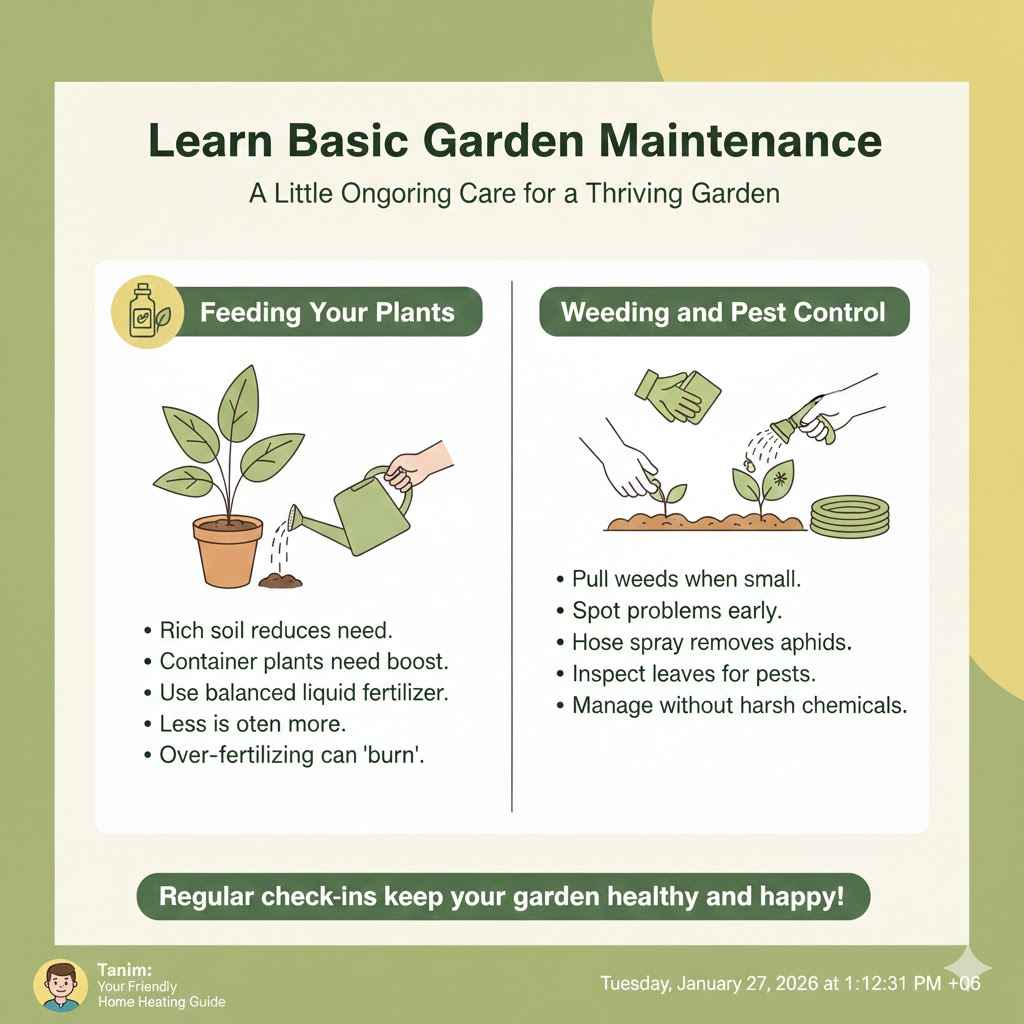
A garden is a living thing, and it needs a little ongoing care to thrive. Set aside a few minutes each week to tend to your garden. This regular check-in allows you to spot problems early and keep everything looking its best.
Feeding Your Plants
If you started with rich, compost-amended soil, you may not need to fertilize much. However, plants in containers and heavy-feeding vegetables (like tomatoes) will benefit from a boost. Use a balanced, all-purpose liquid fertilizer, and follow the package directions carefully. Over-fertilizing can burn your plants, so less is often more.
Weeding and Pest Control
Pull weeds as soon as you see them. When they are small, they are easy to remove and haven’t had a chance to steal water and nutrients from your plants. For pests, a strong spray of water from a hose can knock off many common insects like aphids. If you see signs of chewing, inspect the leaves (including the undersides) to find the culprit. Many pests can be managed without harsh chemicals, especially in a small, healthy garden.
Frequently Asked Questions (FAQ)
What is the easiest vegetable to grow for a beginner?
Leaf lettuce is one of the easiest. It grows quickly, requires minimal space, and you can harvest the outer leaves continuously for a long-lasting supply. Bush beans and zucchini are also excellent choices for beginners due to their high productivity.
How often should I water my new garden?
There’s no single answer, as it depends on your soil, climate, and plants. Instead of a schedule, use the finger test: stick your finger two inches into the soil. If it’s dry, it’s time to water. If it’s moist, wait and check again the next day.
Should I start with seeds or plants?
For your very first garden, starting with young plants (called “transplants” or “starts”) from a nursery is often easier. This skips the delicate seedling stage. However, some plants like beans, carrots, and sunflowers are very easy to grow directly from seed in the garden.
What is the difference between an annual and a perennial?
An annual plant completes its entire life cycle—from seed to flower to seed—in one growing season and then dies. Marigolds and tomatoes are annuals. A perennial plant lives for three or more years, often dying back to the ground in winter and re-sprouting from its roots in the spring. Hostas and lavender are perennials.
Do I need to fertilize my plants?
If you prepare your soil with plenty of compost, you may not need to. However, plants in containers will need regular feeding because nutrients wash out with watering. Use a balanced liquid fertilizer every 2-4 weeks for container plants, following the product’s instructions.
What are some common beginner gardening mistakes?
The most common mistakes are starting too big, planting in a shady spot, overwatering, and not preparing the soil properly. By following the steps in this guide, you can easily avoid these pitfalls.
Can I garden if I only have a small balcony?
Absolutely! Container gardening is a fantastic way to grow plants in small spaces. You can grow herbs, salad greens, flowers, and even compact varieties of tomatoes and peppers in pots. Just make sure your balcony gets enough sunlight.
Your Gardening Journey Begins Now
Gardening is a journey of learning and discovery. It connects you with nature, provides fresh food, and adds beauty to your life. Don’t be afraid to make mistakes—every gardener does! Each season teaches you something new.
By starting small, choosing the right plants, and providing them with good soil, sun, and water, you are setting yourself up for a wonderful and rewarding experience. You have the knowledge you need to get started. Now, all that’s left is to get your hands dirty and watch your garden grow. Happy gardening!