
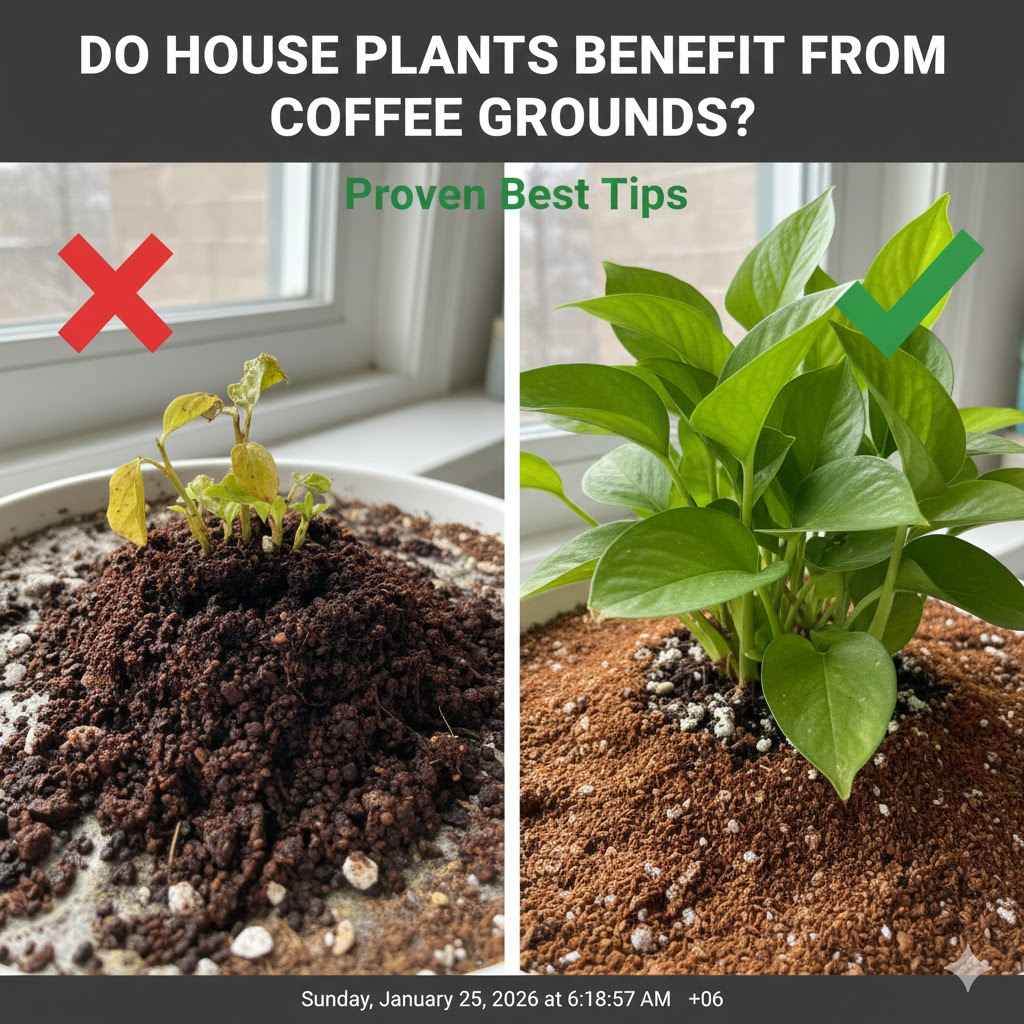
Yes, house plants can benefit from coffee grounds, but not by sprinkling them directly on the soil. The best and safest method is to add used coffee grounds to your compost pile first. This allows them to break down, releasing nitrogen slowly and improving soil structure without risking mold, pests, or soil compaction.
Have you heard that your morning coffee leftovers could be a miracle food for your houseplants? It’s a popular tip you see all over the internet. Many people try it, hoping for lush, green leaves, but end up with moldy soil or unhappy plants instead. It can be so frustrating when a simple gardening hack goes wrong.
Don’t worry, you’re not alone in this confusion. The truth is, coffee grounds can be a wonderful, sustainable addition to your plant care routine, but only if you know how to use them correctly. I’m here to clear things up for you. In this guide, I’ll walk you through the proven best ways to use coffee grounds to help your plants thrive, and I’ll show you the common mistakes to avoid. Let’s get your plants the boost they deserve, safely and effectively.
The Truth About Coffee Grounds and Your Houseplants
Before we jump into the “how-to,” let’s understand what we’re working with. Coffee grounds contain nutrients, most notably nitrogen, which is essential for healthy leaf growth. They also contain smaller amounts of potassium, magnesium, and other minerals that plants need.
However, there are a few myths we need to address right away.
The Acidity Myth
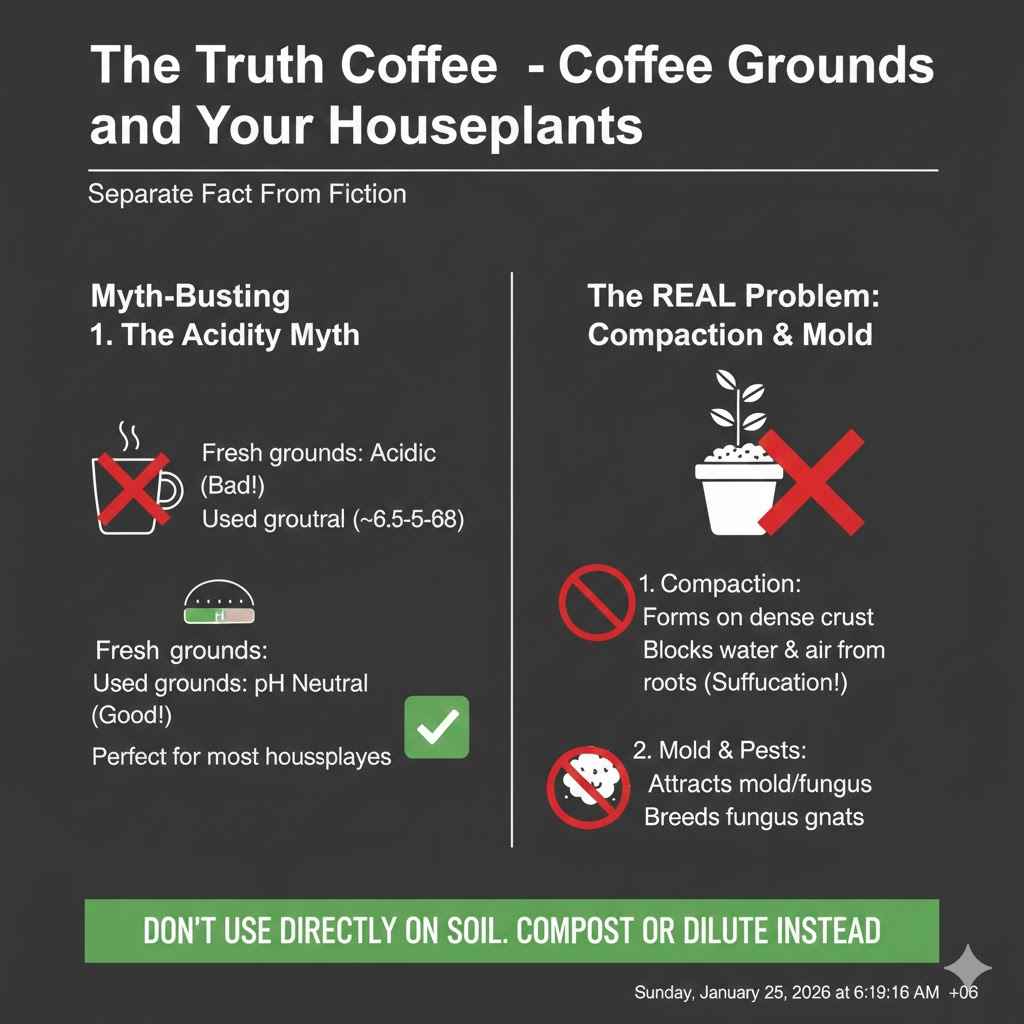
Many people believe coffee grounds are highly acidic and are only good for acid-loving plants like ferns or African violets. While fresh, unbrewed coffee grounds are acidic, the brewing process washes away most of the acid. Used coffee grounds are actually close to pH neutral (around 6.5 to 6.8), which is a perfect range for most houseplants.
The Biggest Problem: Compaction and Mold
The main reason you shouldn’t sprinkle used coffee grounds directly onto the soil of your houseplants is because of what happens next. Coffee grounds are very fine and dense. When you layer them on top of the soil, they tend to clump together and create a solid crust. This crust can prevent water and air from reaching the plant’s roots, essentially suffocating them.
Worse yet, this damp, dense layer is the perfect breeding ground for mold and fungus. It also attracts common pests like fungus gnats, which love to lay their eggs in moist, organic material. Instead of helping your plant, you might be creating a whole new set of problems.
The Benefits: What Coffee Grounds Can Do (When Used Correctly)
When you prepare them properly, coffee grounds can be a fantastic, free resource for your indoor garden. Here’s how they can truly benefit your plants.
A Gentle Source of Nitrogen
Nitrogen is a key component of chlorophyll, the pigment that makes leaves green and helps plants convert sunlight into energy. Composted coffee grounds act as a slow-release fertilizer, providing a gentle and steady supply of nitrogen. This encourages lush, vibrant foliage without the risk of “burning” the plant, which can happen with strong chemical fertilizers.
Improving Soil Structure (in Compost)
When added to a compost pile, coffee grounds contribute valuable organic matter. As they break down with other materials like leaves and vegetable scraps, they help create a rich, crumbly compost. Adding this finished compost to your potting mix improves its structure, creating better aeration for the roots and improving its ability to hold water.
A Sustainable and Free Resource
Perhaps one of the best benefits is that coffee grounds are a waste product for most of us. By using them in your garden, you are recycling a valuable resource, reducing landfill waste, and saving money on expensive fertilizers. It’s a win-win for your plants and the planet.
The Big “Don’ts”: Common Mistakes to Avoid with Coffee Grounds
To make it crystal clear, let’s review the most common mistakes beginners make. Avoiding these pitfalls is the key to successfully using coffee grounds for your plants.
| Common Mistake (The “Don’t”) | Why It’s a Problem | What to Do Instead (The “Do”) |
|---|---|---|
| Piling used grounds on topsoil. | Creates a water-repellent crust, blocks air, and promotes mold and fungus gnats. | Add the grounds to a compost pile or brew them into a liquid fertilizer “tea.” |
| Using fresh (unbrewed) grounds. | Fresh grounds are too acidic for most plants and their caffeine can inhibit growth. | Only use brewed, used coffee grounds that have a near-neutral pH. |
| Using too high a concentration. | Too much of a good thing can be bad. A high ratio can compact the soil or create nutrient imbalances. | Keep coffee grounds to less than 20% of your compost pile or potting mix volume. |
| Expecting immediate results. | The nutrients in coffee grounds are released slowly as they decompose. This is not an instant-fix fertilizer. | Be patient. Think of it as building healthy soil over time, not as a quick feeding. |
The Best Ways to Use Coffee Grounds for Houseplants: A Step-by-Step Guide
Now for the fun part! Here are the three proven, plant-safe methods for giving your houseplants the benefits of coffee grounds.
Method 1: The Gold Standard — Composting Coffee Grounds
This is by far the best, safest, and most effective way to use coffee grounds. Composting allows the grounds to break down completely, integrating their nutrients into a rich, balanced soil amendment that your plants will love.
- Collect Your Grounds: After your morning brew, simply dump the used grounds and paper filter into a collection container. You can store them in a small bin with a lid under your sink.
- Add to Your Compost Bin: Treat coffee grounds as a “green” material in your compost, just like grass clippings or vegetable scraps. For a healthy compost pile, you need a good balance of greens (for nitrogen) and “browns” (for carbon).
- Balance with “Browns”: For every part of coffee grounds you add, try to add two to three parts of brown materials. Great brown materials include shredded newspaper, cardboard, or dry autumn leaves. A helpful resource on composting basics can be found at the United States Environmental Protection Agency website.
- Turn and Wait: Regularly turn your compost pile to aerate it and help everything break down. In a few months, you’ll have dark, rich, earthy-smelling compost.
- Use Your Finished Compost: You can use your finished compost in two ways. Either spread a thin layer (about half an inch) on top of your houseplant’s soil as a “top dressing” or mix it into your soil when you are repotting a plant.
Method 2: Making a “Coffee Ground Tea” (Liquid Fertilizer)
If you don’t have a compost pile, this is an excellent alternative. Creating a liquid fertilizer, or “tea,” allows you to deliver the water-soluble nutrients from the grounds directly to your plants without any risk of mold or compaction.
- Gather Your Supplies: You’ll need about one cup of used coffee grounds and a one-gallon container of water. An old milk jug or a large bucket works perfectly.
- Steep the Grounds: Add the cup of used coffee grounds to the gallon of water. Stir it well and let the mixture steep for at least a few hours, or even overnight.
- Strain the Liquid: Pour the mixture through a fine-mesh sieve, cheesecloth, or even an old coffee filter to separate the liquid from the grounds. You only want to use the liquid. The leftover solids can be added to your outdoor garden beds or compost.
- Water Your Plants: Use this weak, nutrient-rich tea to water your houseplants as you normally would. Because it’s a very gentle fertilizer, you can use it every two to three weeks during the growing season (spring and summer).
Method 3: Mixing Directly Into Potting Soil (Use With Extreme Caution)
This method should be used sparingly and only when you are repotting a plant. It is not for top-dressing. The key is to use a very small amount to avoid negative effects.
- Dry the Grounds Completely: Spread your used coffee grounds on a baking sheet in a thin layer and let them air dry completely. This is a crucial step to prevent mold from growing in your potting mix.
- Calculate the Right Ratio: When creating your potting mix, ensure that the coffee grounds make up no more than 10% of the total volume. For example, if you have nine cups of potting soil, you would add no more than one cup of dried coffee grounds.
- Mix Thoroughly: It is vital to mix the dry grounds into the potting soil very well. You want them to be evenly distributed, not in clumps.
- Pot Your Plant: Use this custom soil mix to pot or repot your plant as usual. This method can slightly improve soil aeration and add organic matter, but composting remains the superior choice.
Which Houseplants Like Coffee Grounds?
While composted coffee grounds are safe for almost any plant, some may appreciate the gentle nutrient boost more than others. Remember, the goal is balanced soil health, not drastically changing the soil for one specific plant.
| Plant Category | Do They Benefit? | Best Method to Use |
|---|---|---|
| Most Tropical Foliage Plants (e.g., Pothos, Philodendron, Monsteras, Calatheas) | Yes, they appreciate the gentle nitrogen boost for their lush leaves. | Finished compost mixed into the soil or used as a top dressing. Liquid “coffee tea” is also great. |
| Acid-Loving Plants (e.g., Ferns, African Violets, Prayer Plants) | Yes, they enjoy the rich organic matter from the compost. Used grounds are not acidic enough to significantly alter pH. | Finished compost is the ideal choice. It provides nutrients and improves soil texture. |
| Succulents and Cacti (e.g., Echeveria, Snake Plants, Aloe Vera) | No, it’s best to avoid it. These plants need dry, fast-draining soil and are sensitive to too much moisture and organic material. | None. Stick to a specialized cactus/succulent potting mix. |
| Flowering Houseplants (e.g., Orchids, Peace Lilies, Anthuriums) | Yes, in moderation. They benefit from healthy soil, but may need a fertilizer higher in phosphorus to promote blooms. | Use finished compost to build a healthy soil base. Supplement with a bloom-boosting fertilizer as needed. |
For more detailed information on plant soil preferences, you can explore resources like the Penn State Extension, which provides great insights into soil management.

Frequently Asked Questions (FAQ)
Can I use fresh, unbrewed coffee grounds on my plants?
No, it’s not recommended. Fresh coffee grounds are highly acidic and can harm many houseplants. The caffeine in them can also inhibit the growth of some plants. Always use brewed coffee grounds, which are much milder.
How often should I use coffee ground fertilizer?
It depends on the method. If you’re using finished compost, you only need to add it when you repot or as a top dressing once or twice a year. If you’re using the liquid “coffee tea,” you can use it every 2-4 weeks during the spring and summer growing season.
Will coffee grounds kill my houseplants?
While it’s unlikely to kill a healthy plant outright, using them incorrectly (especially by piling them on the soil surface) can lead to serious problems like root rot, mold, and pest infestations that can eventually harm or kill your plant. Sticking to the safe methods is key.
Do coffee grounds repel pests?
This is mostly a myth. While some anecdotal evidence suggests they might deter slugs in outdoor gardens, they do not repel common houseplant pests. In fact, wet grounds on the soil surface can actually attract fungus gnats.
Can I put coffee grounds in my worm bin (vermicompost)?
Absolutely! Worms love coffee grounds. They are a fantastic addition to a worm composting bin. Just be sure to add them in moderation and balance them with other food scraps and bedding materials.
What about the grounds from K-Cups or coffee pods?
Yes, you can use them. Simply let the pod cool, then carefully peel off the foil lid, empty the grounds into your compost collection bin, and recycle the plastic cup if possible. It’s a great way to reduce the waste from single-use pods.
Are coffee grounds a complete fertilizer for my plants?
No, they are not. Coffee grounds are a good source of nitrogen but are low in other essential nutrients like phosphorus and potassium. Think of them as a great soil conditioner and a gentle nitrogen supplement, not a one-stop-shop fertilizer.
Conclusion: A Smart Sip for Your Soil
So, do houseplants benefit from coffee grounds? The answer is a resounding yes—with the right approach. By moving away from the myth of sprinkling grounds directly on the soil and embracing proven methods like composting or creating a liquid tea, you can unlock their true potential.
Using coffee grounds is more than just a gardening hack; it’s a step toward more sustainable, mindful plant care. You’re turning everyday waste into a valuable resource that builds healthier soil, encourages vibrant growth, and reduces your environmental footprint. It’s about working with nature, not against it.
So go ahead, enjoy your morning cup of coffee. And when you’re done, share a little of that goodness with your green friends—the right way. You’ll build your confidence as a plant parent and be rewarded with happier, healthier houseplants. Happy planting!