
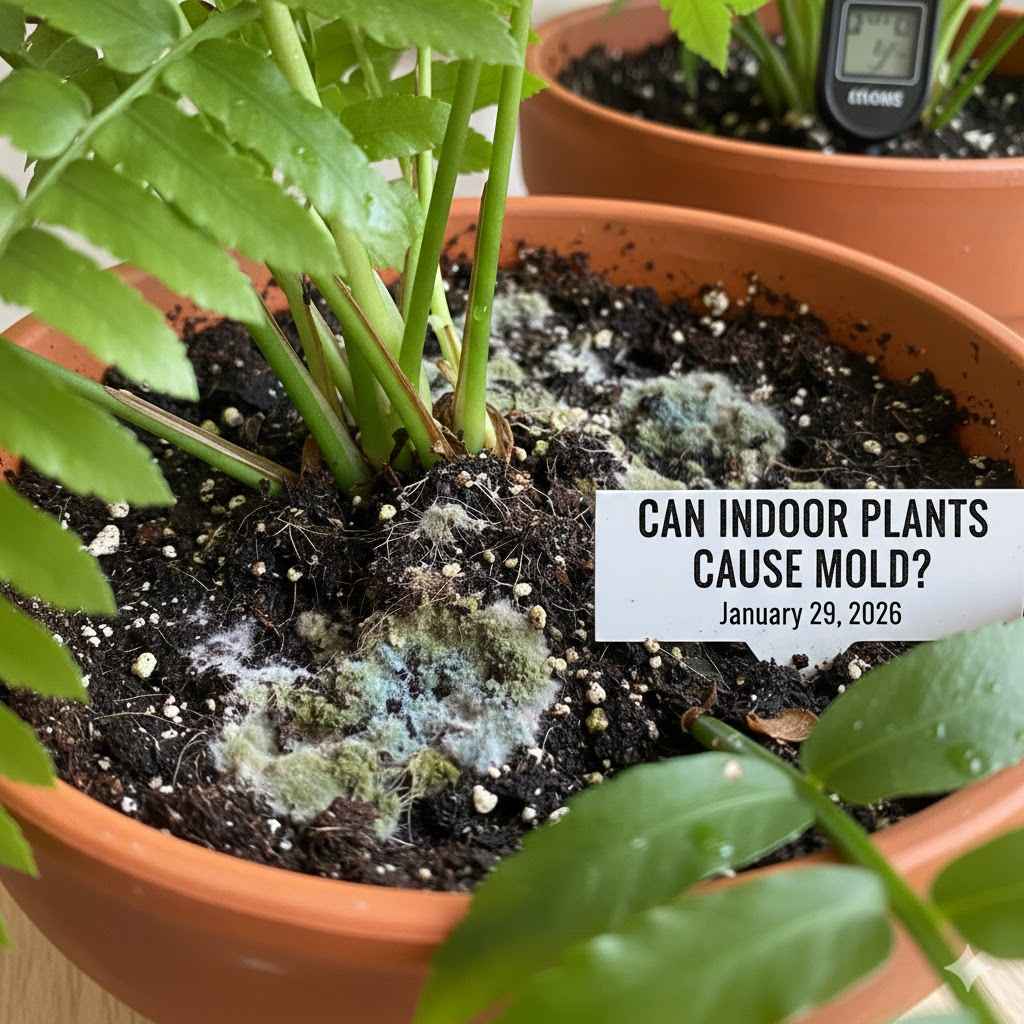
They can contribute to conditions that allow mold to grow if overwatered or in high humidity, but proper care keeps everything healthy and mold-free. With simple steps like right watering and good airflow, you enjoy beautiful plants without worry. (48 words)
Indoor plants bring life, color, and calm to any home. Many beginners love them but worry: “Will my plants make mold grow?” This fear stops people from enjoying houseplants. The good news? Plants themselves do not cause mold problems. Mold needs moisture, warmth, and poor airflow to grow. Overwatering plants or keeping them in damp spots creates those conditions—not the plants.
Do not worry. You can have thriving indoor plants and a mold-free home. This guide shows you why mold appears near plants, how to spot it, and easy steps to prevent it. Follow along, and your plants will stay healthy while your home stays fresh.
Why Mold Shows Up Around Indoor Plants
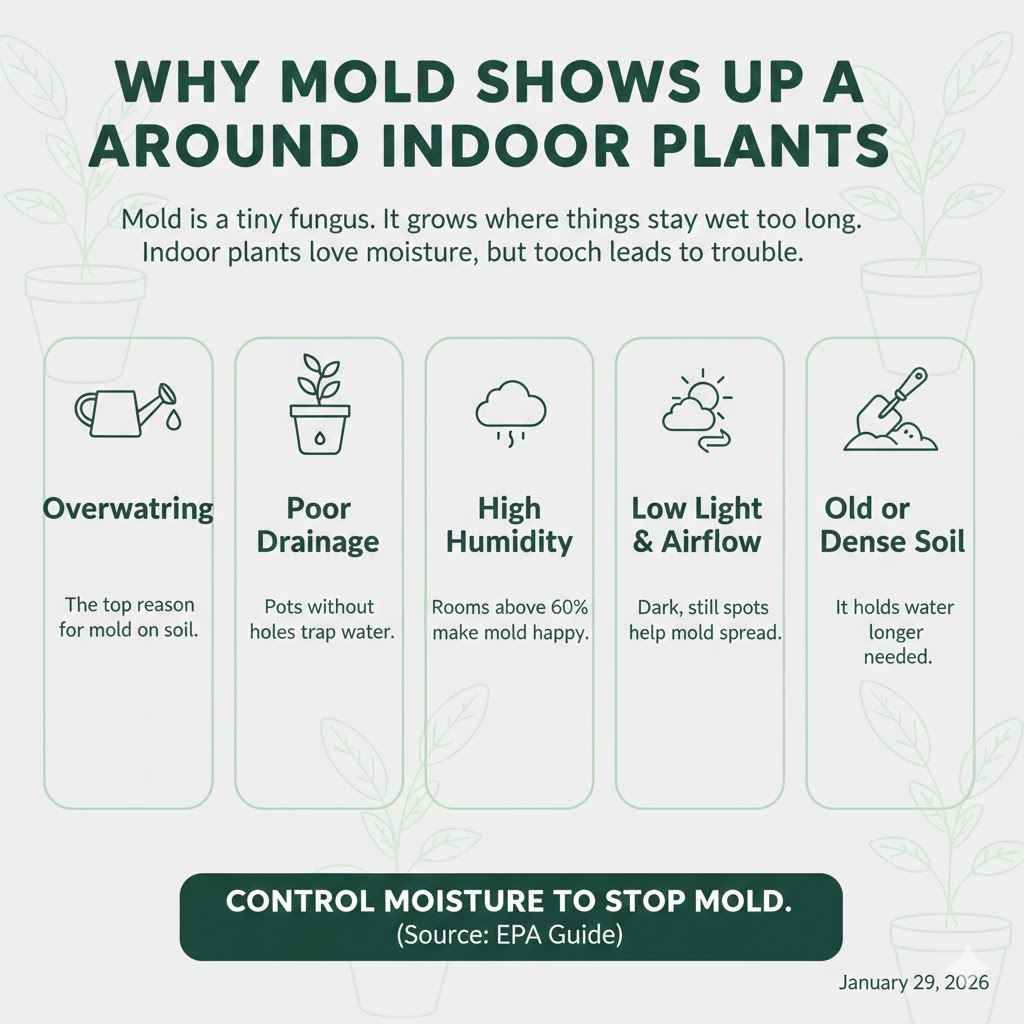
Mold is a tiny fungus. It grows where things stay wet too long. Indoor plants love moisture, but too much leads to trouble.
Common causes include:
- Overwatering — The top reason for mold on soil.
- Poor drainage — Pots without holes trap water.
- High humidity — Rooms above 60% make mold happy.
- Low light and airflow — Dark, still spots help mold spread.
- Old or dense soil — It holds water longer than needed.
The U.S. Environmental Protection Agency (EPA) explains that controlling moisture stops mold growth indoors. Check their guide here: A Brief Guide to Mold, Moisture, and Your Home.
Plants add a little moisture through leaves (transpiration), but experts say it is small. One study from horticulturists notes houseplants rarely raise home humidity enough to cause mold on walls.
Is Mold on Plant Soil Harmful?
White fuzzy mold on soil often looks scary but is usually harmless saprophytic fungus. It breaks down organic matter and rarely hurts strong plants.
Black or green mold needs attention. It may signal bigger issues like root rot.
Mold spores in air can bother people with allergies or asthma. The CDC advises fixing moisture sources to control mold.
Most cases stay in the pot and do not spread to walls or ceilings.
Signs Your Plants Might Lead to Mold Issues
Watch for these early warnings:
- White, green, or black fuzz on soil surface
- Musty smell from the pot
- Yellow leaves or soft stems (overwatering sign)
- Water sitting in saucers
- Mold spots on leaves or nearby walls (rare, but check other causes)
- High room humidity (use a cheap hygrometer)
Spot issues early, and fixes are simple.
Step-by-Step: How to Prevent Mold from Indoor Plants
Follow these easy steps to keep mold away.
- Water only when needed Stick your finger 1-2 inches into soil. Water if dry. Most houseplants need water every 7-14 days.
- Choose pots with drainage holes Always use pots with holes. Add a saucer to catch extra water, but empty it after 30 minutes.
- Use well-draining soil Pick potting mix with perlite or sand. Avoid heavy garden soil.
- Improve airflow Place a small fan nearby on low. Open windows when possible.
- Give enough light Bright, indirect light dries soil faster and fights mold.
- Control home humidity Keep it 40-60%. Use a dehumidifier if needed.
- Repot when necessary Fresh soil every 1-2 years helps.
- Clean up dead leaves Remove fallen bits from soil to stop decay.
Quick Comparison: Good vs Bad Practices for Mold Prevention
| Practice | Good (Prevents Mold) | Bad (Encourages Mold) |
|---|---|---|
| Watering | Check soil first, water when dry | Water on schedule, keep soil wet |
| Pot type | With drainage holes | No holes or saucer always full |
| Soil mix | Light, airy with perlite | Dense, holds water |
| Room conditions | Bright light, good airflow | Dark, still, high humidity |
| Maintenance | Remove dead matter, repot yearly | Ignore fallen leaves, old soil |
How to Fix Mold If You See It
Found mold? Act fast with these steps.
- Move plant to bright, airy spot.
- Scrape off top 1-2 inches of moldy soil (wear gloves).
- Let soil dry out fully.
- Sprinkle cinnamon (natural antifungal) on soil.
- Water less until fixed.
- Repot in fresh sterile mix if bad.
- Improve room conditions.
For big mold issues in home, see EPA advice.
Best Houseplants That Help Control Humidity
Some plants lower humidity and fight mold risk.
- Snake plant — Tough, low water.
- Peace lily — Absorbs moisture.
- Spider plant — Easy, purifies air.
- Boston fern — Loves humidity but uses it up.
These thrive without adding extra dampness.
Common Mistakes Beginners Make
Many new gardeners do these:
- Water too often because soil looks dry on top (but wet below).
- Use decorative pots without holes.
- Group too many plants in small, dark room.
- Ignore saucer water.
Avoid these, and your plants stay happy.
Benefits of Indoor Plants (Mold-Free!)
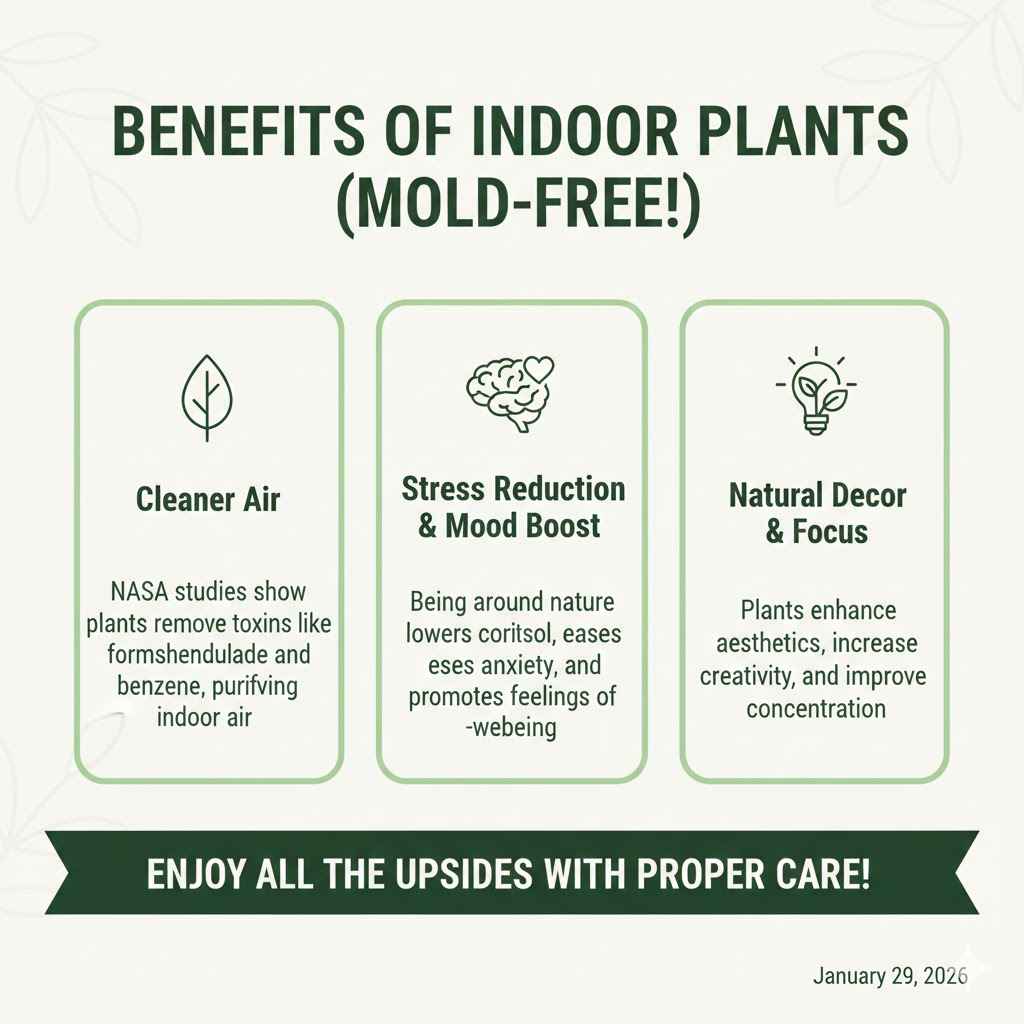
Plants clean air, reduce stress, and look great. NASA studies show they remove toxins. With right care, benefits far outweigh tiny mold risks.
FAQ
1. Can houseplants cause mold on my walls? No, not directly. Plants add little humidity. Wall mold usually comes from leaks, poor ventilation, or high home moisture. Fix those first.
2. Is white mold on soil bad for my plant? Usually no. It is harmless and shows overwatering. Scrape it off and water less.
3. How often should I water to avoid mold? Only when top 1-2 inches of soil feel dry. Use finger test, not calendar.
4. Do all indoor plants cause mold risk? No. Succulents and cacti need little water and rarely have mold. Overwatered tropicals pose more risk.
5. Can mold from plants make me sick? Spores may irritate allergies or asthma. Healthy plants with good care rarely release harmful amounts.
6. What is the best way to prevent mold long-term? Good drainage, right watering, bright light, airflow, and humidity under 60%. Check plants weekly.
7. Should I throw away a moldy plant? Rarely. Fix care first. Repot if needed. Most recover fast.
Conclusion
Indoor plants do not cause mold in your home when cared for properly. The real key is moisture control—water wisely, ensure drainage, and keep air moving. You now have clear steps to enjoy lush greenery without worry.
Start small. Pick easy plants, follow the tips here, and watch your confidence grow. Gardening brings joy, fresh air, and beauty to your space. You can do this! Your home will thank you with healthy plants and clean, comfortable air.
Keep it simple, stay consistent, and have fun growing. Happy gardening!