
No, most air purifiers do not harm or kill plants. Standard HEPA and carbon filter models are safe and can even benefit your houseplants by removing dust, pollen, and pollutants. Only ozone-generating purifiers pose a real risk, potentially damaging leaves or killing sensitive plants at high levels.
Hey there, friend! If you’re like many beginner gardeners, you love filling your home with lush green plants. They bring life, calm, and a touch of nature indoors. But then you wonder: could that humming air purifier hurt my precious pothos or peace lily? It’s a fair worry—especially when you’re just starting out and want everything to thrive. The good news? In most cases, air purifiers are plant-friendly. They often help more than harm by cleaning the air your plants breathe. Let’s walk through this step by step so you feel confident keeping both your purifier and your plants happy.
Many folks run air purifiers to cut down on dust, allergens, or odors. Plants love cleaner air too! But some types of purifiers work differently, and that’s where confusion comes in. We’ll cover the safe ones, the risky ones, and easy tips to use them together without any problems.
Understanding How Air Purifiers Work
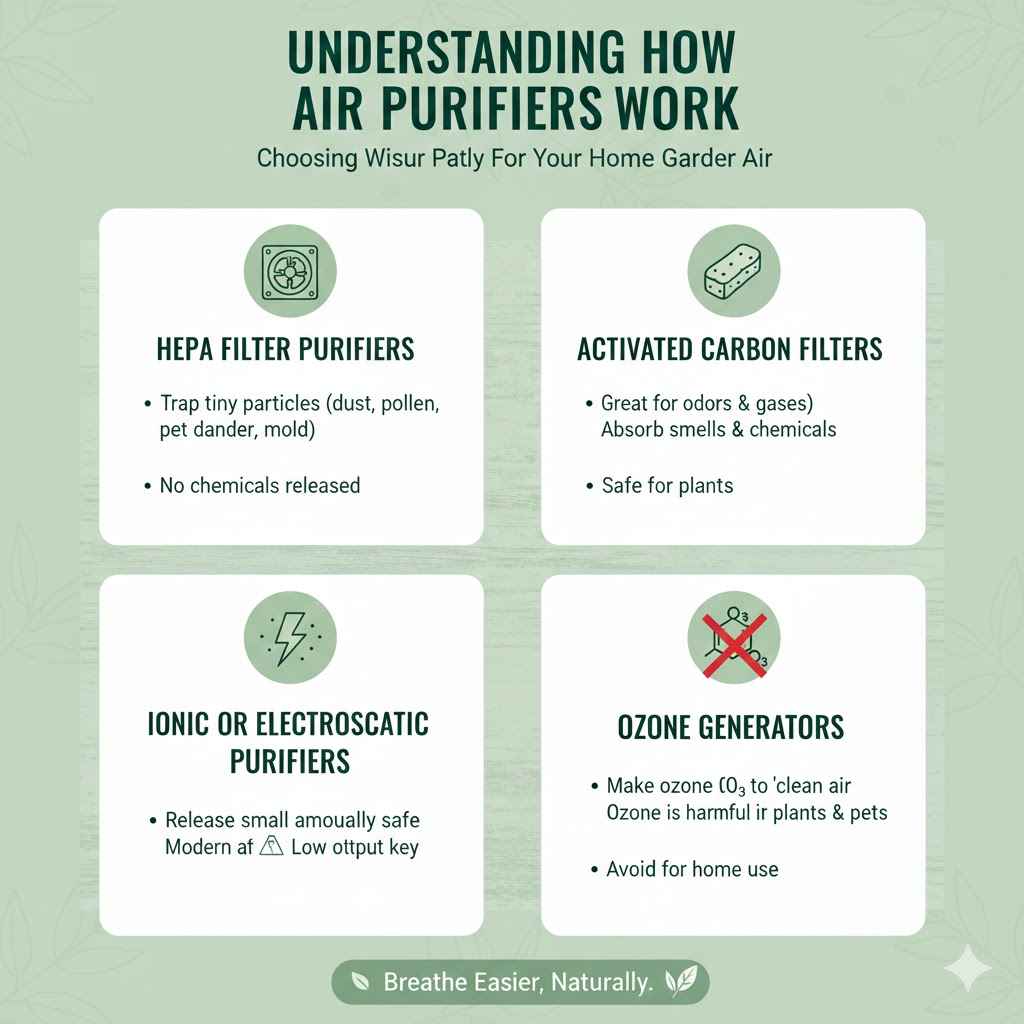
Air purifiers come in a few main types. Knowing the difference helps you choose wisely for your home garden.
- HEPA filter purifiers: These trap tiny particles like dust, pollen, pet dander, and mold spores. They use a fan to pull air through a dense filter—no chemicals released.
- Activated carbon filters: Great for odors and gases (VOCs). They absorb smells without harming plants.
- Ionic or electrostatic purifiers: Some release small amounts of ions, but most modern ones are safe in low output.
- Ozone generators: These make ozone (O3) to “clean” air. Ozone is the one to watch out for.
Most popular brands today use HEPA + carbon combos. They’re the safest choice for homes with plants.
Do Standard Air Purifiers Harm Plants?
Short answer: No! HEPA and carbon filter air purifiers are safe for houseplants. They actually help by reducing dust that clogs leaf pores (stomata). Cleaner leaves mean better photosynthesis—your plants grow stronger and greener.
Think about it: Dust buildup blocks sunlight and air exchange on leaves. A good purifier keeps things fresh. Many gardeners report healthier plants after adding one. No evidence shows standard models dry out soil faster or cause leaf burn when used normally.
One small tip: Place the purifier at least 1-2 feet from plants. Strong airflow might dry soil quicker in tiny pots, but that’s easy to fix with a quick watering check.
When Air Purifiers Can Harm Plants: The Ozone Risk
Here’s the important part—ozone-generating purifiers can hurt or even kill plants. Ozone is a strong gas that attacks plant tissues.
High ozone levels cause:
- Leaf spotting or yellowing (chlorosis)
- Brown tips or edges (necrosis)
- Stunted growth
- Wilting or death in severe cases
The U.S. Environmental Protection Agency (EPA) warns that ozone harms indoor plants and materials. They advise against using ozone generators in occupied spaces, especially around plants. Even low levels over time stress sensitive species like ferns or orchids.
Avoid ozone models if you have plants. Look for “ozone-free” or “HEPA only” labels when shopping.
How to Safely Use an Air Purifier with Your Plants
Follow these simple steps to keep everything thriving:
- Choose a HEPA or HEPA + carbon purifier. Skip ozone ones.
- Read the manual—ensure it’s low-ozone or zero-ozone certified (CARB certified in some areas).
- Place it wisely: 2-3 feet from plants to avoid direct strong blasts on leaves.
- Run on low or medium speed most days—high speed is great for quick cleans but can dry air.
- Check soil moisture more often at first. Water when the top inch feels dry.
- Clean or replace filters regularly so the unit works efficiently without extra strain.
- Combine with good habits: Open windows when weather allows for fresh air exchange.
These steps make it easy and worry-free.
Benefits of Pairing Air Purifiers with Houseplants
Plants and purifiers team up beautifully for better indoor air. Plants add moisture, beauty, and a bit of natural filtering (though not as much as once thought—studies show you need lots for big impact). Purifiers handle particles fast.
Here’s a quick comparison table:
| Feature | Houseplants | HEPA Air Purifier | Together |
|---|---|---|---|
| Removes dust/particles | Limited (settles on leaves) | Excellent (99.97% at 0.3 microns) | Best of both |
| Handles VOCs/odors | Some absorption | Good with carbon filter | Strong combo |
| Oxygen boost | Yes (daytime) | No | Plants shine here |
| Speed of cleaning | Slow | Fast | Purifier leads, plants support |
| Risk to plants | None | None (non-ozone) | Safe and helpful |
Use both for a healthier, greener home!
Common Mistakes to Avoid
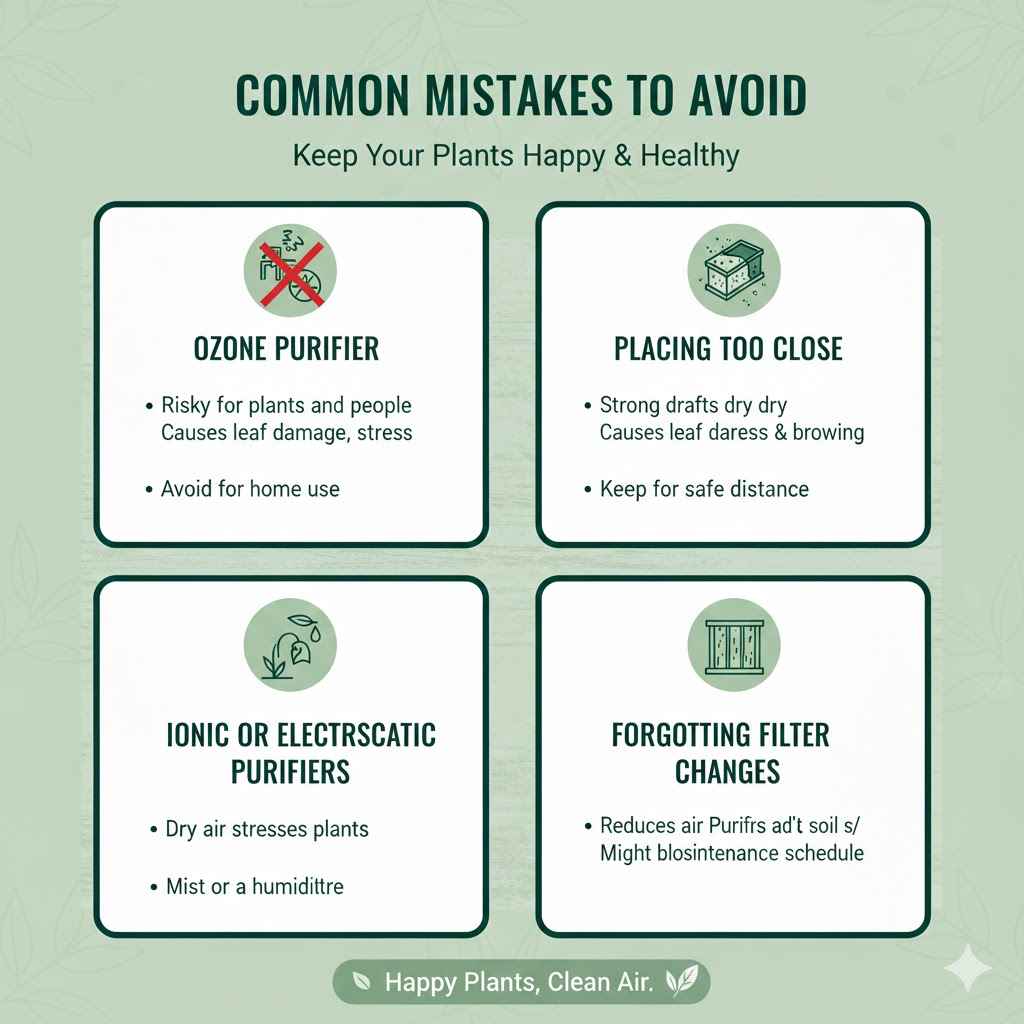
- Buying an ozone purifier thinking it’s stronger—it’s risky for plants and people.
- Placing purifier too close—strong drafts dry soil or stress leaves.
- Forgetting filter changes—dirty filters work less and might blow dust around.
- Ignoring humidity—purifiers don’t add moisture, so mist plants if air gets dry.
Avoid these, and you’ll see happy plants.
FAQ
Can a HEPA air purifier dry out my houseplants?
Not really. It moves air, but doesn’t remove humidity like a dehumidifier. Just check soil and water as usual. Most homes stay fine.
Are ionic air purifiers safe for plants?
Most modern ones are, if low-ozone. Check specs. HEPA is safer overall—no ions or ozone worries.
Will running an air purifier 24/7 hurt my plants?
No, it’s often good! Cleaner air helps. Just use medium speed and keep distance from pots.
Do air purifiers remove CO2 that plants need?
No—they focus on particles and VOCs, not CO2. Plants still get plenty from normal air.
Can ozone purifiers kill my plants quickly?
Yes, high levels can damage leaves fast and lead to death over days or weeks. Avoid them near plants.
Should I turn off the purifier at night for my plants?
No need—plants rest at night but still benefit from clean air. Low setting is perfect.
Do plants clean air better than purifiers?
No—purifiers are much faster for particles. Plants help with some gases but need hundreds for real impact (per studies). Use both!
Wrapping It Up: Enjoy Clean Air and Thriving Plants
You don’t have to choose between fresh air and healthy plants—they go hand in hand. Stick with reliable HEPA or carbon filter purifiers, keep them a little distance from your greens, and watch your indoor garden flourish. Cleaner air means less dust on leaves, better growth, and more joy in your space.
Gardening is about small, smart steps that build confidence. You’ve got this! Start with a good purifier if you haven’t already, place your favorite plants nearby, and enjoy the peaceful, vibrant home you’re creating. Your plants will thank you with new leaves and steady growth. Happy gardening—keep it green and simple!